


Even in a typical year, tourism businesses in northern New England have to deal with forces both unpredictable and out of their control, such as the price of gasoline and whether the sun will shine on the weekends. Forecasting this summer is even more difficult, as there’s the yet-unknown scale of the trade war set off by President Donald Trump’s tariffs, and concern over the effect of growing anti-U.S. sentiment on the Canadian side of the border.
One bright spot for business owners is staffing, which seems to have at least stabilized, if not returned to levels seen prior to the coronavirus pandemic. However, according to one industry expert, the reason for that stabilization might itself be cause for worry.
“We’re seeing applications, we’re hiring people, we’re in a much better spot than we were even 12, 18 months ago,” said Mike Somers, president and chief executive officer of the New Hampshire Lodging and Restaurant Association. “I think it’s unfortunately a function of the economy slowing down.” Inflation might have slowed but, he continued, “pricing hasn’t come down. I think what has happened is a lot of those part-time workers we lost during the pandemic, we’ve seen them come back. Their families need that extra income.”
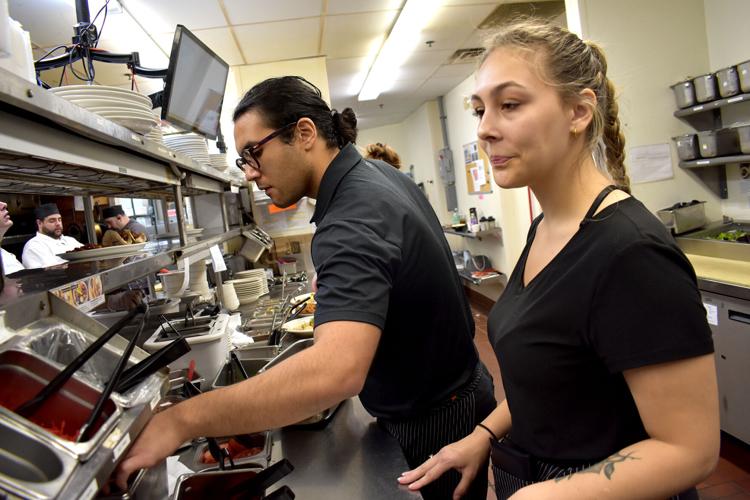
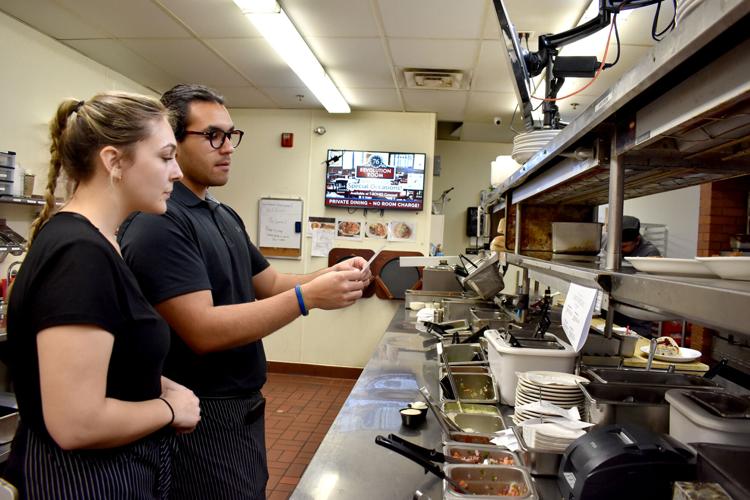
Fortunately for those in need of extra income, the hospitality industry can provide just that, and often through short hours. Meanwhile, Somers said, those restaurants and other businesses have learned over the past few years how to scale operations to fit staffing capacity, such as by shortening their hours or reducing the number of guests they will seat at a given time.
“The supply side has improved a little, and the demand side has eased a little,” Somers said.
As for how many customers those businesses will serve, Somers said it’s hard to say.
“It’s been a very volatile start to the year,” Somers said. So far, he said there’s been a “dramatic drop” of Canadian visitors to the U.S., which he said is concerning because “that’s a significant piece of summer visitation.”
While tourism from Canada is a minority of overall visitation to New England, it’s significant enough that a measurable drop could make a difference over the course of the season. As Somers put it, “That isn’t going to destroy the season, but it will provide areas of softness,” and could portend a larger trend of reduced international tourism.
But if Americans also choose to stay closer to home with their vacations, New England could replace its foreign visitors with those from neighboring states. Weddings and other events are continuing to book well, he said.
Overall, it’s a mixed forecast with many unknown variables.
“There’s just a lot of hesitancy. I think everyone is gearing up for a full summer season, there is quietly a concern that bookings might not be where they used to be,” Somers said. “There are some bright spots, but there are some areas of concern. And tourism in New Hampshire always ends up being a weather report.”
Karmen Gifford, president of the Lakes Region Chamber of Commerce, was a bit sunnier in her outlook, though she held some of the same reservations.
“I’m seeing tourism on track, except for Canada. The Canadian tourists coming over the border is down and will be down, people are choosing not to visit this year,” Gifford said.
She said she advises members against fretting over the variables, instead to focus on what they can control, such as maintaining standards of service with the staffing levels they have.
“People are already working beyond capacity, that creates anxiety. We don’t need to create more anxiety with things that are beyond their control,” Gifford said. “It’s a different approach to business.”
View from the trenches
Tom Boucher is owner and chief executive officer of Great New Hampshire Restaurants, a 40-plus year business that operates nine locations, including T-Bones and Cactus Jack’s in Laconia. He said his balance sheet is largely a product of climactic events.
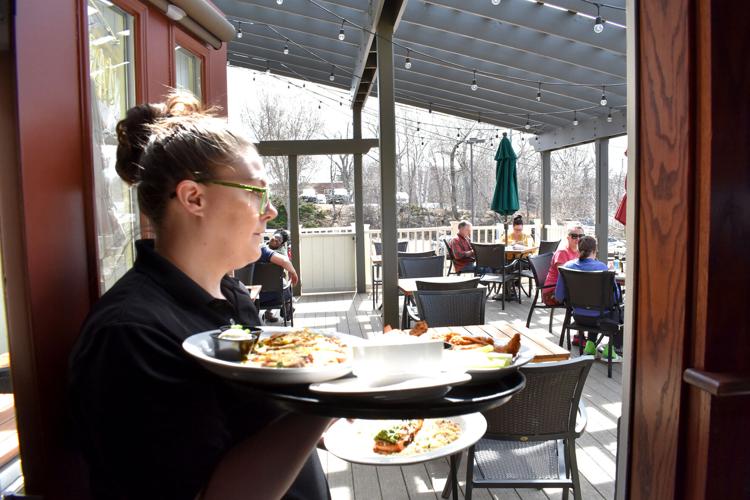
“It’s amazing, several years back, before the pandemic, we had a June when it rained the whole month, 28 out of 30 days, and we were jammed.” People on vacation don’t have much else to do besides go out to eat when it’s raining, he explained. “The flip side of it is, if it’s nice, it brings day trippers.”
More than the atmosphere, Boucher is concerned about attitudes, particularly those to the north.
“It’s really clear that Canadians are bothered by what’s happening at the administration level, and they’re showing it by not going to the United States,” Boucher said. A significant and lasting decline in Canadian visitation would be bad news for local businesses.
“We’re not very bullish about what it looks like this summer because of that, because of the potential the tariffs are going to have and the uncertainty in the stock market,” Boucher said.
He noted money spent by Canadians ends up in the pockets of restaurant workers, and even in the state’s restaurant and lodging tax revenues.
“If lodging and restaurants don’t have a great summer, that doesn’t bode well for the state, either,” Boucher said.
On the staffing front, Boucher was less concerned. He said staffing is always a challenge, but this year seems to be less so than recent seasons.
“We’re not all the way back, but we’re pretty close.”
At The NASWA Resort, one of the longest-running hospitality businesses in the Lakes Region and indeed the state, owner Cynthia Makris said she's heard all of the concerns, but is more focused on celebration.
“We’re very excited, it’s a big anniversary year for us,” Makris said, noting 2025 marks 90 years since Jim and Fanny Salta, her grandparents, bought a natural spring on Weirs Boulevard and built a handful of cottages to rent to weary travelers. The business now has a hotel, beach bar, fine dining restaurant and, of course, lots of colorful cottages overlooking Paugus Bay.
“We’re going to celebrate the whole season long, specials and events and parties all year.”
There’s a word in Greek, “philoxenia,” which Makris said translates most directly to “friend of the stranger,” and she invoked that word to explain how she thinks of the family business. She’s heard many stories from guests about how they first came to the NASWA for their honeymoon decades ago, and now return with children and grandchildren.
“People started as strangers, and now they’re family,” Makris said.
So far, she hasn’t seen any firm indication Canadian visitation is down — no reservations have been canceled, for example — though she's seen some charged comments on social media. “I guess we’ll have to wait and see as we get close to the season.”
She is also not stressing about staffing. Many long-term employees are returning, and she expects to have enough workers through a mix of locals and those who come from abroad, through either the H-2B or J-1 student visa programs. Enough, she said, but not as many as she would like.
“Since COVID, we are never fully staffed anymore. We have to run with less people. You have to be more efficient and it creates more overtime,” Makris said. “We do have a good starting crew, we are looking forward to hiring more now. We are looking to hire locals for the summer, and college and high school kids that want a cool summer job on the lake.”
Makris said she would consider her business fully staffed if she had at least 130 employees. She expects to have somewhere between 100 and 110 this summer, which is much easier to operate with than the 70 she had in 2020. “Thank God we’re five years past that.”
The NASWA will open at the end of the month, and its first big event will be Mother’s Day brunch on May 11. Every season has its challenges, but Makris only gets one chance to celebrate the NASWA’s 90th.
“There’s a lot of excitement in the air around here, we’re very excited,” Makris said. “We’re 90 years young.”


(0) comments
Welcome to the discussion.
Log In
Keep it Clean. Please avoid obscene, vulgar, lewd, racist or sexually-oriented language.
PLEASE TURN OFF YOUR CAPS LOCK.
Don't Threaten. Threats of harming another person will not be tolerated.
Be Truthful. Don't knowingly lie about anyone or anything.
Be Nice. No racism, sexism or any sort of -ism that is degrading to another person.
Be Proactive. Use the 'Report' link on each comment to let us know of abusive posts.
Share with Us. We'd love to hear eyewitness accounts, the history behind an article.