


GILFORD — One astounding fact becomes clear when you hit the open water of Lake Winnipesaukee: There are a lot of islands.
Quaint residences of all types can be seen dotting the forested landscape. From cottages to mansions, the dwellings range as do the lifestyles. But for many, their island home plays a special role in their Lakes Region summer living.
It’s a unique way of life.
After all, you can’t stay all year long, especially as Winnipesaukee freezes over and plays host to shanties and ice-fishing traps.
Factors like weather become life or disaster, and reliance on neighbors is more important than ever.
“Everybody cares about everybody. It’s really, really quite unique,” said Brit Munsterteiger, 48, of Camp Island.
But for many, they wouldn’t have it any other way.
‘Would you consider an island?’
For Nancy and Steve Birge, living on an island is an absolute blessing — and a happy accident.
Avid boaters for most of their lives, the Birges began looking at rentals in the area. A Realtor offered them a plethora of dwellings to peruse. They didn’t think about island living until were asked if they’d consider it.
The seed was planted.
“We were in love right away,” said Nancy.
For them, Mark Island (and its 102 acres) is where they call home May through October, before heading to their other home in South Carolina for the winter.
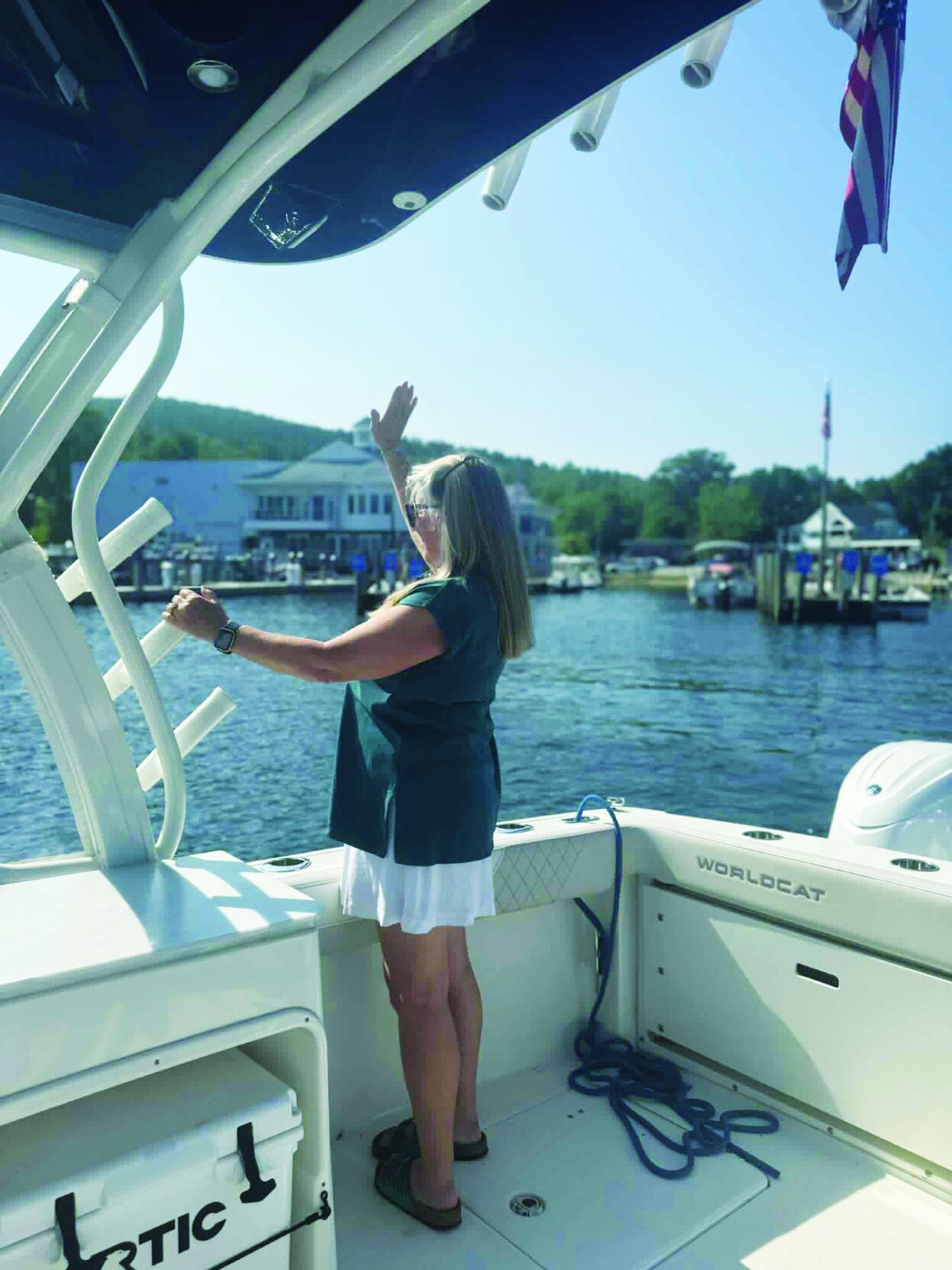
The couple took The Laconia Daily Sun for a tour of the lake, sharing both special and mundane moments. Their home, equipped with a beautiful wrap-around porch, outdoor shower and welcoming presence, sits indented on the edge of the peninsula.
“This is a beautiful slice of heaven. It really is,” Nancy said. “Life doesn't get any better.”
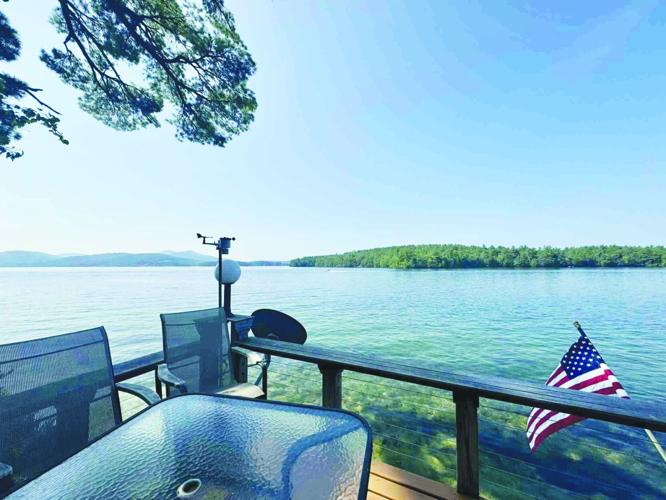
Their home boasts a feature no longer allowed due to today’s conservation efforts: An overlook deck. From here, the views of Winni are stunning, the seats prime for boat watching and an after-work drink.
The couple’s three dogs, Finn, Skye and Reese, don’t seem to know they’re isolated on Mark Island, and that’s OK. Seeing dogs on boats and living their best lives is just part of the norm.
“They're all very good on the boat,” Nancy said.
Electricity, or not
Many Lakes Region islands are without electricity ― but that doesn’t stop people from taking up residency.
For Munsterteiger, it’s a big part of island life’s charm. She and her family have called Camp Island home since 1969, passing their family cottage down from each generation to the next. She herself has been going since 1976.
“I’ve seen the cyclical nature of island life, which is beautiful in terms of generations that happen. I was there as a child, and I grew up with my neighbors and the children that lived on the island. We were teenagers together through our teenage years, and now our children play together,” she said.
The name Camp Island is fitting nomenclature, since it’s like camping, literally, with no tent needed.
At the Munsterteiger residence, they rely on solar power and propane, which is very much part of their routine, if not certainly a different way of living. The property, assessed at $635,200, boasts a “normal” bathroom and a more rustic way of using the facilities: a modernized bucket toilet.
"It's like a bucket you go to the bathroom in,” Munsterteiger said. “You collect your waste and then dispose of it. That’s really for when we have larger groups out there. We have a very small septic system.”
At the end of the season, the Munsterteigers head to their permanent residence in Bedford, reconnecting with society in a more typical fashion.
The “unplugged” memories created each season are near and dear to their hearts.
“I think it’s just a really healthy experience to be in a place where that’s not the priority,” she said about lack of cell service. “It gives you the permission to check out for a while from that digital world. Instead, they’re playing cards, they’re making friendship bracelets. It’s natural fun; antics.
“The smallness of things; no one is escaping to their rooms or going to their phone. They’re present, and there’s something really magical about that because there’s nothing else to do,” Munsterteiger said.
Meanwhile, the Birge residence on Mark Island does feature electricity, and they’re grateful for it. The electrical towers sit on Bear Island, with wires running safely under the water from Cattle Landing to Mark.
Despite no unsightly overhead wires to ruin the picturesque view, lights can be seen from the mainland, serving as a reminder that yes, people do live there.
‘Beautiful water’
The largest lake in the Granite State with more than 200 islands, Winnipesaukee was named by the Abenaki Native Americans, who boasted a large presence in New Hampshire.
In Bruce Heald’s book “Lake Winnipesaukee,” the author provides the backstory to the lake's name. Translated as “beautiful water in a high place,” the sentiment couldn’t ring more true.
The early-centuries group fished off what is known as The Weirs, today’s popular tourist destination hosting attractions like the M/S Mount Washington, tiki boat tours and plenty of restaurants.
Lore is part of the fun with several spots around the lake known for their tall tales.
For example, The Witches are said to mimic the triangular shape of a witch’s hat. A glacial lake, the 32 aces of The Witches are dangerous, with many damaged boat props due to the protruding rocks in that area.
According to the M/S Mount Washington website, Cow Island got its name because quarantined cows were taken there after traveling stateside from Europe.
And Penny Island boasts one just one home, a private island for one lucky family.
Gray skies & choppy waters
There have been times the Birges have resorted to traditional methods of boating, relying on compasses and GPS to find the town docks in severe weather; the type of weather where the fog is so thick you can’t see your hand in front of you.
But after all, you’ve got to get to the mainland. Mainstay responsibilities continue despite the rain.
There are times, though, folks have to ask: To leave the island or not?
“We’re really good about tracking the weather,” Munsterteiger said.
Her daughter, Melanie, often resides on the island herself during the summer — with her parents visiting on weekends — working aboard the Mount.
“We have taught her that [weather] can’t be an excuse as to why you can’t get to work. We have the technology where we can do that these days. That’s our expectations as a family,” Munsterteiger said, explaining how island residents simply leave earlier or later depending on the weather.
“On the same token, if a storm rolls in, you’re not putting yourself in danger.”
As all boaters know, the forecast is a major part of daily routine. Clear skies in the morning doesn’t always mean clear afternoons. The 15-20 minute boat ride back to the docks can become quite challenging in anything but sunny weather, but it doesn’t deter islanders from getting to the mainland.
“The other thing you really need to think about with boats is the weather,” said Nancy. “Today, it's great ... but the weather's not always like this. There are times when we have to come in in the rain, or we're going out and it's windy and wavy. There were a few times where we couldn't go out.”
The challenges of island life
It’s a lot of work to live on an island.
For one thing, finding a place to park, both boat or vehicle, can be difficult at times.
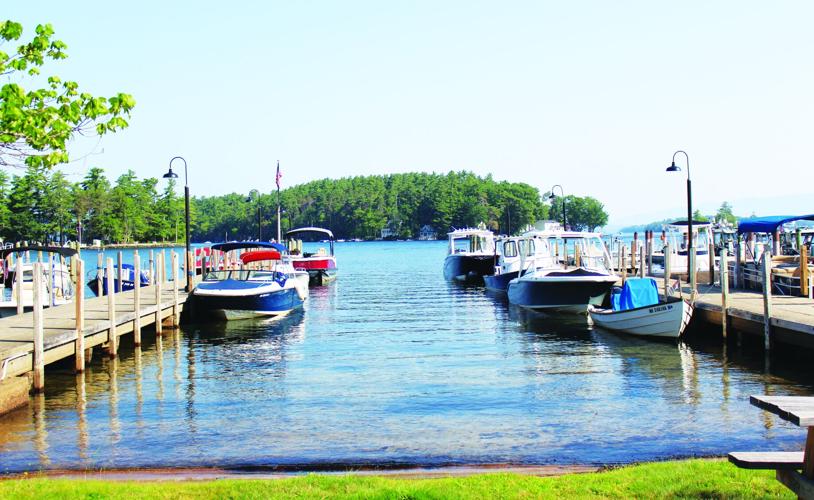
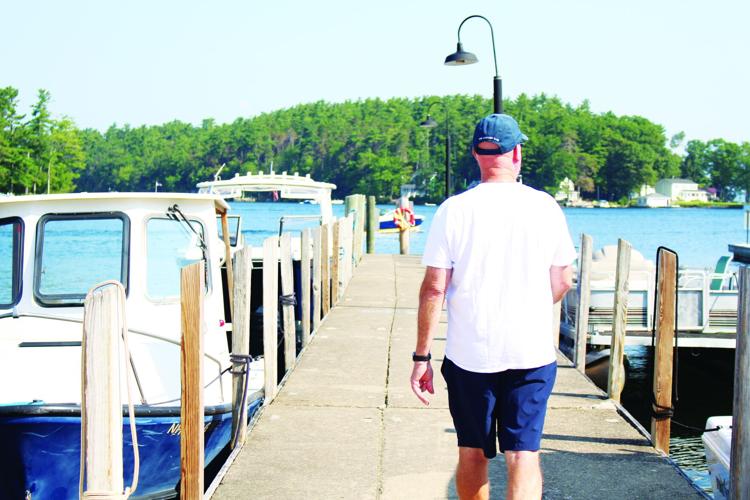
At the Gilford Town Docks, stickers are required to park four-wheeled modes of transportation. Guests need a pass at all times, or risk being ticketed.
The Munsterteigers use Fay's Boat Yard to come and go to Camp, and have little to complain about.
“Fay's Boat Yard treats islanders differently,” she said, adding an islander’s relationship with their boat is different than that of a mainland dweller. “I think the biggest difference between an island and non-islander relationship with their boat is that an islander sees it as a necessity.”
Then there are other chores — the blackwater kind — to think about.
“We have a very small septic system,” Munsterteiger said. “There’s a boat that comes out with a septic pump trunk and pumps the septic system. Our tank is so small ... I think it’s 100 gallons ... and their minimum [pump] is $800.”
Propane tanks are also delivered directly to Camp Island.
Despite the extra logistics, islanders love living where they do.
“It’s an unusual lifestyle,” Nancy said.


(0) comments
Welcome to the discussion.
Log In
Keep it Clean. Please avoid obscene, vulgar, lewd, racist or sexually-oriented language.
PLEASE TURN OFF YOUR CAPS LOCK.
Don't Threaten. Threats of harming another person will not be tolerated.
Be Truthful. Don't knowingly lie about anyone or anything.
Be Nice. No racism, sexism or any sort of -ism that is degrading to another person.
Be Proactive. Use the 'Report' link on each comment to let us know of abusive posts.
Share with Us. We'd love to hear eyewitness accounts, the history behind an article.