


CONCORD — Franklin Rep. James Thibault (Merrimack 25), the youngest New Hampshire state representative, introduced his first solo sponsored bill to establish Daniel Webster Day. Thibault spoke about his bill in a House Executive Departments and Administration Committee meeting Feb. 12, where it was introduced.
“This is a state commemoration of simply remembering the history of Daniel Webster as an important figure in New Hampshire history,” Thibault said.
Thibault has co-sponsored 12 bills. This new bill is intended not only to honor Webster, but to encourage schools to teach students about him and his impact on the state.
“I understand there may be concerns about creating new state observances because they won’t be recognized, people won’t know about them,” Thibault said. “But I think this will be different.”
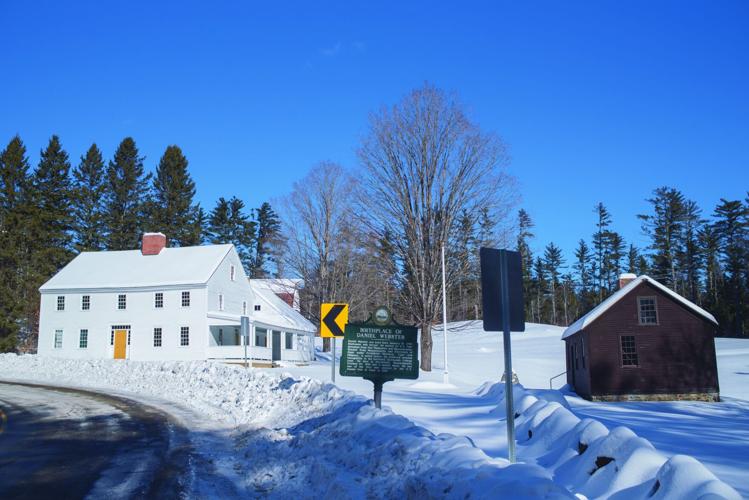
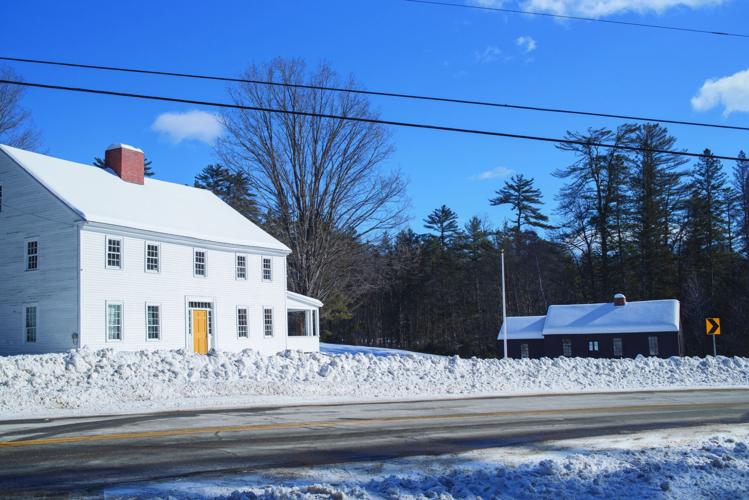
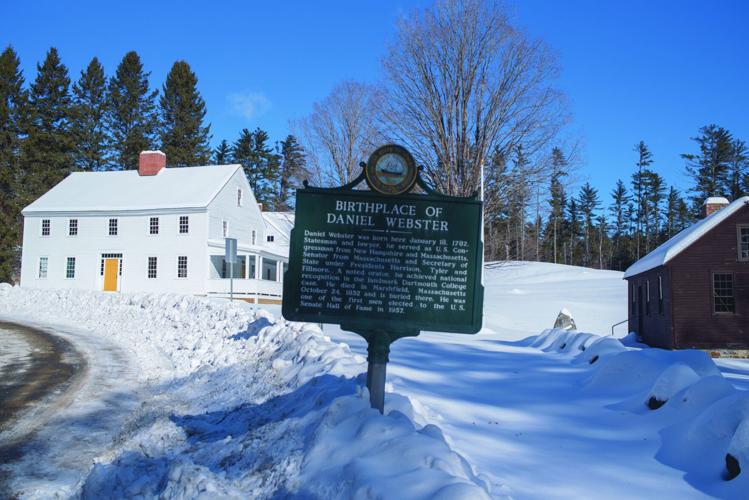
Thibault sees Webster’s life as an example of the American Dream. Webster was born to poor farming parents in Salisbury, where his home can be seen in what is now Franklin. He attended Dartmouth College at 15, and became a lawyer, before an impressive career as a politician. He argued in the Supreme Court, including in the landmark case McCulloch v Maryland, which ultimately gave Congress the authority under the Constitution to “make all laws which shall be necessary and proper.”
His political career began in 1813 as a Granite State representative. He later went on to represent Massachusetts in the House in 1823, as well as the Senate starting in 1827. He also served as Secretary of State under Presidents William Henry Harrison, John Tyler and Millard Fillmore. He was also a gifted orator, speaking in the Senate in what became his “Second Reply to Hayne” speech, where he refuted the policy of nullification by Southern senators, a policy that would allow states to nullify, or ignore, a federal law.
Thibault also noted Webster’s founding of the U.S. Senate Page Program, which allows high school students to immerse themselves into the inner-workings on Capitol Hill.
Thibault also argued there is precedent for honoring Webster, including the preservation of his birthplace, and his estate in Massachusetts.
“This is not something that’s without precedent, it just puts it into state statute, and allows us for it to be more publicly aware for schools to be able to work on,” he said. Schools would be encouraged, but not required, to teach about Webster.
The bill received a 7-7 vote, before being recessed for a future date to include absent committee members.
Rep. Heath Howard (Strafford 4) seconded the motion to pass the bill. He called Webster a “New Hampshire icon.” Rep. Stephen Pearson (Rockingham 13) spoke in favor of the bill.
“There’s too many things that have shaped this state, and too many folks that have been involved in that, that seem to just be lost forever,” Pearson said. “And Daniel Webster is certainly worthy of recognition and highlighting in an educational sense and a historical review.”
While the bill has some support, other representatives opposed it. Rep. John Sellers (Grafton 10) spoke against it.
“It says the schools are encouraged. It doesn’t say they have to, they shall,” Sellers said. “I don’t know, I just look at this as another thing for the governor to do, and maybe the schools will do it, maybe they won’t.”
Vice Chair Erica Layon of Rockingham 13 also voted against the bill. Layon is a recent member of the NH Commission on Holocaust and Genocide Education. She said Holocaust education is required in the state, but not many know how to teach it, despite information provided by the Cohen Institute for Holocaust and Genocide Studies at Keene State College. She appreciated the interest in honoring Webster, but doesn’t believe this bill to be effective. She suggested adding information to help assist with the teaching of his legacy.
“Having the proclamation from the governor without any sort of materials or resources to provide to the schools would allow us to check that box, but not necessarily have that education,” she said. “And I actually would encourage you to work on creating some voluntary information that can be used to teach people in the classes so that they can actually understand this and appreciate it.”
Thibault plans on reaching out to local historical societies to help put together an informative resource.
Another concern is regarding Webster’s controversial positions in supporting the Compromise of 1850, and the Fugitive Slave Act.
Despite criticisms of Webster and the bill, Thibault stood firm. He claims Webster is among many things New Hampshire youth should learn more about. He hopes to continue advocating for an increased youth understanding of Granite State history and politics.
“Not only teaching them the basics of federalism and the idea of separation of powers at different levels of government, but also the history of our country, the history of our state that allowed for it to form in the way it did,” he said. “And that includes important figures like Daniel Webster.”


(0) comments
Welcome to the discussion.
Log In
Keep it Clean. Please avoid obscene, vulgar, lewd, racist or sexually-oriented language.
PLEASE TURN OFF YOUR CAPS LOCK.
Don't Threaten. Threats of harming another person will not be tolerated.
Be Truthful. Don't knowingly lie about anyone or anything.
Be Nice. No racism, sexism or any sort of -ism that is degrading to another person.
Be Proactive. Use the 'Report' link on each comment to let us know of abusive posts.
Share with Us. We'd love to hear eyewitness accounts, the history behind an article.