


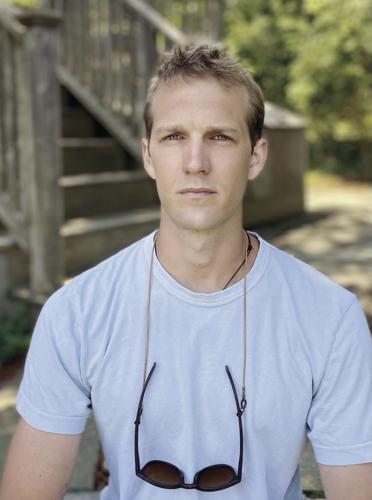
MOULTONBOROUGH — Will Addis is coming forward with his very personal story in the hope that he can help others.
Addis, 30, said that as a young camper he was sexually abused at Camp Tecumseh by Matthew J. Scavitto, 37, who was a counselor.
In a separate case in 2015, Scavitto was convicted for institutional sexual assault and corrupting the morals of a minor. This involved sexual abuse of a high school student at a boarding school in Chester County, Pennsylvania, between 2013 and 2015. That student was also a former camper and member of the Camp Tecumseh staff, the camp said in a letter to parents. Scavitto was sentenced to less than two years in prison.
Once it learned of Scavitto’s arrest and conviction, the camp notified parents, called authorities and made other changes. It encouraged anybody with concerns to come forward, and retained child safety experts.
It reached an out-of-court settlement with Addis, of Nantucket.
“I wouldn’t accept a settlement agreement that didn’t allow me to share what happened to me,” Addis said in an interview with The Laconia Daily Sun. “This was something that was a non-negotiable item.
“The purpose of saying my name and being public is that hopefully it gives a sense of comfort, righteousness and reallocation of thought to someone who may say, ‘I went through something like this.’”
He kept his story secret until recently out of a sense of embarrassment, shame and misplaced guilt. But the trauma would not go away. It affected decisions about schooling and career and finally left him considering suicide.
Addis sued Camp Tecumseh last fall. He alleged that Scavitto, of Chester County, Pennsylvania, sexually assaulted him from 2001 to 2003.
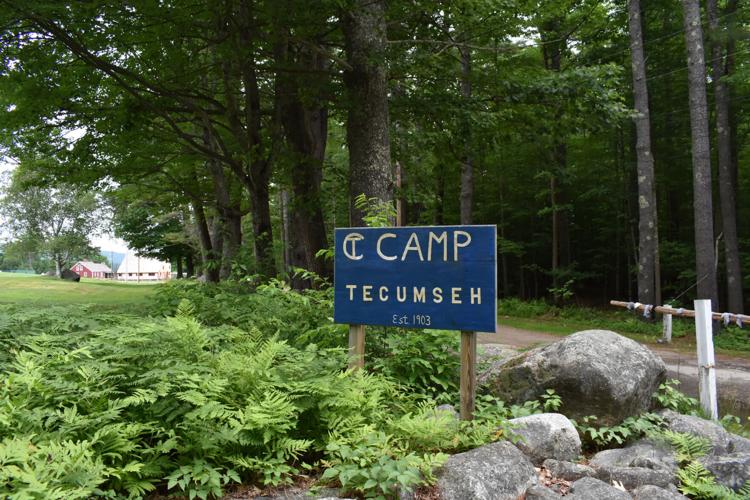
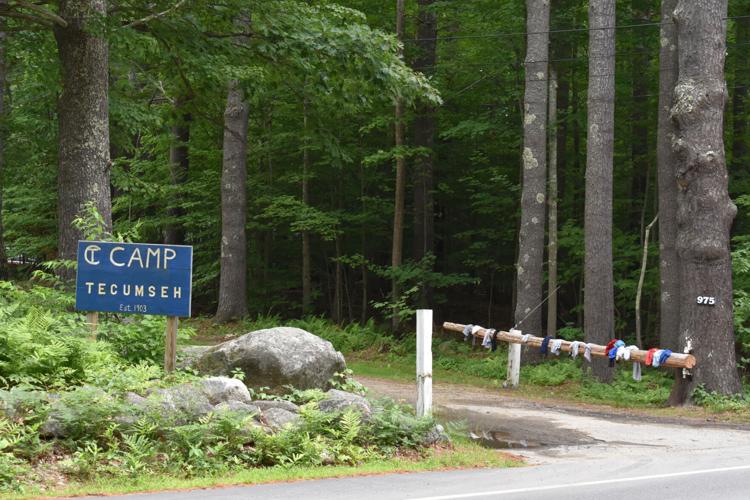
Addis said in the interview that the abuse took place in an environment of “toxic masculinity” at the 118-year-old camp on Lake Winnipesaukee.
“Placed in a patriarchal society, physical and emotional boundary violations between campers and counselors normalize,” he said. “Traditional traits of men as socially dominant are considered ‘toxic’ due in part to their promotion of violence, including sexual assault.”
Addis said he witnessed and was subjected to hazing, including the “typewriter,” in which a senior camper or counselor straddles a camper's pelvic region and forcefully finger-jabs their abdominal region, pretending to write a letter home to their parents. A second senior camper or counselor holds the camper’s arms down.
“Hazing practices would come in all different shapes and sizes,” Addis said. “You may be forced to bend over with a bare-naked butt and be hit with the bristle end of a broom stick, known as Camper Baseball. You may publicly receive a ‘typewriter’ or have your nipples twisted.”
Addis said Scavitto afforded him some protection from this hazing, gave him special food and other privileges in what he now understands groomed him for sexual abuse, which he said often occurred late at night in the dark cabin. Addis said his bed was next to Scavitto’s bed.
Physical games at the camp included “Buck-Buck” in which campers are in a line, kneeling and grasping the midsection of the person in front of them. Others jump onto the line with a goal of forming a pile of bodies. A photo on the camp’s alumni website, shows such a group, with an adult male straddling the back of one of the campers.
Addis said such games and the hazing may have served to normalize inappropriate behavior in the minds of some at the camp.
“When you’re on top of somebody in Buck-Buck, it might not look that much different from spooning someone in bed,” he said.
“Camp Tecumseh’s culture and traditions create a Petri dish of hyper-masculine displays of dominance and physical boundary violations, resulting in a safe haven for predators like Scavitto to thrive.”
There was also nude swimming, a bathroom without a privacy door and open showers, Addis said.
Addis said he ended up choosing to go to a boarding school, leaving another school because some fellow campers attended and he feared they knew of Scavitto’s actions.
“The attention Scavitto showed to me, especially sleeping with me, was public and spoken about amongst the camp,” Addis said.
He said that at one point another counselor saw the two in bed — a boundary violation — and notified the camp.
Addis said that if a “boundary violation report” had been filed at that point, it would have prevented further abuse.
Addis graduated college with a four-year degree and worked in finance for several years in the Boston area, but his trauma always remained in the background. He moved to Nantucket, but he still felt the pain of what had occurred in his childhood.
“I finally hit rock bottom for me and had suicidal ideation,” he said. “I was planning suicide and coupled with that was anger with myself and wanting to be rid of this pain because it has always been there, eating, nagging at me,” he said. “I realized I couldn’t get rid of it and my body decided to speak up.”
He told his girlfriend of five years, and she was supportive. Then he told his parents, and his mother said she had been suspicious that something had happened at camp.
Addis contacted attorney Roderick MacLeish, who feared Addis might harm himself and suggested he go to an emergency room. Addis followed this advice.
Addis went into therapy and was diagnosed with post-traumatic stress disorder for the what he encountered at the camp when he was 10, 11 and 12.
He said the trauma led to flashbacks, nightmares, fears and a desire to want to take control.
“There were major depressive disorders, deep sadness, problems with self-worth, self-confidence, general anxiety and fear,” he said. “I just didn’t want people to know this. Fear put me on the run, abandoning people and making it real challenging for me.”
His attorney filed a legal complaint on Nov. 2, against the camp in Grafton County Superior Court, just before the statute of limitations would have run out. The out-of-court settlement came a few months later.
Scavitto did not answer a call seeking comment. He has not been charged in connection with Addis’s accusations.
Cornelius Merlini, head of the camp’s board of trustees, said the camp has approached Addis’s allegations in a positive manner.
“When Will came forward in the fall of 2020, it was in the context of a civil suit,” he said. “Notwithstanding that, we approached his disclosure from a perspective of belief, focusing on how we could support Will in a manner consistent with our core values.
“While the details of settlement discussions are confidential, we approached resolution of this matter with the commitment to share information candidly with Will, to listen openly to Will’s experience and perspective, and to resolve the matter on Will’s timeline.”
He said this has been a painful period in the camp’s long history.
“It is critical to bring these issues into the daylight and to discuss them with candor. We will always listen, learn, and grow to ensure Camp Tecumseh fulfills our commitment to ensuring the highest standards of safety and welfare for our campers, past, present, and future,” he said.
Merlini also said many campers, including himself, benefited greatly from the camp.
“I came to Tecumseh as a camper in 1980,” he said. “I was the 14th of 15 children in my family and would not have had this opportunity without the full scholarship provided by the camp.
“As a camper, I learned critically formative lessons about integrity, character and sportsmanship and formed lifelong friendships. Tecumseh taught me how to balance healthy competition with character, grace, and respect. I have stayed involved with the camp for 40 years — as a counselor, a parent, an alumni, and board member — because I have witnessed time and time again how the culture and environment at camp has uplifted our campers and helped them to develop and grow to be better boys and, ultimately, good men.”
The camp’s motto is “Make Good Boys Better.”
In 2015, after the Pennsylvania charges and conviction came out, the camp cut ties with Scavitto, notified police and child protective services and conducted an internal review with the help of child protection experts.
“Our top priority is to protect and support our children. We should encourage campers to talk about their feelings and camp experiences and offer sensitivity and respect for the privacy of the victim and his family,” the camp said in a letter to parents at the time.
The camp said it stopped sanctioning nude swimming in the early 1990s. In the early 2000s it built a dividing wall in the bathroom. The bathroom and showers have been renovated to enclose toilets and install curtains around each shower.
In a statement, the camp said what once might have been “considered adolescent humor or physical pranks of innocent intent have no place at camp.”
“While bullying and hazing have never been permitted or tolerated, we have recognized that even well-intended or seemingly innocent jokes and pranks were no longer appropriate or supportive of camp’s values and mission,” the camp said.
“These changes were part of our concerted effort to create an environment where minors feel safe and are protected by clear boundaries, guidelines, and expectations and multiple levels of oversight.”
The camp also now has a director of camper safety and wellness to oversee the protection of minors.
The camp said it is “committed to an environment where minors and adults feel empowered to report incidents and have a clear understanding of what to look for and how to prevent and stop abuse.
“Nothing that we do now can undo the harm caused to our former campers, both those who were directly impacted, as well as the many other campers, counselors, and senior leaders whose sense of safety and security were shaken by these events. We are deeply sorry to the former campers who were abused by Scavitto, and so very grateful for their courage in speaking up and standing strong.”


(0) comments
Welcome to the discussion.
Log In
Keep it Clean. Please avoid obscene, vulgar, lewd, racist or sexually-oriented language.
PLEASE TURN OFF YOUR CAPS LOCK.
Don't Threaten. Threats of harming another person will not be tolerated.
Be Truthful. Don't knowingly lie about anyone or anything.
Be Nice. No racism, sexism or any sort of -ism that is degrading to another person.
Be Proactive. Use the 'Report' link on each comment to let us know of abusive posts.
Share with Us. We'd love to hear eyewitness accounts, the history behind an article.