


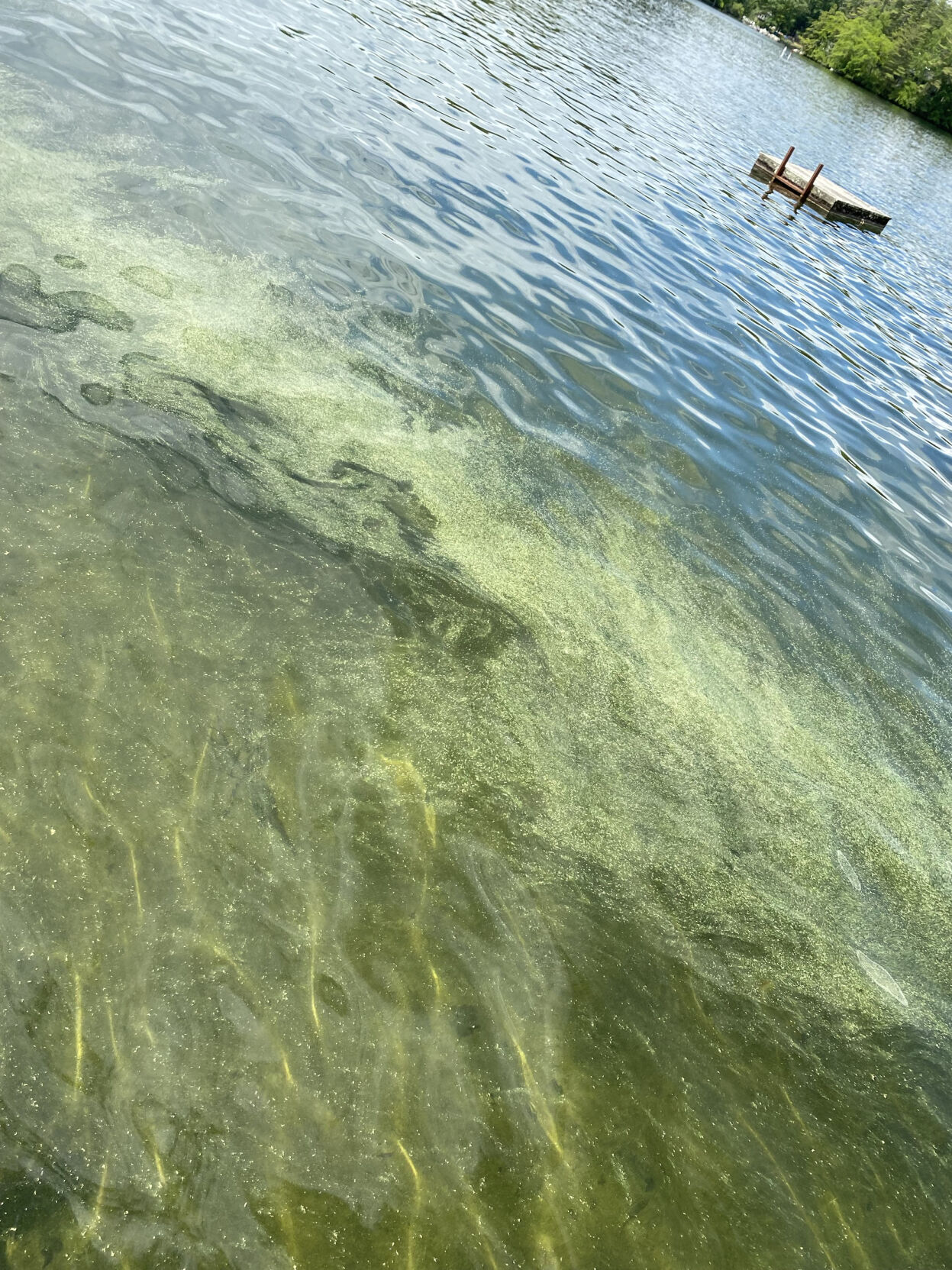
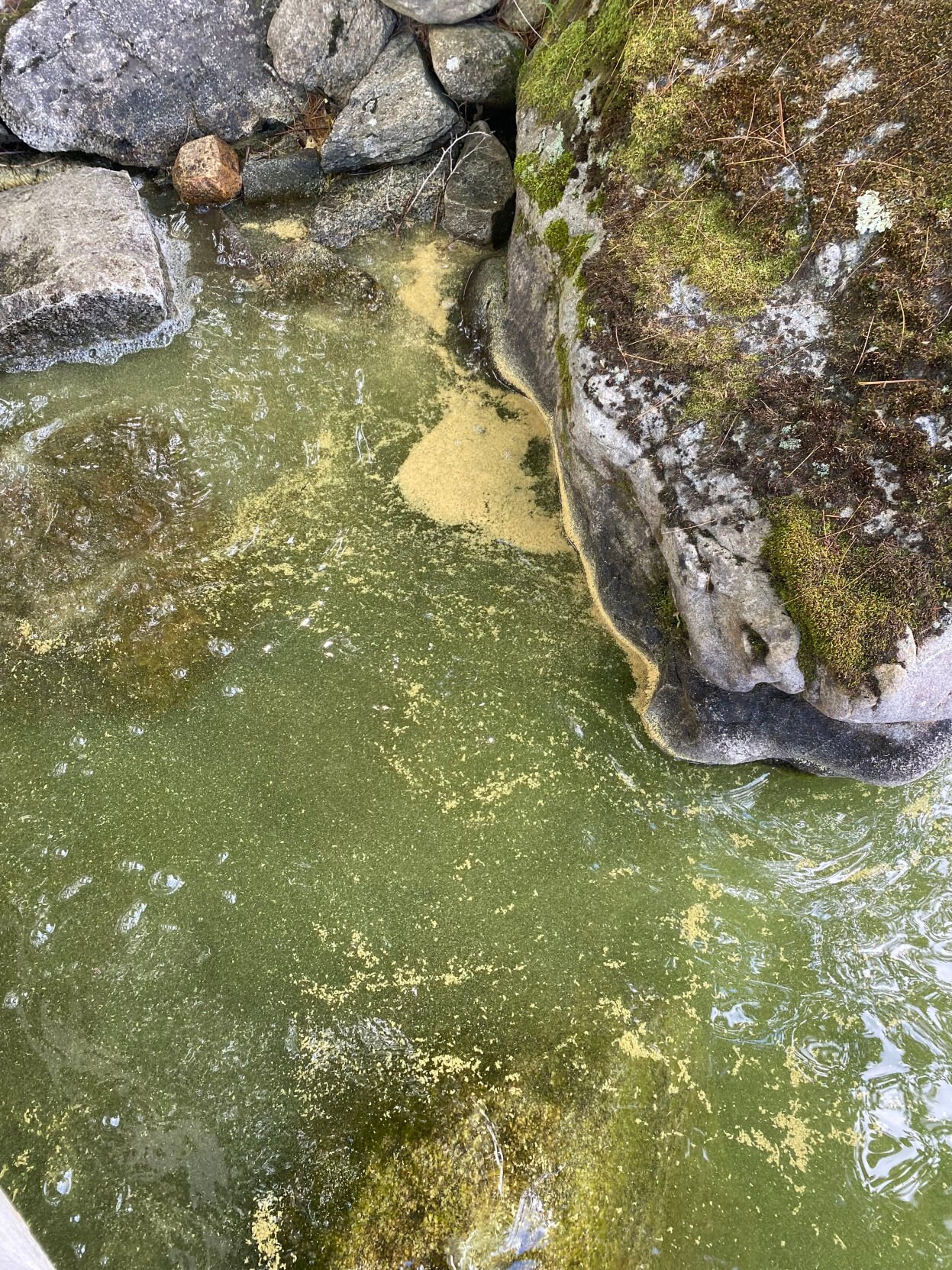
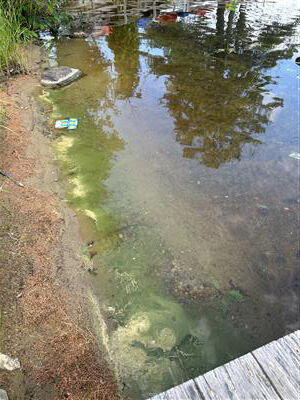
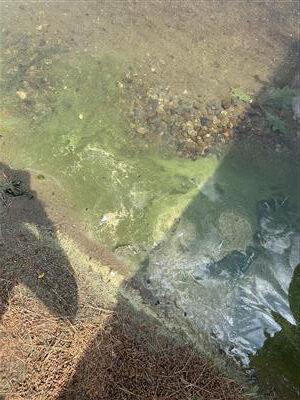
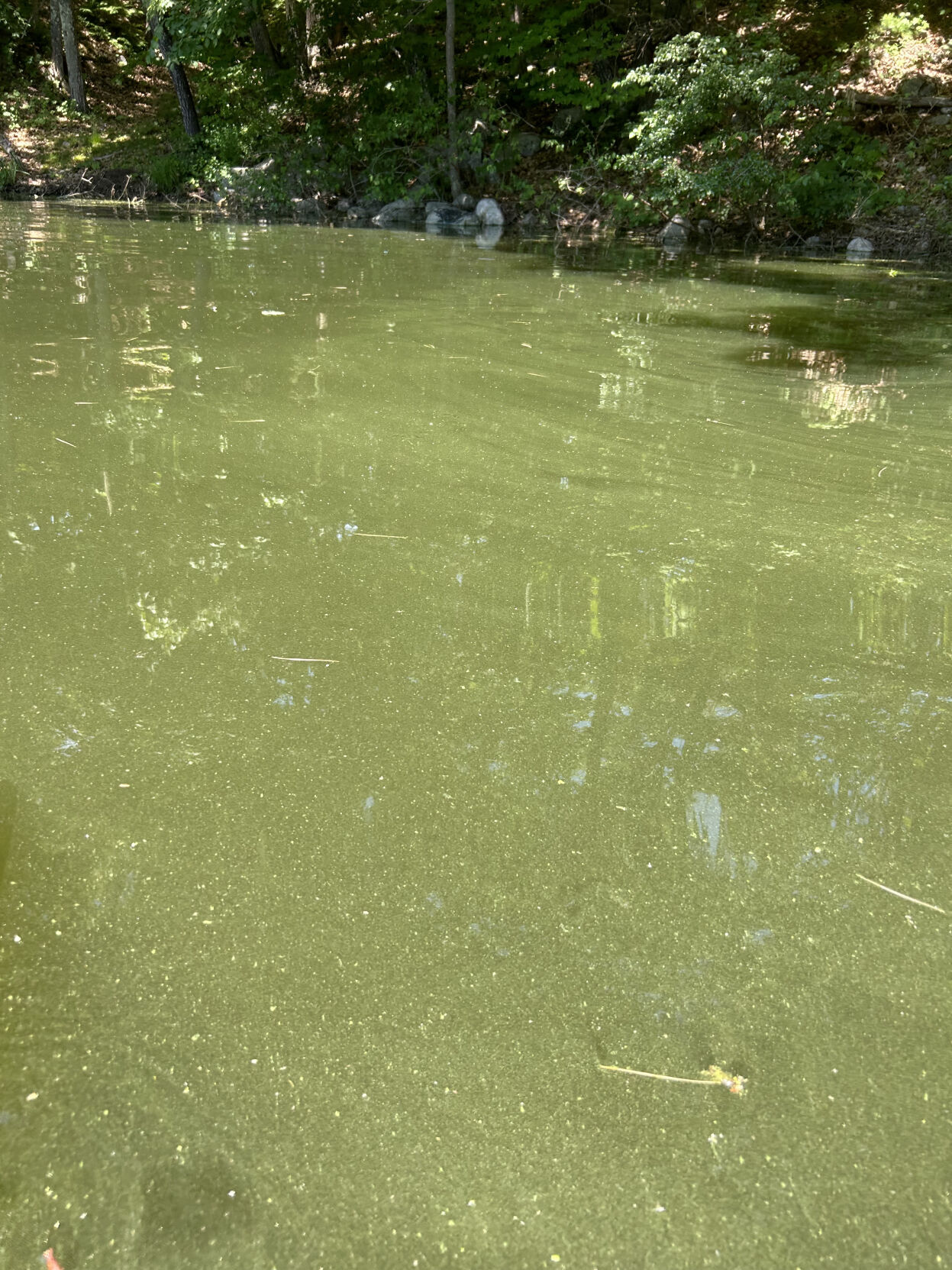
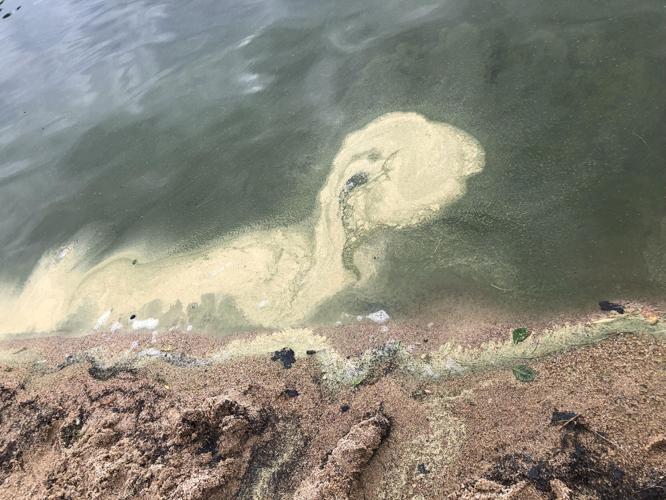
LACONIA — The New Hampshire Department of Environmental Services has issued new warnings and alerts for blue-green algae blooms on Lake Winnipesaukee. Local conservationists say they’re receiving reports of the same from communities around the lake.
Earlier in June, DES issued alerts on lakes Winnisquam and Winnipesaukee in Belmont, Meredith, Laconia, Sanbornton and Tilton. The department issued warnings on Lake Winnipesaukee at 19 Mile Bay Beach in Tuftonboro and for Carry and Brewster beaches in Wolfeboro on June 12. Another warning was issued for Mill Pond in Alton on Sunday and one at Meredith Town Docks on Monday.
NHDES issues a warning if water samples collected indicate a count of cyanobacteria, commonly referred to as blue-green algae, above 70,000 cells/mL. Areas where samples contain a count lower than 70,000 cells/mL are issued alerts.
The number of advisories is expected to rise in coming days, in an event Bree Rossiter, Lake Winnipesaukee Association conservation program manager, called unprecedented.
DES staff were out Wednesday taking water quality samples after receiving numerous reports regarding suspected sightings of blue-green algae on Lakes Region water bodies.
Once scientists have reviewed cell counts of water samples taken from the lakes, new advisories are expected to be updated at des.nh.gov/water/healthy-swimming/healthy-swimming-mapper.
Conservationists with the Lake Winnipesaukee Association have received reports and evidence of algal blooms from every section of the lake in recent days, Rossiter said Wednesday morning. There weren’t any specific areas of the lake which received a notably higher volume of reports regarding suspected cyanobacteria blooms.
Environmental conditions have combined to produce a higher level of cyanobacteria in the lake just one day before the summer solstice, which is Thursday, June 20 this year.
The Lakes Region, along with much of New England, is experiencing an intense heatwave, which Rossiter said likely contributed to the formation of algal blooms, along with other causes. Those include high water temperatures, increased sunlight penetration deep into the water and an increase in nutrient runoff which feeds bacteria growth.
Current surface water temperatures on Lake Winnipesaukee were around 69 degrees, up 6 degrees since the start of the week, according to DES data. That’s 10 degrees higher than water temperatures recorded one month ago.
The abbreviated ice-in on the lake this year likely also contributed to increased algal growth, Rossiter noted. With prolonged periods of ice-in, the lake lays dormant and sunlight is not able to penetrate the waters as deeply or easily.
“Extremely,” Rossiter said when asked if this level of activity is unusual in June. “This is unprecedented.”
Nutrients, especially phosphorus, introduced into lakes in high quantities partly by rainwater runoff from lawns and roads and clear-cut forested areas contribute to the problem. Areas with higher levels of development around the lake also correlated to areas with higher levels of phosphorus in water samples, according to a recent study of water quality in Paugus Bay conducted by the Lake Winnipesaukee Association and their partners. To see the results of the study, view this article on laconiadailysun.com.
But blue-green algae blooms may not be immediately obvious to observers. Pollen on top of the lake's water may mask the presence of algae, which sometimes also looks like pollen around the edge of a lake near the shore. Algae isn’t necessarily hidden underneath the pollen, either, but is more often mixed together to form an offensive substance.
Increased algal formation and a summer heat wave make for a precarious combination. LWA staff advise residents who intend to recreate on the lakes perform a self-risk assessment. View the water and if it looks odd, be cautious and consider staying on the shore, Rossiter said.
“The heat wave affects [cyanobacteria growth] 100%,” Rossiter said. “No doubt.”
At particular risk for adverse health effects are children and animals, who may be more likely to accidentally ingest contaminated water. Cyanobacteria can cause sickness, skin irritation and in rare cases has proven fatal.
If someone believes they or their pet has encountered blue-green algae in the lake, they should rinse off with fresh water as soon as possible, Rossiter said.
This week, members of the LWA and representatives of DES are coordinating to conduct water quality testing around Lake Winnipesaukee. Individuals who believe they have spotted an algal bloom are asked to fill out a report at des.nh.gov/water/healthy-swimming/harmful-algal-blooms. DES is coordinating sample collection from areas reported to contain blooms by citizens. Rossiter asked those who report a potential bloom to DES also contact LWA at 603-581-6632 or mail@winnipesaukee.org so they may update their records.


(0) comments
Welcome to the discussion.
Log In
Keep it Clean. Please avoid obscene, vulgar, lewd, racist or sexually-oriented language.
PLEASE TURN OFF YOUR CAPS LOCK.
Don't Threaten. Threats of harming another person will not be tolerated.
Be Truthful. Don't knowingly lie about anyone or anything.
Be Nice. No racism, sexism or any sort of -ism that is degrading to another person.
Be Proactive. Use the 'Report' link on each comment to let us know of abusive posts.
Share with Us. We'd love to hear eyewitness accounts, the history behind an article.