


LACONIA — The decision about which of the five reported buyers the state will negotiate with for the sale of the former Laconia State School property is clearly in the governor’s hands. City leaders, once bitten and twice shy, are hoping to apply as much influence as they can, and have scored a win on that front by getting the city manager a literal seat at the table where that decision will be made.
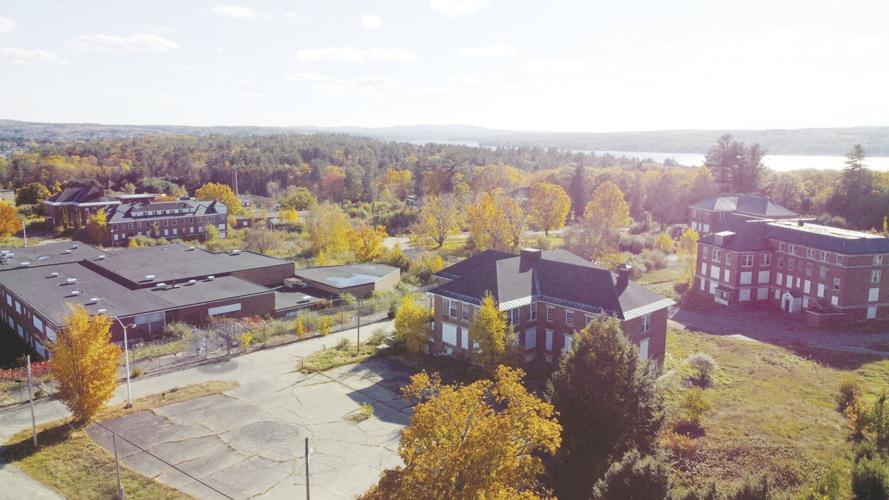
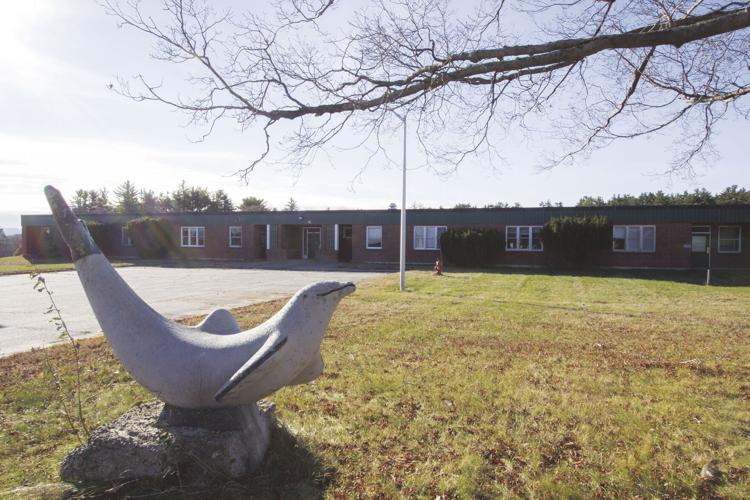
The nearly 220-acre property, which for decades was home to a residential facility for people with intellectual and developmental disabilities, is seen by city leaders as a possible launchpad for the region’s economic development. But the experience of the last time the state sought to close the sale has those leaders hoping to exert as much control as they can over the next steps.
Those steps will be quick, too. As reported earlier this week, the state has received five offers from developers interested in the property. The next move will be the creation of an advisory committee which will meet, out of public view, to evaluate the proposals and recommend one to Gov. Chris Sununu for the state to begin negotiating a purchase-and-sale agreement.
The date of that meeting hasn’t yet been set, though it’s likely to occur sometime within the next few weeks. Nor has the composition of that subcommittee been finalized, but Charlie Arlinghaus, commissioner of the state’s Department of Administrative Services which is managing the sale, confirmed Thursday that Kirk Beattie, Laconia’s city manager, will be on the committee.
Beattie’s inclusion was a win for Laconia Mayor Andrew Hosmer, who wrote a letter to Arlinghaus asking for the city to have a voice in the selection process.
The city has good reason for worry. The property was supposed to be sold last year to developer Robynne Alexander, who offered $21.5 million — much more than any other offer — and planned to build a resort hotel, commercial and restaurant space, and more than 1,000 housing units.
Alexander’s plan far exceeded her development resume, which was the first of many red flags that flew up over the ensuing months. She had been sued by previous business partners, was behind on taxes on other developments, and perhaps most troubling, became a subject of an investigation by the state’s Bureau of Securities Regulation. In the end, she also was unable to follow through with her offer and, after granting her delays that went from September 2023 to April, the state finally declared the deal dead and put the property back on the market.
That blow still stings for Laconia. If developed, it would have added a healthy boost in taxable property, and perhaps more importantly, would have provided some much-needed housing stock. The previous failure hurts for the state, too, in the form of a $21.5 million hole in the budget.
It seems there were lessons learned, which has officials talking about the next deal with a note of cautious optimism, perhaps with an emphasis on the cautious.
“I guess the proof is always in the performance,” Hosmer said, answering if he thinks this round will prove more fruitful. “It never should have been about the highest offer, though I can understand that that was important to the state. What’s important to the city, from my perspective, is what the development looks like. Does it provide for needed investments and priorities for the city,” such as high-quality and affordable housing? “Does the developer have the ability to fulfill their promises? The previous winning bidder clearly didn’t have that ability.”
Hosmer said he also wants the winning plan to include a demolition of the dilapidated structures and remediation of environmental hazards on the site, and a phased development that will allow the city to grow its services to meet the rising demand.
‘“I want to be sure the developer is a good partner to the city, not just now but in years to come,” Hosmer said, adding that he appreciated Arlinghaus making a space for Beattie on the advisory committee.
“I greatly appreciate it and I have utmost confidence in the city manager being able to voice the priorities of the city,” Hosmer said.
Confidence will be required, because state law prohibits information about the various bidders from being released to the public or even city leaders. To prevent lobbying or interference from competing buyers, no details about the process will be made public until the governor makes his choice.
Beattie said he has been told he will be able to listen and speak at the meeting, but doesn’t know if he’ll have a vote. “I’ve been asked to sit at the table and have a voice in the conversation,” he said. Beattie knows how he’ll use his voice, he said. He said he wants to pick a developer who will move quickly: “We don't want it to sit dormant for years.” He said he wants to see a healthy residential component — “we need mixed affordability of housing,” he wants to be sure that Ahern State Park isn’t diminished, nor the city’s ability to park cars for Robbie Mills Field, and he would like to see aspects that could result in employment.
“If there’s opportunity for job creation, I think that would be good as well,” Beattie said.
Some of the developers who submitted bids have already been in contact with the city, Beattie said, and he reported he likes what he’s heard. The developers seem to be opening with a collaborative stance, and their intentions largely align with the city’s hopes.
“I think that I can speak for myself and my team at the city, we see some good things potentially happening there, and we’re staying cautiously optimistic,” Beattie said.
One person who join Beattie at the advisory table is Joe Kenney, the executive councilor whose district includes Laconia.
Kenney, who said he’s seeing the situation perhaps more optimistically than others, feels there is still value to be harvested from the fizzled deal with Alexander. There were myriad headaches to be worked out, as a result of the state owning the land for so long, such as road ownership, snowmobile easements and lease deals for emergency dispatch facilities that operate there.
“To me, that was a really good learning experience, it’s making this process easier and quicker, we’ve gotten through those ordeals and issues,” Kenney said.
As part of the advisory committee, Kenney said he would look for a developer who would work well with the city, plan a mixed-use development and include an “interpretive museum that captures the history of the site.”
Kenney said he expects at least four of the five offers will be coming from “credible” developers, “as I know from some basic information,” and the state could have them bound to some sort of contract soon.
“By the second meeting in August of the governor and council, hopefully there will be one that will be selected and put on the table for council to review and decide,” Kenney said. “The process is going to move fairly quickly."
In the eyes of Karmen Gifford, president of the Lakes Region Chamber of Commerce, activity at the State School will be a welcome sight.
“I’m really happy to see it moving in a forward direction,” Gifford said. “I don’t want to see it sit like it did last time. I think it’s important that that property have a purpose.”
The governor and Executive Council are scheduled to meet on Wednesday, Aug. 7, at the Derry Opera House, and Friday, Aug. 30, in Wakefield, then not again until Wednesday, Sept. 25. The meetings, which are open to the public, begin at 10 a.m. A location for the September meeting has not yet been determined.


(0) comments
Welcome to the discussion.
Log In
Keep it Clean. Please avoid obscene, vulgar, lewd, racist or sexually-oriented language.
PLEASE TURN OFF YOUR CAPS LOCK.
Don't Threaten. Threats of harming another person will not be tolerated.
Be Truthful. Don't knowingly lie about anyone or anything.
Be Nice. No racism, sexism or any sort of -ism that is degrading to another person.
Be Proactive. Use the 'Report' link on each comment to let us know of abusive posts.
Share with Us. We'd love to hear eyewitness accounts, the history behind an article.