


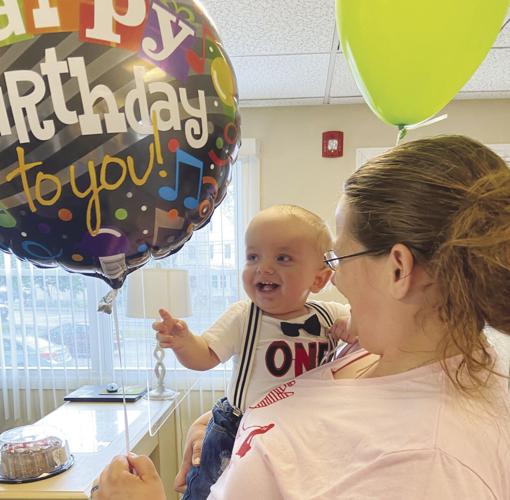
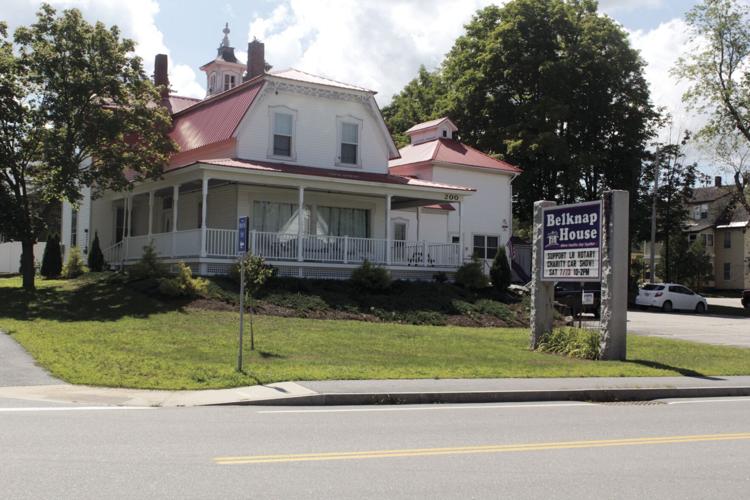

LACONIA — There’s a book nook where community volunteers read to little ones, and a playroom with computers and toys. In the living room, a 5-year-old races Matchbox cars on a coffee table while his big sister curls up with a novel. Outside, children ride bikes in the driveway. Others play at a water table, or on the swing set and slide. There are birthday parties for guests and crafts for parents and children to do together.
The residents of Belknap House have a common bond that is not instantly apparent: they are families experiencing homelessness — together.
And they are grateful for this unusual oasis, which serves as a haven and a training ground for what happens next: finding and keeping a place to live.
“It’s our helping hand up, providing safe shelter when people are most vulnerable, but also empowering them to be self-sufficient so they can move forward,” through a network of resources, referrals, guidance and education from 40 community partners, said executive director Paula Ferenc. “Being homeless, you’ve got to figure out a lot of stuff.”
Since its doors opened five years ago, Belknap House has sheltered 86 families, 1,628 people, and provided 11,065 bed-nights for homeless children. Since 2020, when the temporary emergency cold weather shelter for families transitioned to operating year-round, 45 families have found their bearings here, including 75 children and 70 parents. It’s a place that functions as home when home is lost — and it resets lives.
It's a mission that remains timeless, universal and growing nationwide and in New Hampshire. And COVID-19 complicated the landscape. According to the 2021 annual report on the homelessness in New Hampshire released in May by the New Hampshire Coalition to End Homelessness, there was an 11% increase in homelessness statewide from 2020 to 2021, and the number of unsheltered people and chronic homeless more than doubled. This was most likely due to fears of being in a group shelter during the pandemic, said NHCEH director Stephanie Savard.
A bright light was the decline in numbers of families experiencing homelessness. Statewide, family homelessness dropped by 17% during the same time period. This speaks to the effectiveness of the Emergency Rental Assistance Program during COVID, said Savard, which prevented tenants from being evicted and underscored the value of preventing homelessness through housing supports. Once someone is homeless, it’s much more costly and a more time-consuming process to rehouse them, according to housing and homelessness experts.
With living costs rising during inflation, the question is what will happen now — especially since ERAP supports and housing remains scarce and out of reach especially for many lower-income families. Refuges like Belknap House, which focus on moving people into secure housing and instilling the skills they need to keep it, become extremely relevant and valuable.
“I think Belknap House should become a model because homelessness is not going away,” said Forenc. “Why not have things set up a different way?”
The residents who have used it say that Belknap House defies stereotypes of what shelters are like. There is no community room lined with beds. Here, families have their own space, and cooperate to take care of communal areas, such as kitchen, living, and computer rooms. On-site classes teach them about budgeting, living within one’s means, and how to coexist amicably and fairly with other people in the same building. They have classes in parenting, how to be a trustworthy tenant, and how to find a permanent rental in a sea of high costs.
They’re connected to supports such as food stamps and Head Start programs for their children. They are referred to training and services from Lakes Region Community Services, the Family Resource Center and Lakes Region Mental Health Center. They learn how to fill out housing applications and how to apply for jobs that use their talents, interests and skills sets — including jobs within walking distance when they don’t have a car. They receive case management and individualized needs assessments and plans for family members. Another thing families say they relish: Belknap House enables them to stay together, rather than splitting up to find a place to sleep and eat.
From the end of March to the middle of June, five families at Belknap House have found permanent rental housing in Concord, Ferenc said, when nothing was available within their price range in the Lakes Region. Local charities and organizations provided them with furniture, beds and kitchenwares.
“Every time spent living in a community, in communal areas, because of the way we’re sheltered, you see more growth in families,” said Ferenc. “People become more supportive of each other and more understanding of differences. We set a certain standard and we will take people who are willing to do the work when they’re here. Here they can take a deep breath. It gives them space to do what they need to do.”
Families are provided with food, clothing and a care package that includes resources. The house is staffed 24/7 for issues and questions that come up. “The kids come in and there’s already a comfort zone,” Ferenc said.
For the families who use it, it’s a way-station between loss and upheaval, and securing a place again in society.
“Worry, worry, worry. That’s what I did. It’s very scary not knowing where you’re going to be from one day to the next,” said Angel, who arrived on June 21, with her husband and five children after they lost their apartment on Blueberry Lane. “We can relate to each other and the struggles we’ve been through. By talking to someone who can understand, they might have a different idea of how to get through it. You’re not being judged because you’re here.”
“Everyone comes with their own situation. Whether they’re sleeping on someone’s couch, in a car, or camping, much of that is isolated. It’s helpful to be around people with a similar situation, with different stories,” said house assistant Kevin Person.
During COVID, Amanda Royal stayed with her husband and children at Belknap House for over a year, after living at her mother’s house in Bristol for 21 days, not knowing where they could go after being asked to leave the Salvation Army’s Carey House shelter. “For us, it was a lot of unknowns,” she said. “We were terrified about losing our children because we didn’t have a steady place to live. Our kids understood, but they didn’t really understand.” Their children were happy to move to a campground at first, she said, because it was an adventure that felt like a vacation. "Then we had to pretend we were happy.”
The added value is stability for children during uncertain times when they’re likely to absorb their parents’ stress.
“Research indicates that the experience of homelessness and housing insecurity can have a profound, even multi-generational, traumatic impact. Clearly, this includes kiddos,” said Susan Stearns, executive director of NAMI NH, the state’s chapter of the National Alliance on Mental Illness. “For young children, their security comes from their caregivers. When their caregivers are struggling with issues like housing insecurity, that stress can, understandably, impact their ability to care and be fully present with their children.”
“Homelessness and housing insecurity negatively impacts children — not only because they may not have stable housing to live in, but because those stressors affect their caregivers’ mental health, Stearns said. “Supporting families helps kiddos.”
“After COVID, when everyone was staying at home, kids get to have friends and play on the playground. You don’t get that if you don’t have a lot of kids living on your street,” Person said. “The birthday parties make people feel special.”
Person’s role at Belknap House is to make sure everyone knows how to do their chores, including sweeping, vacuuming, and cleaning bathrooms. But while helping families there, he also witnesses babies take their first steps and younger children learn to ride bicycles — while their parents reach their own milestones. The personal growth in those who embrace the program is significant, he said.
“I watch people grow and become good tenants. I see people grow and be willing to grow, and get good things, like their kids back, or a car, or an apartment,” Person said.


(0) comments
Welcome to the discussion.
Log In
Keep it Clean. Please avoid obscene, vulgar, lewd, racist or sexually-oriented language.
PLEASE TURN OFF YOUR CAPS LOCK.
Don't Threaten. Threats of harming another person will not be tolerated.
Be Truthful. Don't knowingly lie about anyone or anything.
Be Nice. No racism, sexism or any sort of -ism that is degrading to another person.
Be Proactive. Use the 'Report' link on each comment to let us know of abusive posts.
Share with Us. We'd love to hear eyewitness accounts, the history behind an article.