



Editor's note: This is the third in a three-part series following the process of participating in a Powerhouse Theatre Collaborative show through the lens of “Captains Courageous,” which will be a New Hampshire premiere when staged Oct. 20-22.
LACONIA — Before artificial intelligence threatened creators, and before self-driving cars threatened motorists, there was the threat diesel engines presented to anglers who made their living through sail-powered ships. That’s one of the themes explored in the story told in “Captains Courageous,” a musical play based on a Rudyard Kipling book, first published in 1897. Technological innovation comes at a cost, and sometimes what’s lost can be a sense of tradition, and even of identity, for those connected to the old ways.
Despite Kipling's fame, and a successful Hollywood movie version in 1937, the story remains obscure today, to the extent the production of “Captains” staged this weekend by Powerhouse Theatre Collaborative at the Colonial Theatre will be the New Hampshire debut of the tale.
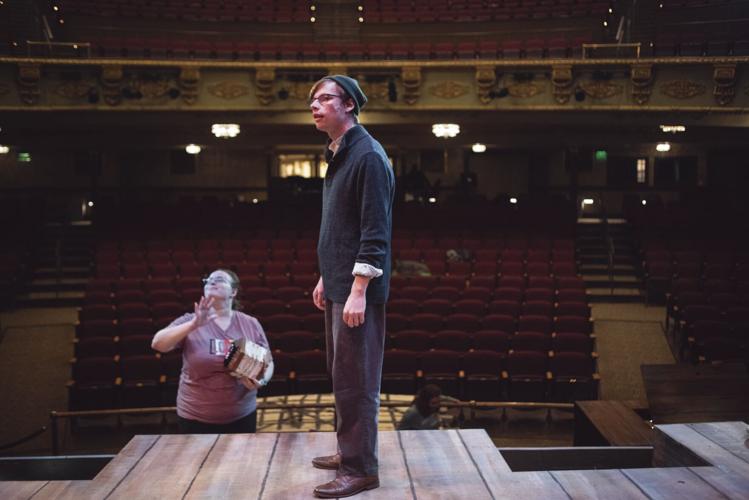
This week has been a critical period for the crew behind the show. The process started in June, with auditions to fill the 19 roles. Since then, actors have been getting to know their lines, their characters and the music. Meanwhile, efforts in set design and construction, lighting and sound and costumes have also been pursued. The final days before opening, referred to as “tech week,” are when all the technical threads are woven together into one cohesive production. At least, that’s the hope.
It takes hope and ambition to put on any sort of theater, but this show in particular requires an extra dose of each. For starters, it’s an unusual casting challenge, as producers Bryan and Johanna Halperin, founders of the community theater company, had to find 19 male actors who could sing as well as act. Then they had to figure out how to design a stage, sets and costumes for a play so rare that there aren’t any clips online from which to borrow inspiration.
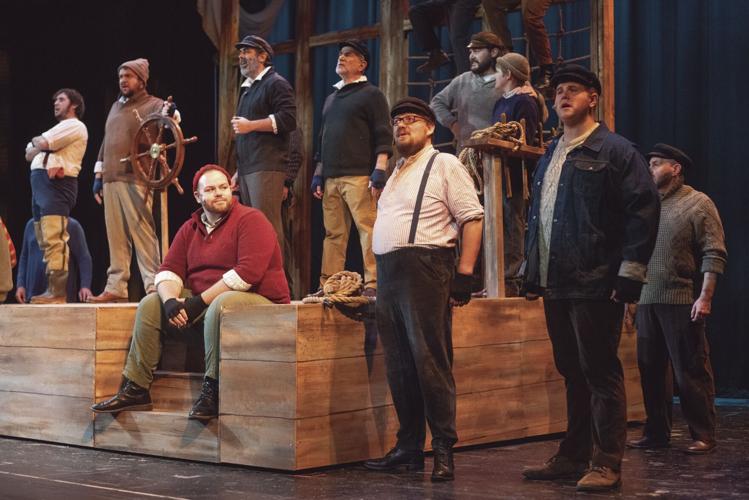
And it isn’t just any set. “Captains Courageous” doesn’t take place in a home, on a street or anywhere on terra firma. The story plays out on a 19th-century fishing schooner on the Atlantic Ocean.
To the extent that the actors onstage are successful in transporting the audience into the salty yonder, they’ll have to thank several sets of skilled, dedicated hands the audience will never see.
Constructing a ship onstage
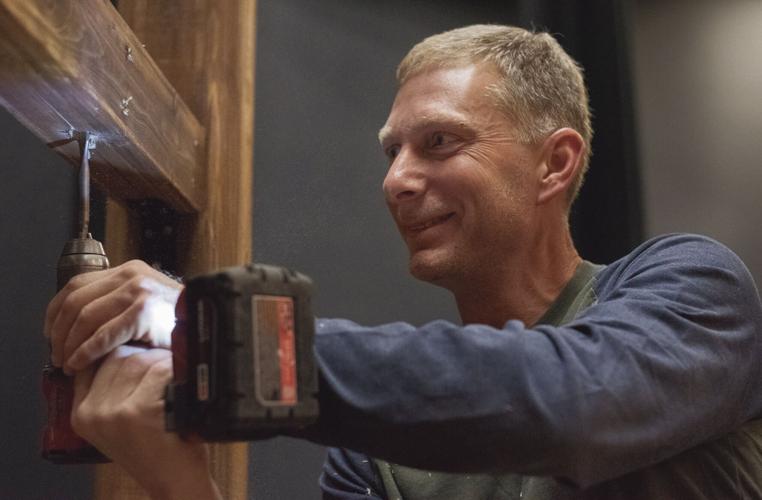
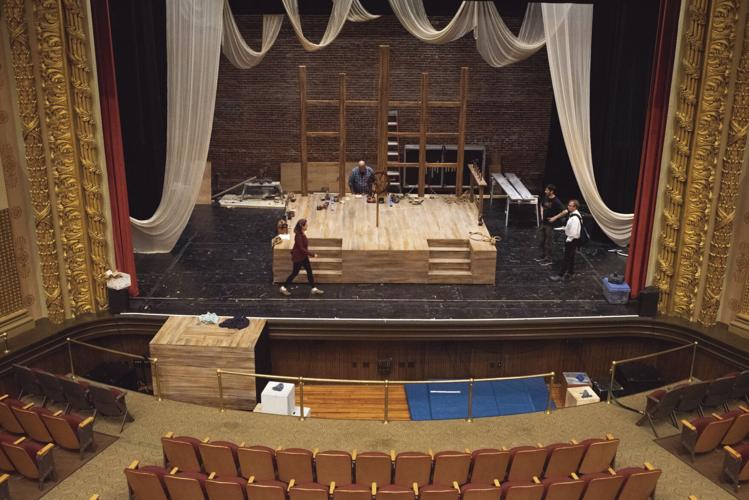
First up is the stage and set design. The focal point is a dynamic structure designed by Samantha Tutasi: the main deck of the sailing vessel. It has to be sturdy enough for the 19-member cast to climb all over it, it has to be able to move and rotate, to represent different locations for various scenes, and it needs the ability to be locked in place for each scene, without being affixed to the stage floor, so the surface will remain unblemished for the next production.
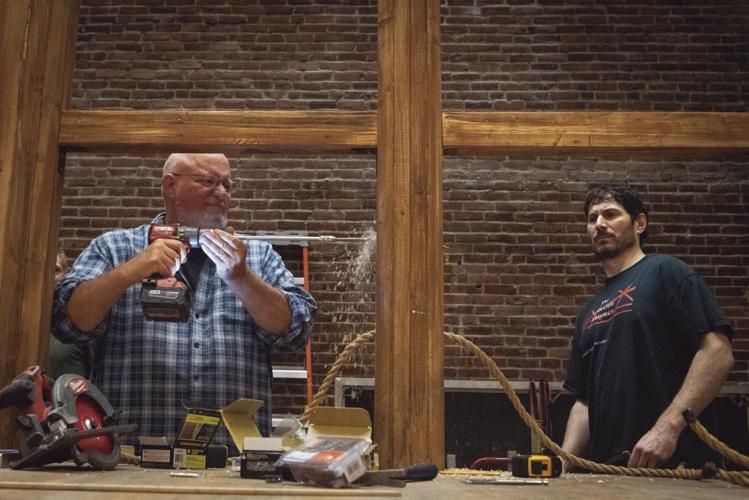
If designing it sounds like a challenge, even steeper was the hill before Jim Scadova, technical director and set builder, who had the task of turning Tutasi’s designs into three-dimensional form. And — because the Colonial Theatre’s stage is in high demand — he wasn’t able to begin building until Sunday morning, less than a week before the show’s debut.
“Each set has its own challenges,” Scadova said on Monday. “There’s nothing standard about a set.”
Scadova, a real estate investor, became involved in theatrical construction through his daughter, who volunteered him to help build a set for a fifth grade production when she was at Inter-Lakes Elementary in Meredith — she’s now a junior in high school. Scadova said he’s been involved in building “all my life,” from furniture to houses, and he said set building has become a way for him to apply his technical skills to an artistic pursuit.
“In the past six years, Bryan and Johanna have challenged me with sets, which I’ve enjoyed. It’s a lot of fun,” Scadova said.
Translating a set design into a real-life structure requires a lot of what Scadova called “behind-the-scenes engineering,” which considers not just what shape the structure should take, but what sort of action it will need to support.
“If you’re just standing on the stage, it’s a lot different than if you’re dancing, or if everyone’s crowded into one corner,” he said. For “Captains,” the actors do all of the above, plus leap from one level to the next, and climb the mast to tend to the rigging. He hinted at some other design elements which only ticket-buyers will find out about.
“There are some interesting features to this that are a lot of fun,” Scadova said.
He’s built many things in his life, but only in the past six years have his construction skills been used in storytelling.
“Probably the biggest thing I get out of it, it’s just a bunch of lumber and paint until the actors come onto it, and it comes to life,” Scadova said.
Dressing for a day out at sea
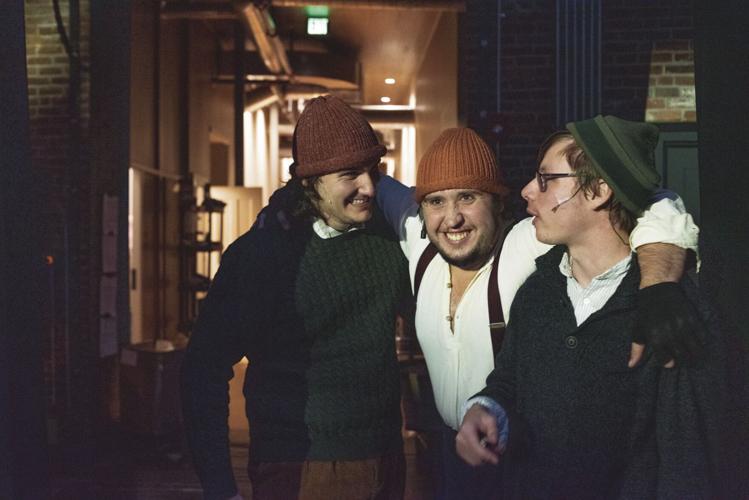
The costumes are Heather Vitale’s task. She said she started designing them by researching what anglers of the era wore. Sweaters and trousers was the answer, but it isn’t as simple as it sounds.
“There’s a whole rich history to that, which was cool to dive into,” Vitale said. Newer fishermen would have simpler sweaters, whereas the more experienced on the job were more likely to have sweaters with more complex weave patterns. Then she read the script, and decided to assign colors of clothing based on each character’s personality and affiliation among his peers.
When it came to pants, Vitale was fortunate in that a recent trend in “paper bag” style women’s pants meant there’s a ready supply in second-hand stores. The trousers appear to look the same as what fishermen would have worn a century ago. However, because the trend only returned for women, those thrift-store finds all needed alteration to fit the bodies of male actors.
Like Scadova, Vitale is involved in theater because of a child. Her daughter developed a taste for the stage. “And I said, if she’s doing theater, I’ve got to do something, and I’m really good at this.”
Vitale was a theater kid herself, but said she fell out of the art form because she felt she wasn’t progressing as quickly as others around her. Her mother had been a costumer, though, and passed her skill with the sewing machine to her.
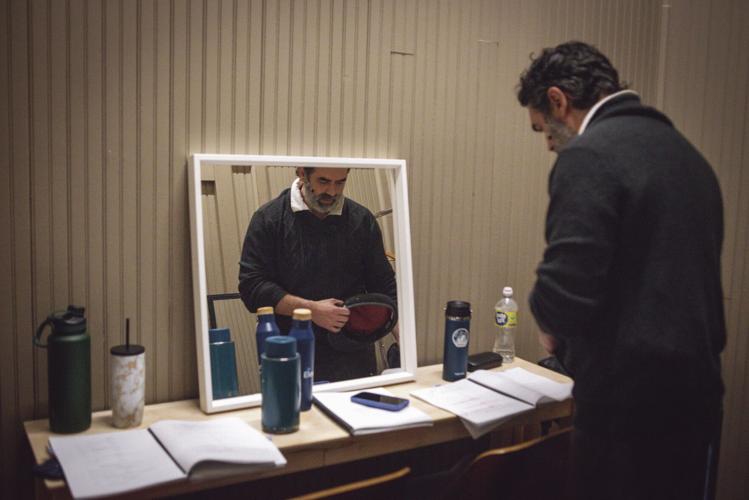
The payoff, she said, is when she first sees the actors wearing the costumes. That happened with this play when an actor she has worked with before donned the sweater and pants and hat and instantly became “a salty sea captain. ... That is the satisfaction, you are totally transforming somebody based on what you put them in.”
Taking the helm
While most tech crew members have roles with a limited scope, Katie Duncan, stage manager, has to consider how all the parts come together.
Duncan said she’s been involved in community theater for just about her entire adult life, and this is her 13th show with Powerhouse.
“My main role and purpose is to make sure that everything is safe, that all the actors are safe, and everything is moving the way it’s supposed to,” Duncan said.
She got her first taste of the dramatic life when she was in third grade and her music teacher at Beaver Meadow Elementary School in Concord, Clint Klose, put her in a show.
One thing Duncan treasures about community theater is that the same sense of discovery she felt as a third grader is present for at least someone in every production. She said for people who are interested in community theater but perhaps aren’t ready for an acting role, the tech crew is a great place to start.
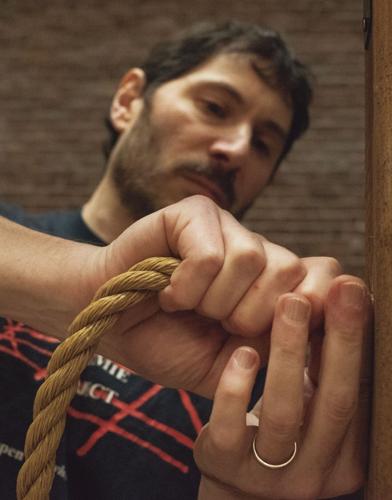
“Everyone is so excited and welcoming to new people of all levels of skill and experience, you are really met where you are,” Duncan said. “If you’ve never held a power tool before, there will be someone who will help you.”
And if even that sounds too intimidating, Duncan said an even easier way to take part is just to buy a ticket. “Captains Courageous” will take the stage on Friday and Saturday night, with a matinee on Sunday. For details about tickets and times, visit powerhousenh.org.
“This is not a musical that people know really well. Sometimes people are afraid of getting involved or coming to see a name that they don’t recognize, but it’s really important for our personal growth,” Duncan said. “I would love it for people to take a chance on this. It’s really great, and they’re working really hard.”




(0) comments
Welcome to the discussion.
Log In
Keep it Clean. Please avoid obscene, vulgar, lewd, racist or sexually-oriented language.
PLEASE TURN OFF YOUR CAPS LOCK.
Don't Threaten. Threats of harming another person will not be tolerated.
Be Truthful. Don't knowingly lie about anyone or anything.
Be Nice. No racism, sexism or any sort of -ism that is degrading to another person.
Be Proactive. Use the 'Report' link on each comment to let us know of abusive posts.
Share with Us. We'd love to hear eyewitness accounts, the history behind an article.