


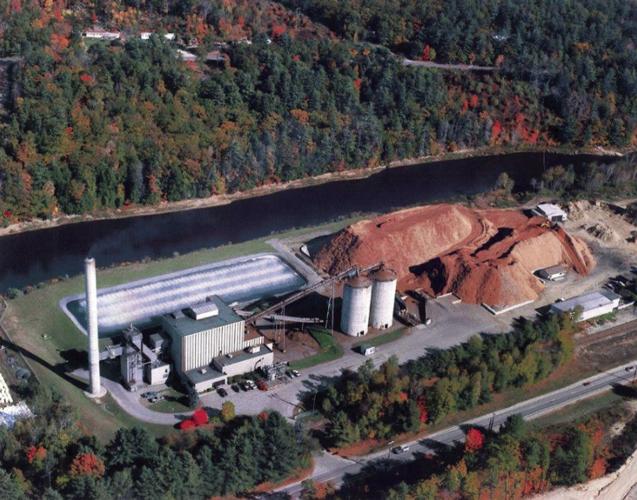
CONCORD — Sen. Jeb Bradley, R-Wolfeboro, said he is confident that a bipartisan amendment to House Bill 183 would satisfy the legal concerns that have prevented the implementation of last year’s law requiring utilities to purchase power generated by the state’s six wood-burning biomass plants and, in doing so, preserve more than 1,000 forestry-related jobs.
The New England Ratepayers Association has challenged the law, passed by an override vote after Gov. Chris Sununu vetoed Senate Bill 365, and Eversource has refused to purchase the power until conflicts between state and federal law are addressed.
The ratepayers’ group argued that only the Federal Energy Regulatory Commission has authority to set wholesale prices for electricity. The bill passed last year by the legislature required utilities to purchase the power generated at biomass plants by the burning of wood or garbage at above-market rates in order to sustain the plants.
Sununu vetoed the bill, claiming it would lead to higher electricity bills for New Hampshire consumers who already pay among the highest rates in the country.
Supporters of the bill argued that the loss of the biomass plants would lead to higher electric capacity charges — the cost of maintaining a generating capacity to meet periods of high demand — because of fewer in-state generating facilities.
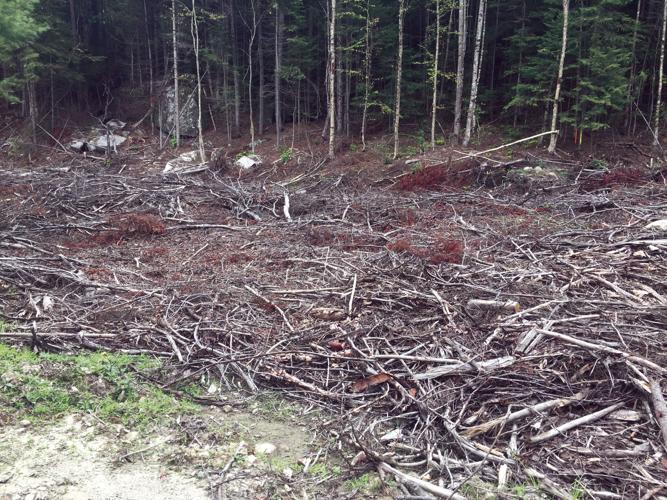
Additionally, the entire forest industry relies upon the ability to get rid of low-quality wood in order to grow trees suitable for lumber, as well as to preserve healthy forests. Representatives of the forest industry say the biomass plants also serve as a way to get rid of storm-damaged trees and allow better management of town and state parks.
Bradley said the amendment being heard in committee next Tuesday or the Tuesday after removes the requirement that utilities purchase the power directly. Instead, they would purchase base-load renewable-generation credits that they could then sell on the open market.
Bradley said utilities would be able to purchase the credits at 20 percent less than the default service rate, guaranteeing a profit on their sale. The utilities would recover the remaining cost of purchasing the credits as a stranded cost.
Since stranded costs are passed along to consumers through their electric rates, there would be an impact on their monthly bills, Bradley acknowledged, but he said they will see future savings on the portion of the bills covering capacity costs.
“It’s not exactly a break-even amount,” Bradley said, estimating that the increase in stranded costs would amount to $20-21 million, while the savings in capacity costs would be about $17 million.
“When you remove that base load power [from the biomass plants], you have to replace it with capacity. The less base load power you have, the higher the capacity cost,” he said.
Sununu has not yet weighed in on the amendment, but Marc Brown of the New England Ratepayers Association said it would cost the average ratepayer $1.40 a month to keep the biomass plants open.
Brown questions the $17 million figured cited as the impact on capacity costs, calculating that if the plants were to bid their entire capacity into the auction, it would amount to $1.8 million, far less than the $20 million cost to ratepayers to keep them open.
Broad impact
Shaun Lagueux of New England Forest Consultants in Bristol said the uncertainty of the biomass plants’ survival is impacting the entire forest industry, but the main impact of their closure would fall on silviculture — the management of forests for health and growth — and aesthetics.
With the biomass plants idle, there is no place to get rid of the low-grade wood, to the detriment of textbook forestry practices, Lagueux said.
“The aesthetics are worse now,” he said, even before the full effect of the plant closures is felt.
“We went through the winter in a pretty standard way,” Lagueux said, with most of the plants “limping along” on their existing wood inventory and playing the spot market. “Because they have the inventory, it’s better to keep it running,” he said, “but they’re not buying wood, other than keeping a little on hand.”
For foresters, a strong pulp market is helping with some of the lower-grade wood, he said. The concern is whether there will be enough work for the wood-chippers, who have invested heavily in equipment that they are unable to sell in the current unsettled market.
“I’m cautiously optimistic that the amendment will pass,” Lagueux said, “no question about it.”
It is what happens afterward that is in question, he said. Gov. Sununu is likely to veto the bill, “and that’s where the real battle comes in,” Lagueux said.
“I have great faith in the Senate, including Bob Giuda, who has been a big supporter. The fight will be in the House, like it was last year.”
He said a large number of Democrats are likely to vote to override the governor’s veto, but he is not so sure about House Republicans.
“I’m cautiously optimistic, when you look at the numbers, for a successful override,” he said.
If the change is defeated?
“It will probably lead to the layoff of some crews, and that will have a trickle-down impact on the local communities,” Lagueux said. “If it doesn’t pass, we’ll be in the position where there may not be a biomass market going forward.”


(0) comments
Welcome to the discussion.
Log In
Keep it Clean. Please avoid obscene, vulgar, lewd, racist or sexually-oriented language.
PLEASE TURN OFF YOUR CAPS LOCK.
Don't Threaten. Threats of harming another person will not be tolerated.
Be Truthful. Don't knowingly lie about anyone or anything.
Be Nice. No racism, sexism or any sort of -ism that is degrading to another person.
Be Proactive. Use the 'Report' link on each comment to let us know of abusive posts.
Share with Us. We'd love to hear eyewitness accounts, the history behind an article.