


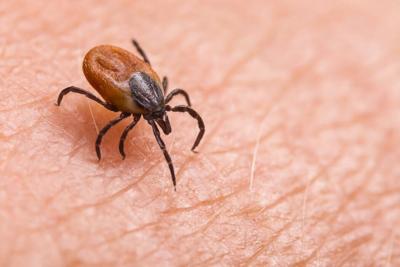
(PITTSBURGH) As spring unfolds, new research highlights an issue for southwestern Pennsylvania residents: Most people know ticks are in their backyard, but few believe they’re actually at risk of contracting tick-borne illnesses.
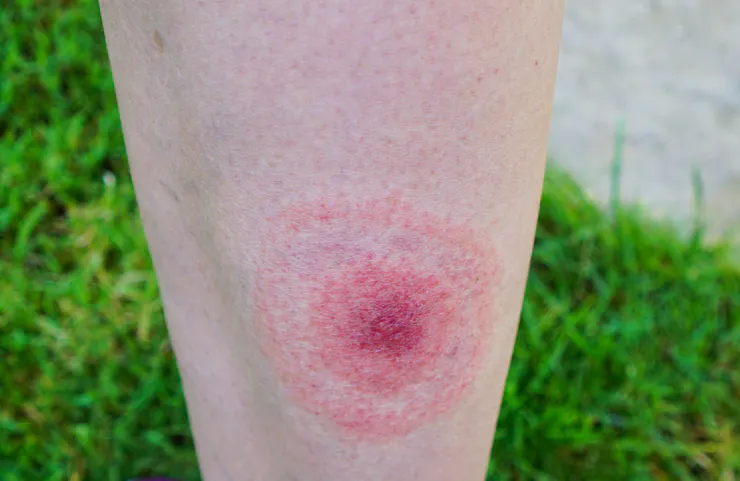
Every year in the United States, an estimated 500,000 people are diagnosed with Lyme disease. The illness, caused by a bacterium called Borrelia burgdorferi, is transmitted to humans through the bite of an infected black-legged tick. A common early sign of Lyme disease is a distinctive “bull’s-eye” rash, occurring in 70% to 80% of infected people.
If not treated early, the infection can progress to more serious symptoms, such as joint swelling and arthritis, nerve pain, tingling or numbness, facial muscle weakness, heart inflammation and difficulties with memory or concentration.
Behind these infections is a complex ecological cycle that unfolds largely unnoticed in forests, parks and even backyards. Ticks acquire the bacterium when they take a blood meal from an infected animal. One of the most important hosts in this cycle is the white-footed mouse which are reservoirs for several tick-borne pathogens. Young ticks frequently feed on these mice and become infected. This allows them to transmit the bacteria later in life when they bite other animals or humans.
We are a disease ecologist and Ph.D. student at the University of Pittsburgh, where we study the ecology of ticks, wildlife hosts and tick-borne pathogens in western Pennsylvania. Our research examines how Lyme disease circulates in local environments and how communities interact with tick habitats in their everyday lives.
Understanding the biology of ticks is only part of the story. Effectively reducing disease risk also requires understanding how people perceive ticks and the pathogens they transmit, and what prevention strategies they are willing to use.
The cycle behind tick bites
Both black-legged ticks and white-footed mice are widespread across Pennsylvania. This creates conditions for Lyme disease bacteria transmission. As a result, Pennsylvania consistently ranks among the top three states in the country for reported Lyme disease cases each year.

During the summer of 2024, our team conducted a community survey in neighborhoods across Allegheny, Washington and Westmoreland counties. These areas were selected because they border parks and forested habitats where ticks are commonly found. Homeowners were invited to participate in a short questionnaire that explored their experiences with ticks and tick-borne diseases.
Fifty-two residents completed the 12-question survey. We asked participants whether they had observed ticks on their property, whether they believed tick-borne diseases posed a health risk and what personal or property-level precautions they used to prevent tick bites.
The results revealed a striking contrast between awareness of ticks and perception of risk.
Most people don’t fear ticks
Over 80% of respondents reported seeing ticks on their property at some point. Despite this widespread exposure, far fewer homeowners believed tick-borne diseases posed a major health threat. Only 32% considered diseases such as Lyme disease to be a significant health risk to themselves or their family. More than half of respondents believe tick-borne diseases represent only a minor health concern, and 14% said they posed no health risk at all.
The survey also revealed clear patterns in how people protect themselves from ticks. Nearly all participants reported taking at least some precautionary measures when spending time outdoors. The most common strategy was performing tick checks, a simple but effective method for reducing infection risk, as ticks typically need to be attached for 24 to 48 hours to transmit the bacteria. Other reported precautions include wearing protective clothing, showering after outdoor activities, or changing clothes once returning indoors.


Interestingly, most homeowners reported they did not use pest control treatments to reduce tick populations in their yards. When asked how they might respond if ticks were discovered on their property, most participants said they would simply increase their use of personal protective behaviors over treating their property or consulting a pest management company.
Prevention starts with people
These findings highlight an important challenge in tick-borne disease prevention. While many residents recognize that ticks are present in their nearby environment, they may underestimate the health risks associated with them. Some may also prefer prevention strategies that focus on individual behavior rather than environmental control.
From a public health perspective, understanding these attitudes is essential. Strategies designed to reduce tick populations, such as yard treatments or rodent-targeted tick control devices, which kill ticks on mice or other wildlife carriers, are effective if homeowners are willing to adopt them. Research that examines community perceptions can help scientists and public health officials design prevention programs that are both practical and acceptable to the people who live in tick-endemic areas. These are the regions where specific tick populations are permanently established, constantly present and actively transmitting diseases.
The study also represents one of the first efforts to examine tick-related perceptions specifically in western Pennsylvania. As climate change, expanding wildlife populations and changes in land use continue to influence tick distributions, understanding how communities experience and respond to ticks is increasingly important. Our team will continue exploring ways to reduce tick exposure that will benefit homeowners and affected communities. This includes field evaluations of rodent-targeted tick control strategies and studies of how ticks and pathogens circulate among wildlife hosts.
For homeowners living near wooded areas, the message remains simple but important: Ticks are common, and taking precautions – performing tick checks, using repellents and managing yard habitats – can help reduce the risk of tick-borne diseases.
As research continues, combining ecological science with community perspectives may prove to be one of the most effective ways to combat Lyme disease and other tick-borne illnesses.
This article is republished from The Conversation, a nonprofit, independent news organization bringing you facts and trustworthy analysis to help you make sense of our complex world. It was written by: Danielle Tufts, University of Pittsburgh and Emily Bache, University of Pittsburgh
Read more:
- Ticks carry decades of history in each troublesome bite
- Tick bites: Every year is a bad tick year
- Pittsburgh’s air pollution estimated to claim 3,000+ lives per year − and EPA rollbacks aren’t helping
Danielle Tufts receives funding from the Centers for Disease Control and Prevention.
Emily Bache does not work for, consult, own shares in or receive funding from any company or organization that would benefit from this article, and has disclosed no relevant affiliations beyond their academic appointment.





(0) comments
Welcome to the discussion.
Log In
Keep it Clean. Please avoid obscene, vulgar, lewd, racist or sexually-oriented language.
PLEASE TURN OFF YOUR CAPS LOCK.
Don't Threaten. Threats of harming another person will not be tolerated.
Be Truthful. Don't knowingly lie about anyone or anything.
Be Nice. No racism, sexism or any sort of -ism that is degrading to another person.
Be Proactive. Use the 'Report' link on each comment to let us know of abusive posts.
Share with Us. We'd love to hear eyewitness accounts, the history behind an article.