


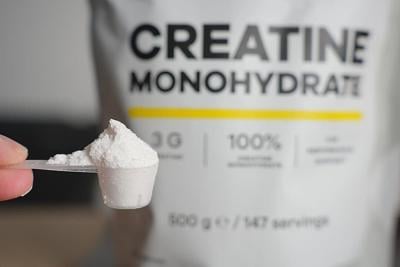

If you’re used to thinking about creatine as a sports-performance supplement, seeing the word paired with “perimenopause” may come as a bit of a shock. But women stand to benefit from it, too, and emerging research suggests its potential benefits may extend beyond exercise performance. All of which has made creatine a supplement of growing interest during perimenopause, a life stage that has long been understudied and underserved.
Research specifically on creatine during perimenopause is still fairly limited. Most of what we know comes from research on creatine more broadly, along with studies in older and postmenopausal women. But there’s enough evidence to start connecting some dots, particularly when it comes to muscle and strength, with intriguing early research into other areas that matter during the menopause transition. Here, Ritual shares what’s known so far.
Key Takeaways
- Muscle mass and strength decline with age, and hormonal changes during the menopause transition may accelerate that loss.
- Creatine can support gains in strength and lean mass, particularly when paired with resistance training.
- Research specific to perimenopause is still limited, but studies in older and postmenopausal women offer clues about how creatine may support women during this stage of life.
- A 2026 meta-analysis found that creatine supplementation alongside resistance training improved leg strength and lean mass in postmenopausal women.
- Researchers are also exploring creatine's potential effects on bone health and cognition, but the evidence in these areas is still emerging.
- The standard evidence-based dose is 3–5 grams of creatine monohydrate a day; if muscle and strength are your goals, pair it with resistance training.
What is creatine and what does it do?
Creatine is a compound your body makes and also gets from food. Most of it is stored in your muscles, where it helps supply energy during short bursts of hard effort.
Here’s how it works: Your muscles use a molecule called adenosine triphosphate (ATP) for energy, but they keep only a small amount readily available. When that supply starts to run low, a stored form of creatine called phosphocreatine helps rapidly replenish it. Having more phosphocreatine available can give your muscles a little more capacity to do another rep or push through a few more seconds of a hard effort before they fatigue. Over time, that can help you get more out of your training.
Your body turns over roughly 2 grams of creatine each day. Your liver and kidneys make about half of what’s needed to replace it, while the rest typically comes from your diet, primarily animal foods. But dietary intake varies from person to person. Research shows that women consume 30%–40% less dietary creatine than men, that intake declines with age, and that people who eat little or no animal protein get very little creatine from food. This means some people may start with lower creatine stores than others.
And even a typical omnivorous diet doesn't fully saturate the amount of creatine your muscles can store. Muscle creatine stores generally sit at about 60%–80% of capacity, and supplementation can raise muscle creatine and phosphocreatine by 20%–40%, giving your muscles more to draw on when energy demand spikes.
Why is creatine getting attention during perimenopause?
To understand why people are talking about creatine supplementation during perimenopause, it helps to look at where its potential benefits intersect with the changes that happen in this stage of life.
During perimenopause—the years-long transition surrounding menopause, when shifting hormone levels can cause changes throughout the body—age-related declines in muscle mass and strength may accelerate. Bone loss can also accelerate in late perimenopause, while cognitive changes such as brain fog and difficulty concentrating are common. These changes overlap with areas where creatine has attracted research interest. Its benefits for muscle and strength are well established, for example, and early research is also exploring its potential benefits for both bone and cognitive health.
There are, however, important limitations to the evidence surrounding this relationship. To begin with, research into creatine’s potential benefits beyond exercise performance is still emerging. Women have also historically been underrepresented in creatine research: A 2020 review found that only about 9% of studies on creatine supplementation were conducted exclusively in women. And research specifically in perimenopausal women is particularly sparse; the few studies that include them have typically grouped them with postmenopausal women.
What are the potential benefits of creatine during perimenopause?
While research into creatine during the menopause transition is still developing, the evidence we do have points to several areas of potential benefit. The strongest evidence is for benefits to muscle and strength, while research into potential benefits for bone and cognitive health is less established but emerging.
Creatine, muscle, and strength during perimenopause
One of creatine’s best-established benefits is improved high-intensity exercise performance. Over time, when creatine is paired with resistance training, this can translate into greater gains in strength and lean mass, which is largely made up of muscle. Research suggests these benefits to exercise performance and strength extend to women as well as men.
That may be especially relevant during the menopause transition. Muscle mass and strength decline with age in everyone, but the hormonal changes of perimenopause appear to speed up that loss. By one estimate, women lose roughly 1.5 pounds of lean mass a year during the transition. Maintaining muscle and strength therefore becomes increasingly important at this stage, which helps explain the growing interest in creatine.
Creatine's effects on muscle and strength haven't been studied in perimenopausal women specifically. But there is evidence that it can support strength and lean mass in older women. A 2026 meta-analysis of trials in postmenopausal women found that creatine increased leg-press strength by 7.5 kg and lean mass by 0.37 kg compared with placebo.
Another meta-analysis found that creatine combined with resistance training improved upper-body strength in older women, with gains in both upper- and lower-body strength in studies lasting at least 24 weeks. And a 2026 trial in adults aged 45 to 65, more than half of whom were women, found that 12 weeks of creatine supplementation, at 10 grams per day, increased lean tissue mass and strength compared with placebo, including among participants who didn't follow an exercise program. The evidence hasn’t been entirely consistent, though: a two-year trial of 237 postmenopausal women found no additional strength benefit from adding creatine to resistance training.
Taken together, these findings suggest creatine may be a useful tool for supporting muscle and strength as women move through the menopause transition, although research specifically in perimenopausal women is still needed.
Creatine and bone health during perimenopause
During the menopause transition, bone loss accelerates. There's relatively little change in early perimenopause, then loss speeds up in late perimenopause—at a rate of approximately 1.6% per year at the spine and 1% at the hip—and continues at a similar pace through the first postmenopausal years.
Researchers believe creatine could potentially help support bone health, but this hasn't yet been proven. One theory builds on creatine's effects on muscle: stronger muscles exert more force on bone, which can stimulate bone remodeling—the process of breaking down old bone and building new bone in its place. Researchers have also proposed that creatine may act directly on cells involved in building and maintaining bone.
So far, clinical research has produced mixed results. In a small 12-month trial of 47 postmenopausal women, those taking creatine while resistance training lost less bone density at the femoral neck than those training with a placebo. A larger two-year trial of 237 postmenopausal women found no benefit for bone mineral density, but did find improvements in some measures related to bone structure and strength. A 2026 meta-analysis similarly found no overall benefit for bone mineral density.
Overall, the research hasn't consistently shown that creatine benefits bone mineral density. But some evidence suggests it may help preserve bone density at certain sites or affect aspects of bone structure and strength that aren't captured by bone density alone. Whether those effects are meaningful during perimenopause remains to be studied.
Creatine and cognition during perimenopause
Many women experience cognitive changes such as brain fog, word-finding trouble, and difficulty concentrating during the menopause transition. The brain, like muscle, requires a steady supply of energy to function, and creatine helps it rapidly regenerate that energy in the form of ATP.
Research is early, but there are some signs that creatine may support certain aspects of cognition. A 2023 meta-analysis of eight small trials found that creatine improved measures of memory compared with placebo, with the clearest effect in older adults ages 66 to 76 and no benefit in younger people ages 11 to 31. However, the older-adult finding was based on only two studies, and the researchers cautioned that the results should be interpreted carefully. The middle years most relevant to perimenopause weren't represented, but the findings raise the possibility that creatine could support memory health earlier in the aging process, too.
Creatine may also help support cognition when the brain is under stress. In one small trial, a single high dose reduced declines in memory and processing speed after 21 hours without sleep; a second study found that a lower single dose also reduced declines on several cognitive tasks during sleep deprivation. Given that sleep disruption is common during perimenopause, these findings could have interesting implications for women in this life stage. However, both studies used doses several times higher than the standard daily dose and weren't conducted specifically in women going through perimenopause, so it isn't clear whether taking 3–5 grams a day during the menopause transition would have the same effects.
Research looking more directly at creatine and cognition in women around the menopause transition is even more limited. In one small eight-week trial of 36 peri- and postmenopausal women, low doses of non-monohydrate forms of creatine raised brain creatine levels and improved response speed on some cognitive tests compared with placebo.
While more research is needed, these early findings suggest creatine could potentially have a role in supporting cognitive function during perimenopause.
How to take creatine during perimenopause


While there’s no specific protocol for creatine supplementation during perimenopause, research does support some best practices for incorporating it into your routine:
Dose
For creatine supplementation, the standard evidence-based dose is 3–5 grams of creatine monohydrate a day. Research in older, postmenopausal women specifically showed benefits for strength and lean mass with doses of at least 5 grams a day, when combined with resistance training.
Some people start with a higher-dose "loading phase"—20 grams per day for 5–7 days—to saturate muscle creatine stores more quickly, but it isn't necessary. A standard daily dose gets you to the same place in about three to four weeks, and skipping the loading phase can help you avoid the small, temporary increase in water weight that can come with it.
Form
Choose creatine monohydrate. It's the most well-researched form.
Timing
Research hasn't identified a best time of day to take creatine. Because creatine works by gradually increasing your muscle creatine stores over time, consistency matters more than taking it at a particular time of day.
Training
If building or maintaining muscle mass and strength is your goal, pair creatine with resistance training. Research shows the combination can support greater gains in both, including in older women.
Is creatine safe for women in midlife?
Creatine monohydrate is among the most-studied supplements available, and at recommended doses it appears safe for healthy adults, including in studies lasting up to five years.
In a systematic review of 29 trials in women, researchers found no serious adverse events, and no significant differences in body weight, kidney markers, or liver markers compared with placebo. Reported side effects are generally minor, including occasional gastrointestinal discomfort, which is more likely with larger single doses.
Talk to your healthcare provider before starting creatine if you have kidney disease or reduced kidney function. Creatine can raise creatinine, a marker used to assess kidney function, which can make standard kidney tests more difficult to interpret. If you're pregnant or breastfeeding, check with your provider first as well, since human research on creatine during pregnancy is still limited.
Understanding creatine’s potential place in your perimenopause care
If maintaining or building muscle and strength is a priority during perimenopause, creatine may be worth considering, particularly alongside resistance training. Its benefits for strength and high-intensity exercise performance are well established, and research in older women suggests it can support gains in strength and lean mass.
Creatine's potential benefits for cognition and bone health are also intriguing, particularly in the context of healthy aging. Early research suggests creatine's benefits could extend beyond muscle and strength, although more research is needed to understand what role these potential benefits might play specifically during perimenopause.
For healthy adults, creatine is considered safe at recommended doses. If you decide to add it to your routine, the standard evidence-based dose is 3–5 grams of creatine monohydrate per day. And if muscle and strength are your primary goals, pair it with resistance training, as that combination has been shown to support both in the general population and older women.
FAQs
Is creatine good for perimenopause?
Creatine may help support muscle and strength during perimenopause, especially when combined with resistance training, though that evidence comes from research in older and postmenopausal women rather than perimenopausal women specifically. Researchers are also exploring potential benefits for bone health and cognition, but that research is still emerging.
How much creatine should a woman in perimenopause take?
There is no perimenopause-specific dose of creatine, but 3-5 grams of creatine monohydrate a day is the standard evidence-based dose for adults. In studies of postmenopausal women that found benefits for strength and lean mass, participants took at least 5 grams of creatine a day alongside resistance training.
Does creatine help with perimenopause brain fog?
We don't know yet, though there is some early research on creatine and cognition. In one small eight-week trial of 36 peri- and postmenopausal women, low doses of creatine improved response speed on some cognitive tests and raised brain creatine levels compared with placebo. Other research in broader populations has found potential benefits for memory and cognitive performance, but more research is needed to understand whether these findings translate to improvements in cognitive symptoms during perimenopause.
Does creatine help bone density during perimenopause?
Creatine hasn’t been studied for bone density specifically during perimenopause, and research in postmenopausal women has had mixed results. One study found less bone loss at the femoral neck, but a 2026 meta-analysis found no overall benefit for bone mineral density. Some studies have found potential benefits for other measures of bone strength and structure, but more research is needed to understand their significance. If you’re concerned about your bone density during perimenopause, talk with your healthcare provider.
Will creatine cause weight gain during perimenopause?
Creatine hasn’t been shown to increase body fat. During a loading phase, some people may see a small, temporary increase in body weight as water is pulled into the muscles, although this doesn't happen to everyone. Studies in women specifically haven't found a significant change in body weight.
Can I take creatine with hormone therapy?
There isn't enough research to know whether hormone therapy changes creatine's effects. The trial in peri- and postmenopausal women excluded women using hormone therapy, so it can't tell us how the two might interact. If you use hormone therapy, talk to your healthcare provider before adding creatine.
Any symptoms, topics, or research discussed in this article are provided for general educational and informational purposes only. They do not constitute product claims.
This story was produced by Ritual and reviewed and distributed by Stacker.


(0) comments
Welcome to the discussion.
Log In
Keep it Clean. Please avoid obscene, vulgar, lewd, racist or sexually-oriented language.
PLEASE TURN OFF YOUR CAPS LOCK.
Don't Threaten. Threats of harming another person will not be tolerated.
Be Truthful. Don't knowingly lie about anyone or anything.
Be Nice. No racism, sexism or any sort of -ism that is degrading to another person.
Be Proactive. Use the 'Report' link on each comment to let us know of abusive posts.
Share with Us. We'd love to hear eyewitness accounts, the history behind an article.