


Nearly half of Americans have used mental health medication, so why are 68% still hesitant?
Next time you’re at a party, look around and consider this: Nearly half of the people in the room have probably taken mental health medication at some point. Still, most people feel uneasy about it.
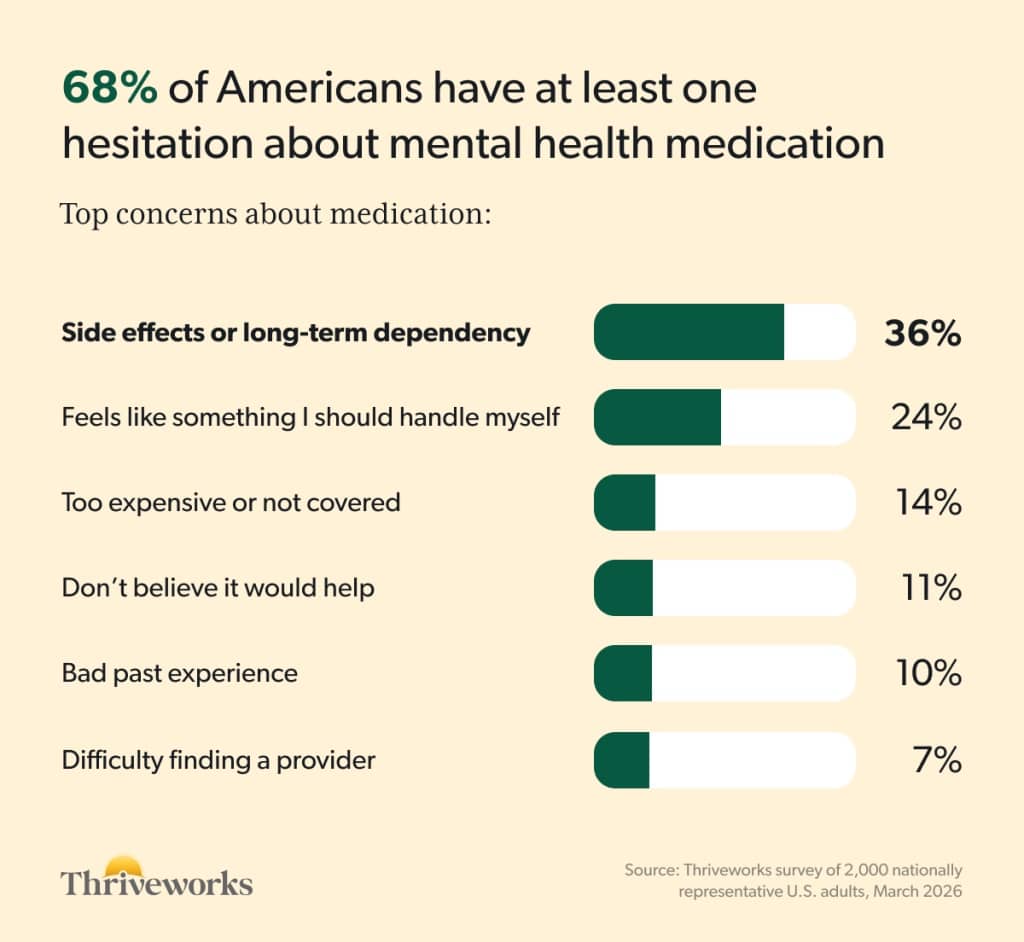
That’s one of the central findings in Thriveworks’ 2026 Pulse on Mental Health Report—the third annual nationally representative survey of 2,000 U.S. adults, conducted by Wakefield Research in March 2026—where 47% of Americans say they’ve been prescribed mental health medication at some point, yet 68% of people still have at least one hesitation about taking it.
“Once clients start opening up, they find out about half of their network is already on medications for mental health and they just never knew because we still have some stigma there,” said Jami Dumler, licensed clinical social worker and clinical programs director at Thriveworks. That stigma might be growing thanks to a steady stream of misinformation coming out of everyone from social media influencers to politicians.
Thriveworks talked to three clinical experts about where these hesitations around mental health medications come from and how mental health providers can help people feel comfortable getting whatever kind of support they need.
Who’s using medication—and who isn’t?
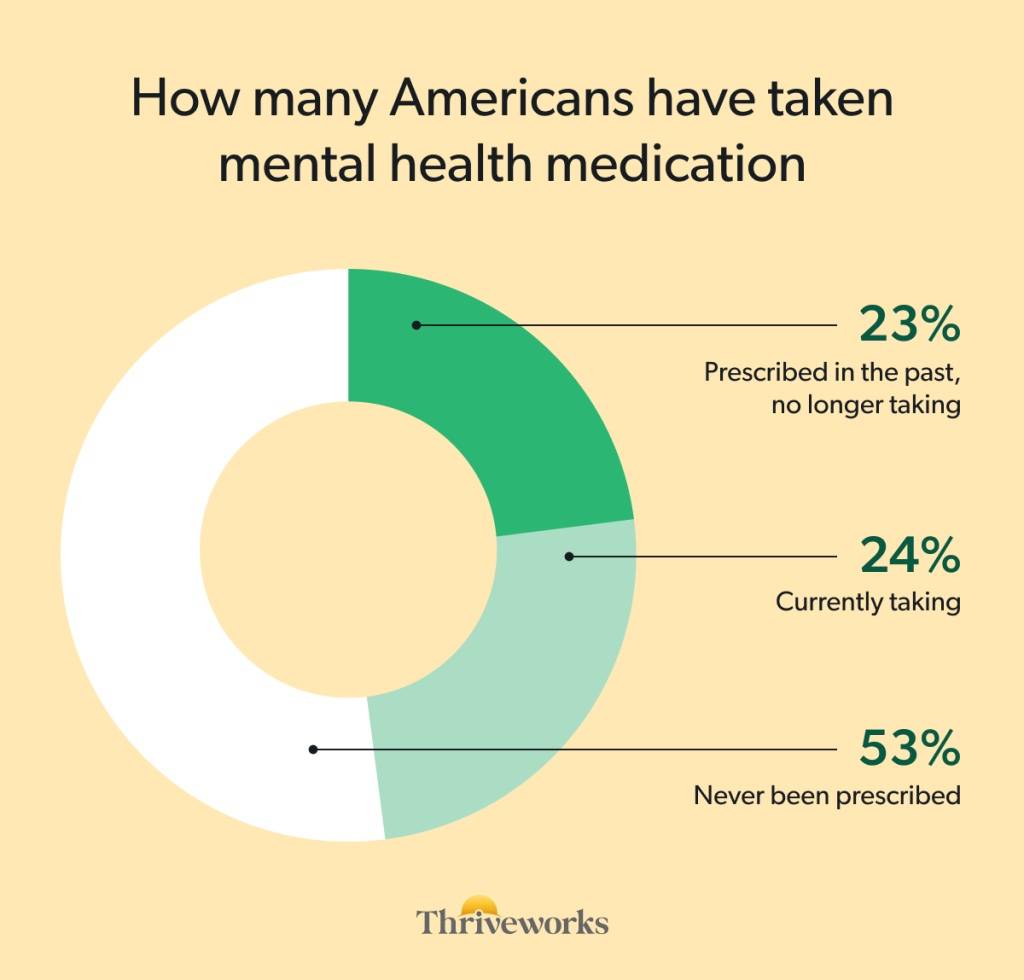
Mental health medication has become a mainstream experience, even if we rarely talk about it that way. Nearly half (47%) of Americans say they’ve been prescribed it at some point, with 24% currently taking it and 23% previously prescribed it.
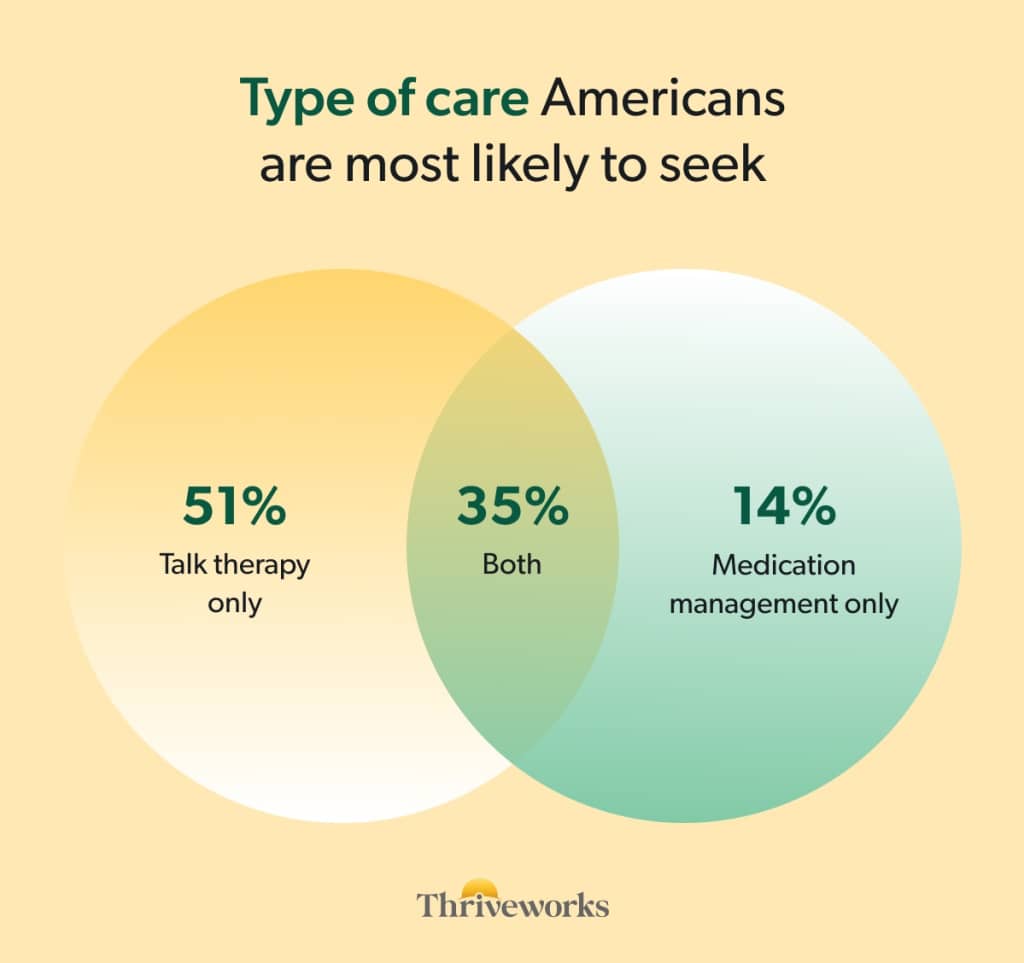
But most people still see medication as a supporting player in the realm of mental health care: Talk therapy remains the primary preference, with 51% of people saying that’s the type of care they’re most likely to seek, followed by a combined approach of therapy and medication (35%), and medication alone being the least popular approach (14%).
Here’s how medication views differ by age, life circumstances, and demographics:
Generational breakdown
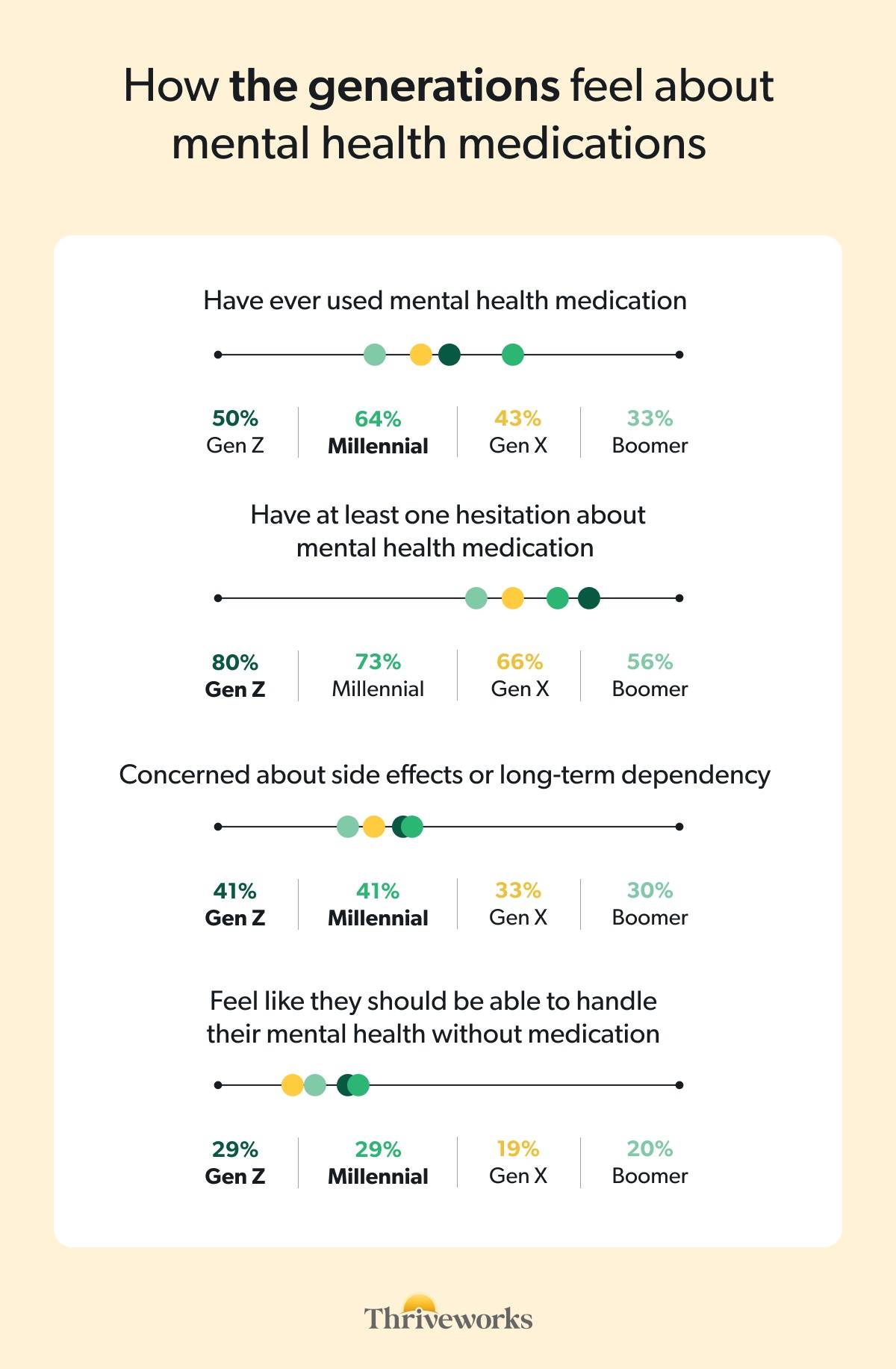
Millennials are the most likely to have used mental health medication (64%), followed by Gen Z (50%), while only one-third of Boomers have used it. But oddly enough, the younger generations are actually more hesitant of mental health meds than their elders, with 80% of Gen Z and 73% of Millennials having at least one reservation about medication, compared with 56% of Boomers.
Dumler wonders if this is driven by wellness trends online. “The younger generations are really focused on health and wellness overall, and there’s a lot of noise around natural support and avoiding traditional medication,” she explained.
Parents vs. nonparents
Parents are far more likely than nonparents to have tried medication (58% versus 41%), which likely speaks to how life stressors may affect your need for support. “I often see medication used as a helpful tool during periods of significant life transition, whether that’s starting a new job, experiencing a major loss, or recovering from a traumatic event,” Dumler said. “Parenthood is another major life transition. Many have used medication temporarily during previous challenging seasons and find it to be a helpful support again while navigating the busy, ever-changing early years of parenting.”
Cultural differences
The clinicians weren’t surprised to see that there were differences among cultural and racial backgrounds, most notably that Black adults had the lowest use rate of medications (36%) and that Hispanic adults had the highest hesitation rate (78%).
For many people, the hesitation is inherited—shaped by how mental health was understood, or avoided, in the communities and families they grew up in. “In some cultures, it can be seen as a weakness to need medication or mental health support. For some it’s around privacy—sharing what’s challenging, or about your family history, can feel like you’re breaking the trust of your family,” Dumler said.
And for some, it likely circles back to bigger systemic problems in America. “It’s a really existentially threatening time to be in any kind of underrepresented, marginalized, or minority population in this country,” said Kate Hanselman, psychiatric mental health nurse practitioner and vice president of clinical psychiatry at Thriveworks. “It would not surprise me at all if people were feeling more reluctant to access care.”
Fears of side effects are top of mind, but often overblown
The most common concern Americans have about mental health medications is the potential for side effects and long-term dependency, with 36% of survey respondents listing this hesitation.
While side effects are possible with any medication, the clinicians we spoke with said that many of these fears are overblown and largely a symptom of too much information. For starters, there’s the ubiquity of pharmaceutical commercials naming a long list of side effects that few patients actually experience.


“In any clinical trial, they’re required to report every side effect that happened during that entire trial. So if somebody just had a headache because they were dehydrated, they still put that down,” Hanselman explained. Older generations have another layer to work through: Their frame of reference is often an earlier era of psych meds that genuinely did carry harsher side effects.
Then there’s everything you read on the internet. Hallie Kritsas, licensed mental health counselor at Thriveworks, sees a lot of her clients’ side effect concerns coming from Googling or asking artificial intelligence about the meds they’re considering. They read about one person’s bad experience and assume they’ll have the same—especially when a mental health challenge is already amping up their anxiety. It can make it hard to remember that bodies respond differently, and that finding a medication where the benefits outweigh any downsides is exactly what a psychiatrist is there for.
“No medication is one-size-fits-all,” Dumler said. “Most people will try a couple of different medications, and they’ll often find one that has very minimal to zero side effects.”
The fear of long-term dependency is a little more complicated to unpack
Concerns about becoming dependent on a mental health medication likely stem from a few different factors. For starters, some worry that they’ll experience withdrawal symptoms when stopping an antidepressant. What they’re actually referring to is something called antidepressant discontinuation syndrome, which can occur if an SSRI is tapered or discontinued too quickly. This doesn’t indicate dependence or addiction, but simply a need to slow down medication changes.
Others may worry about the habit-forming potential of certain mental health meds, like stimulant ADHD medications. These medications do carry a risk of dependence, which is why they are classified as Schedule II controlled substances and are monitored carefully. When prescribed and managed appropriately, dependence should not occur.
Finally, some people just worry about starting a mental health medication without knowing how long they’ll need to take it. The truth of that is: It depends. While not the case for everyone, some people do stay on mental health medications long-term if it’s the best way to manage their symptoms, Hanselman says, and being on a medication long-term isn’t any better or worse than taking it for a short time.
American individualism runs deep and is affecting our ability to ask for help
Not every hesitation is about the medication itself. For nearly a quarter of Americans (24%), the holdup is a belief that they should be able to handle their mental health on their own. It’s a common stigma associated with mental health medications, and it’s one that clinicians trace back to the core of American culture.
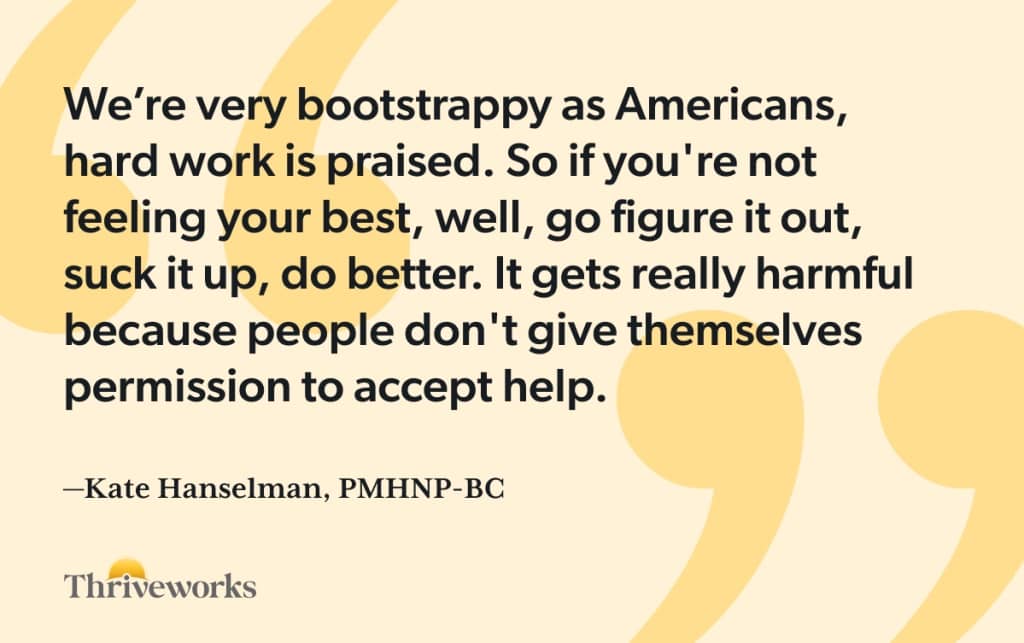
“We’re very ‘bootstrappy’ as Americans,” Hanselman said. “Hard work is praised. So if you’re not feeling your best, well, go figure it out, suck it up, do better. It gets really harmful because people don’t give themselves permission to accept help.”
And while this may seem like an antiquated opinion, Millennials and Gen Z (29%) were actually more likely to report this hesitation than Boomers (20%). “There’s a difference between ‘I can acknowledge I’m having a hard time’—which the younger generations are anecdotally better at—versus ‘I should be able to handle this,’” Hanselman said, noting that internet culture may be contributing to the pressure to figure things out on your own.
How to address medication hesitations in mental health care
Remind patients that they’re in the driver’s seat
Hanselman likes to make sure her patients know that this is a collaborative approach that’s truly driven by them.
“This cannot be a paternalistic relationship—we have to work together because you’re the one living your life and taking your meds every day,” she said. “We can move very, very slowly and minimize your risk of any side effects if you’re concerned. And if we see any side effects you don’t like, we can slow it down, pause, or try something else. We have a ton of different options.” Knowing they can come to her if something goes wrong often gives her patients ease.
When patients are nervous to even take the first step of considering meds, Dumler points out that an appointment with a psychiatrist doesn’t mean an automatic prescription. “I remind folks: You don’t have to walk out of there with medication. I’d love for you to just have a conversation and get your questions answered. Then you’ve got all the information to make your own informed decision,” she said.
Compare mental health treatment to physical health treatment
For patients stuck on the idea that needing medication is a personal failing, clinicians reach for physical-health parallels. “Both my dog and I took Zyrtec this morning because our allergies are not very friendly right now,” Kritsas said. “I would never think taking Zyrtec is a bad thing because it’s ‘just a crutch.’ It’s another tool in our toolbox, another coping mechanism. It’s not the one end-all, be-all—but therapy probably won’t be the one end-all, be-all either. So why wouldn’t we try both things together?”
Helping patients access affordable care
While not a dominant hesitation, 14% of people cited cost or insurance and 7% cited difficulty finding a provider as barriers to trying medication. “There are folks who are low-coverage, underinsured, or not insured, and not all medication is covered by different plans,” Dumler said. “Health care reform is always a challenge in the U.S. and is part of the story.”
Some of these cost problems can be improved with prescribing, Hanselman says, such as by opting for more affordable generic meds or completing a prior authorization to support medication coverage for a patient.
And if the barrier is finding a provider at all, the fix can be telehealth, or even pointing a patient to their existing provider. “I remind folks that are hesitant in terms of care costs, your primary care doctor is a great place to start,” Dumler said. “If you’re not able to access a psychiatrist, having a conversation with your trusted family doctor is another great space to explore if medication could be helpful for you.”
This story was produced by Thriveworks and reviewed and distributed by Stacker.


(0) comments
Welcome to the discussion.
Log In
Keep it Clean. Please avoid obscene, vulgar, lewd, racist or sexually-oriented language.
PLEASE TURN OFF YOUR CAPS LOCK.
Don't Threaten. Threats of harming another person will not be tolerated.
Be Truthful. Don't knowingly lie about anyone or anything.
Be Nice. No racism, sexism or any sort of -ism that is degrading to another person.
Be Proactive. Use the 'Report' link on each comment to let us know of abusive posts.
Share with Us. We'd love to hear eyewitness accounts, the history behind an article.