


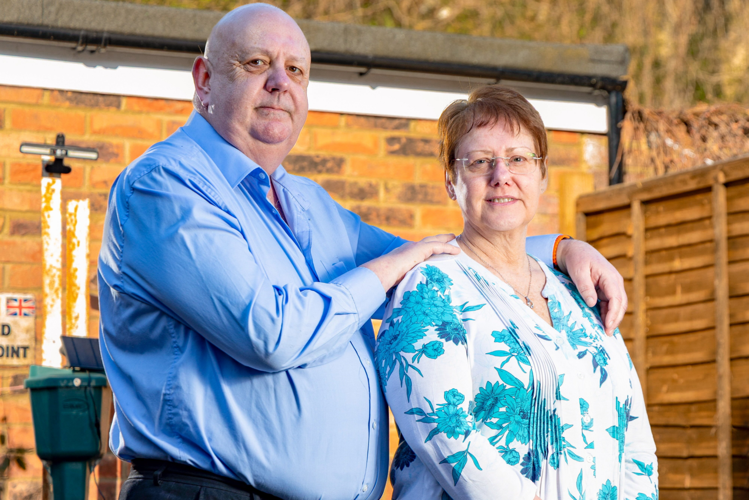
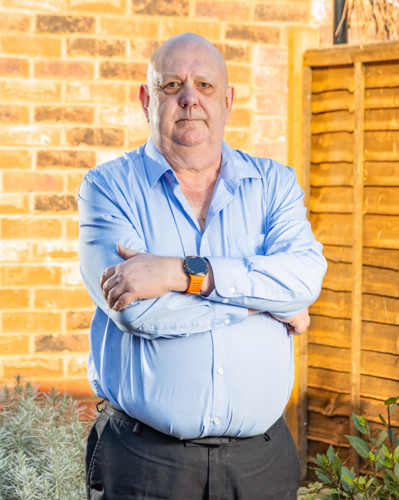

Paul Seymour says he didn't want to worry his wife, Joanne, about his health struggles. (Tom Wren via SWNS)
By Jake Meeus-Jones
A manâ¯hid his symptoms of coronary artery disease from his wife for seven months - before he suffered a life-threatening angina attack.
Paul Seymour, 66, didn't want to worry his wife, Joanne, 64, so kept his symptoms - shortness of breath and chest pains - a secret.
He "made excuses to stop" if they were out when he felt symptoms coming on and said he was able to hide them because the couple had different working patterns.
But it came to a head when Paul collapsed while running to catch a train and woke up outside the entrance of Erith station, in Bexley, southeast London, to a crowd of people surrounding him.
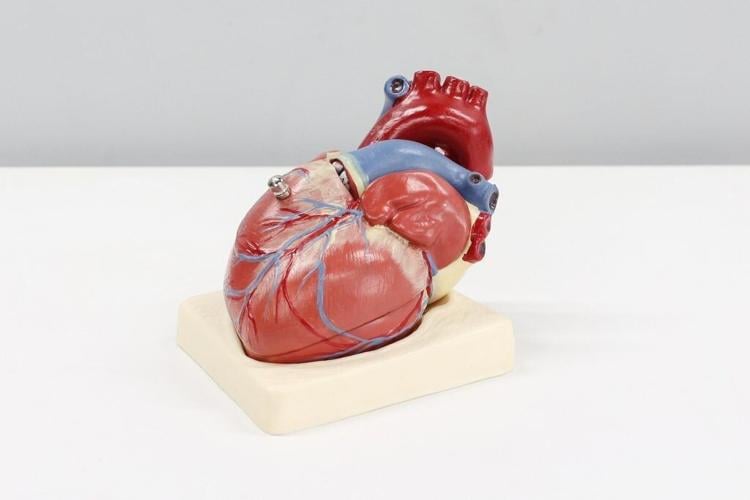
He was rushed to hospital and diagnosed with coronary artery disease – a condition where the arteries become narrowed by fatty material within their walls.
Doctors said the pains he had kept secret were actually angina attacks and he was "lucky not to have had a full-blown heart attack."
Paul realized he had to "own up" to Joanne who admitted with hindsight she may have missed clues carefully hidden by her husband.
Paul, a clinical systems manager on an NHS maternity ward, had three stents fitted and almost a year off work - and vowed never to stay quiet about his health again.

(Tom Wren via SWNS)
"It had been building, with about seven months of chest pains and shortness of breath," Paul, from Erith, southeast London, said.
"All I remember was feeling some chest pains and my hand was tingling on the day.
"When I woke up in the station there was about three or four people and a gentlemen helped me up.
"I sat on the wall and decided I better go to the hospital where they initially gave me a few aspirin and told me to see the GP where I was diagnosed with angina.
"My father was an army man and brought me up to think that showing pain was a weakness - so I kept it from everyone.
"Not opening up about my symptoms is something I regret - it was done for the wrong reasons.
"I thought I was protecting my wife but in reality, I was not really protecting myself.
"I didn't think it was serious and the ironic thing is before this job I was an undertaker and I became a little desensitised to it.
"I suppose it should have been an indication, but I ignored it all."
When she initially found out about his diagnosis, Joanne says she was "angry and scared”.
She said: "He told me that he had to go for some tests at King's College Hospital, but did not elaborate and said that it was nothing to worry about.
"I remember one time we were walking to the train station and had only gone about 30 metres when he became sweaty and was an awful grey color.
"I knew then that something serious was going on, and after he regained some color, even though he said that he was OK.
"We went home and I literally had to force him to tell me what was wrong - he said that he did not want to worry me.
"When I found out, it was a mixture of being angry because he hadn’t told me and being scared.
"He had been diagnosed with high cholesterol a couple of years previously but never took his medication.


"We could have prevented all this if he had done.
"I remember he didn't want to go for walks, but I just put this down to him being anti-social."
Paul isn’t alone in keeping quiet about his health issues.
According to new research commissioned by AXA Health, of the 66 per cent who suffer from a health condition, more than one in 20 (six per cent) would be unlikely to tell a new partner about it, citing fear of being judged as the top reason why (51 per cent)
And 19 per cent of adults who have a health issue have kept their condition a secret from a partner at some point – be it past or present - with a fifth of them still having never told them.
Paul's lifestyle had changed before he collapsed and he believes that may have contributed.
He said: "I was very lucky to get away with a massive angina attack and I should have told my wife.
"I worked for myself at the time - I used to travel up to London all the time and I always used to have fast food and I put on weight.
"I'd be OK most days but anything going upstairs or running caused me to have a few problems.
"I knew I wasn't particularly fit, but I didn't think it was that bad."
After he collapsed in January 2000 when he was in his 40s, Paul didn't have surgery to insert the stents immediately as he had to regain some fitness.
He said: "I ended up being out of work for nearly 12 months as I had to get fit enough for surgery.
"My GP put me on medication and the hospital said I had coronary artery disease."

Photo by Ali Hajiluyi via Unsplash
After an initial three stents were fitted, Paul then went on to have another three fitted for the smaller blockages years later when technology improved.
"After the medication and a little bit of rest I had the operation where I had three stents - I now have six," he said.
While he says it took time, Paul and Joanne now discuss things more openly with regards to their health.
Joanne said: "He must have been very good at hiding his symptoms.
"I did notice that he had also become very quiet and would brush things off, saying he wouldn’t live to be an old man.
"But nowâ¯he knows about me, and I know all about this health problems.
"I was so frightened of losing him for something that could have been prevented."
Some of the main reasons for people not opening up about their health issues include being worried that their partner might leave them (27 per cent), feeling unsure how to talk about it (20 per cent) and not wanting to worry them (28 per cent).
Heather Smith, CEO, AXA Health, which commissioned the research as part of its Cover That Cares campaign, said: "Paul’s storyâ¯highlights why it’s so important to open up to family and friends about health concerns, even when it comes to difficult or embarrassing topics. Undoubtedly it would have been a frightening experience for Paul and keeping his symptoms and worries to himself meant heâ¯wasn’tâ¯able to receive the care and supportâ¯fromâ¯hisâ¯loved ones.â¯
â¯
“It'sâ¯completely understandableâ¯whyâ¯peopleâ¯can beâ¯reluctant to discuss their health, especially when it comes to serious conditions like Paul’s which could cause worry or distress to their loved ones. But as our research shows, 88% of people believeâ¯it’sâ¯important to be honest about health issues and for those who didâ¯open up,â¯the majority felt it positivelyâ¯impactedâ¯their relationship.â¯
“It is so important for patients toâ¯feelâ¯listened to,â¯cared forâ¯andâ¯supportedâ¯from theâ¯veryâ¯beginningâ¯and all the way through their health journey.”â¯â¯




(0) comments
Welcome to the discussion.
Log In
Keep it Clean. Please avoid obscene, vulgar, lewd, racist or sexually-oriented language.
PLEASE TURN OFF YOUR CAPS LOCK.
Don't Threaten. Threats of harming another person will not be tolerated.
Be Truthful. Don't knowingly lie about anyone or anything.
Be Nice. No racism, sexism or any sort of -ism that is degrading to another person.
Be Proactive. Use the 'Report' link on each comment to let us know of abusive posts.
Share with Us. We'd love to hear eyewitness accounts, the history behind an article.