



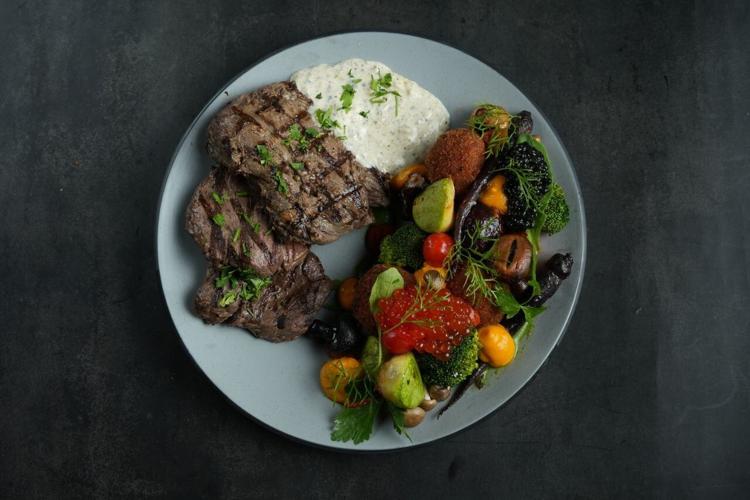


Photo by Andrea Piacquadio via Pexels
The benefits of protein are no secret. From building muscle to sustaining energy, it's a key nutrient to maintain our physical health.
However, longevity expert Mark Kovacs says there is a surprising benefit of increasing protein that often goes undiscussed: better sleep.
"Sleep and protein are two of the most powerful pillars of health," he says. "And they work together in a synergistic way."
"Protein plays a much more important role in sleep than many people realize," says Kovacs, who describes protein as the "building block" of sleep quality.
And good sleep is the basis of maintaining good physical and mental health.
"When adequate protein intake supports better sleep quality, the benefits extend throughout the body."
"Beyond supporting muscle repair and recovery, protein provides the amino acids that serve as building blocks for neurotransmitters involved in sleep regulation," he explains.
"One of the most important is tryptophan, an amino acid that helps the body produce serotonin and melatonin, two compounds that are critical for regulating sleep-wake cycles," the doctor adds.
Melatonin helps to regulate our internal body clock. When it is released naturally in the evenings, it helps us fall asleep and stay asleep throughout the night.

Photo by Dextar Vision via Pexels
"Adequate protein intake also helps stabilize blood sugar levels throughout the night," says Kovacs, CEO of Kovacs Institute, a human performance consultancy.
"Large fluctuations in blood glucose can contribute to nighttime awakenings, whereas a balanced diet with sufficient protein may support more consistent sleep patterns."
By reducing the number of nighttime disruptions, you'll improve your sleep quality. This means you'll get enough of each individual sleep stage like REM and deep sleep.


In turn, this will result in you waking with more energy, feeling physically well-rested, and avoiding brain fog.
"For physically active individuals, protein also helps facilitate overnight tissue repair and recovery, which can improve how rested they feel upon waking," explains Kovacs.
While increasing your protein intake won't necessarily mean you sleep longer, Kovacs says it will help you sleep more efficiently, spending more time in restorative stages of sleep.
"When adequate protein intake supports better sleep quality, the benefits extend throughout the body."
"From a physical health perspective, quality sleep improves muscle recovery, immune function, metabolic health, hormone regulation, and overall energy levels."
"From a mental health standpoint, high-quality sleep supports cognitive performance, emotional regulation, mood stability, stress resilience, memory consolidation, and decision-making. Poor sleep has been linked to increased risks of anxiety, depression, and impaired cognitive function."

Photo by Andrea Piacquadio via Pexels
So how much protein should you be aiming for?
Kovacs cites the traditional recommended dietary allowance of 0.8 grams of protein per kilogram of body weight, but says "that amount is likely too low to optimize health, recovery, and healthy aging."
"For the average healthy adult, I typically recommend approximately 1.2 to 1.6 grams of protein per kilogram of body weight daily," he says.
"For highly active individuals, athletes, or adults over age 50 who are trying to maintain muscle mass and functional capacity, protein needs may increase to approximately 1.6 to 2.2 grams per kilogram per day."
As a practical example, a 70-kilogram (154-pound) adult would generally benefit from consuming between 84 and 112 grams of protein daily, while a physically active person of the same weight may benefit from 112 to 154 grams per day, he says.
But Kovacs explains that it's just as important to ensure your protein intake is distributed throughout the day.
"Consuming 25–40 grams of high-quality protein at each meal appears to be more effective for muscle health, recovery, and potentially sleep support than consuming the majority of protein in a single meal."


(0) comments
Welcome to the discussion.
Log In
Keep it Clean. Please avoid obscene, vulgar, lewd, racist or sexually-oriented language.
PLEASE TURN OFF YOUR CAPS LOCK.
Don't Threaten. Threats of harming another person will not be tolerated.
Be Truthful. Don't knowingly lie about anyone or anything.
Be Nice. No racism, sexism or any sort of -ism that is degrading to another person.
Be Proactive. Use the 'Report' link on each comment to let us know of abusive posts.
Share with Us. We'd love to hear eyewitness accounts, the history behind an article.