




How decentralized clinical trials are reshaping patient recruitment
Many organizations are embracing decentralized clinical trials (DCTs) as a permanent part of their operational research offering. With the need to ensure diversity and adhere to health equity mandates in clinical trials, the benefits of decentralized clinical trials cannot be overlooked.
Many populations remain excluded and underrepresented in clinical trials. How are decentralized clinical trials reshaping patient recruitment to resolve this? Understanding how DCTs help alleviate the burdens of traditional patient recruitment and deliver a strong ROI is the first step.
In this guide from BusTest Express, decision-makers in enterprise organizations will learn everything they need to implement DCTs.
Key Takeaways
- Site-centric recruitment models are important, but they can increase costs and administrative obstacles, and lack true clinical representation across demographics.
- Decentralized clinical trials use a range of digital technologies to help underserved people in rural communities and other areas log information and participate in studies.
- A hybrid approach to clinical trials means that participants and enterprise-level organizations can blend convenience and innovation with occasional in-person appointments when needed.
- Digital tools, advertising and a strong community presence can improve recruitment for DCTs while building trust with participants.
- Mobile health fleets are an integral part of overcoming logistics barriers and ensuring compliance and safety across the supply chain.
- The challenges of an effective DCT can be overcome through strategic thinking and working with a single-source deployment partner to ensure quality and compliance.
The Need for a New Model in Patient Recruitment
Traditional trial recruitment poses several challenges, prompting the need for DCTs as a broader solution. The challenges that more traditionally focused trials present include:
The Financial Burden
A traditional, site-centric recruitment model entails high direct and indirect financial costs. These include:
- Site maintenance and staffing needs.
- Travel reimbursements for patients.
- Extended timelines due to slow recruitment.
- Screening failure rate costs for ineligible participants.
- Localized outreach and marketing costs to raise awareness.
Many of these expenses also lack a clear, definable ROI metric. This means maximum spending without clarity on whether these investments have been worth it.
The Operational Drag
Site-centric models entail greater administrative challenges. Staff are expected to handle multiple patients, many of whom will drop out due to the travel and time commitments required. The logistical complexities of reaching on-site destinations also lead to severe potential delays for those who do travel.
A Lack of Representation
A lack of diversity in clinical trials raises ethical concerns for strategic leaders. However, poor representation can also present significant regulatory and financial implications. A trial that fails to represent the real-world population leads to deeper problems, such as:
- Compromised validity: If a trial’s results can’t be generalized to the entire patient population, its real-world effectiveness and safety are unknown. This can cause significant risks for post-market performance and adoption.
Increased regulatory hurdles: The Food and Drug Administration (FDA) now requires detailed diversity action plans to improve enrollment among underrepresented groups. Failure to do so can lead to costly delays and the potential rejection of a study. - Reduced reputation and trust: Failing to conduct inclusive research, especially when health equity is a key performance measure, can severely damage your organization’s reputation. This may also lead to a lack of trust among the diverse communities you serve.
DCTs are seen as the solution to overcoming barriers such as geographic location, ensuring the most accurate information is obtained.
Decentralized Clinical Trials and the Evolution of Research
Obtaining true diversity and actionable data in a clinical trial can be the defining factor that determines success or failure. Organizations are embracing the benefits of decentralized clinical trials for patient recruitment, enabling a broader range of participants.
What Is Used in a Decentralized Clinical Trial?
A decentralized clinical trial uses a combination of digital technologies. These technologies are used alongside community-based services to encourage participation from people anywhere. While DCT models will use several advancements, the most common ones are:
- Telemedicine platforms: Secure videoconferencing software is used for virtual visits between participants and clinical staff. This platform reduces the need for in-person appointments for consultations and follow-ups.
- Wearable sensors: Devices like smartwatches, ECG monitors or continuous glucose monitors collect vital real-world evidence data. This data typically includes heart rate, activity levels and sleep patterns.
- Direct report platforms: These electronic patient-reported outcome (ePRO) and clinical outcome assessment (eCOA) tools are usually delivered via a smartphone app or tablet. They allow participants to report symptoms, quality of life and other information in real time through digital entries.
- Electronic informed consent (eConsent): These digital platforms manage the consent process remotely. They use interactive multimedia to ensure participants understand the trial before signing electronically, with all documentation recorded for regulatory compliance.
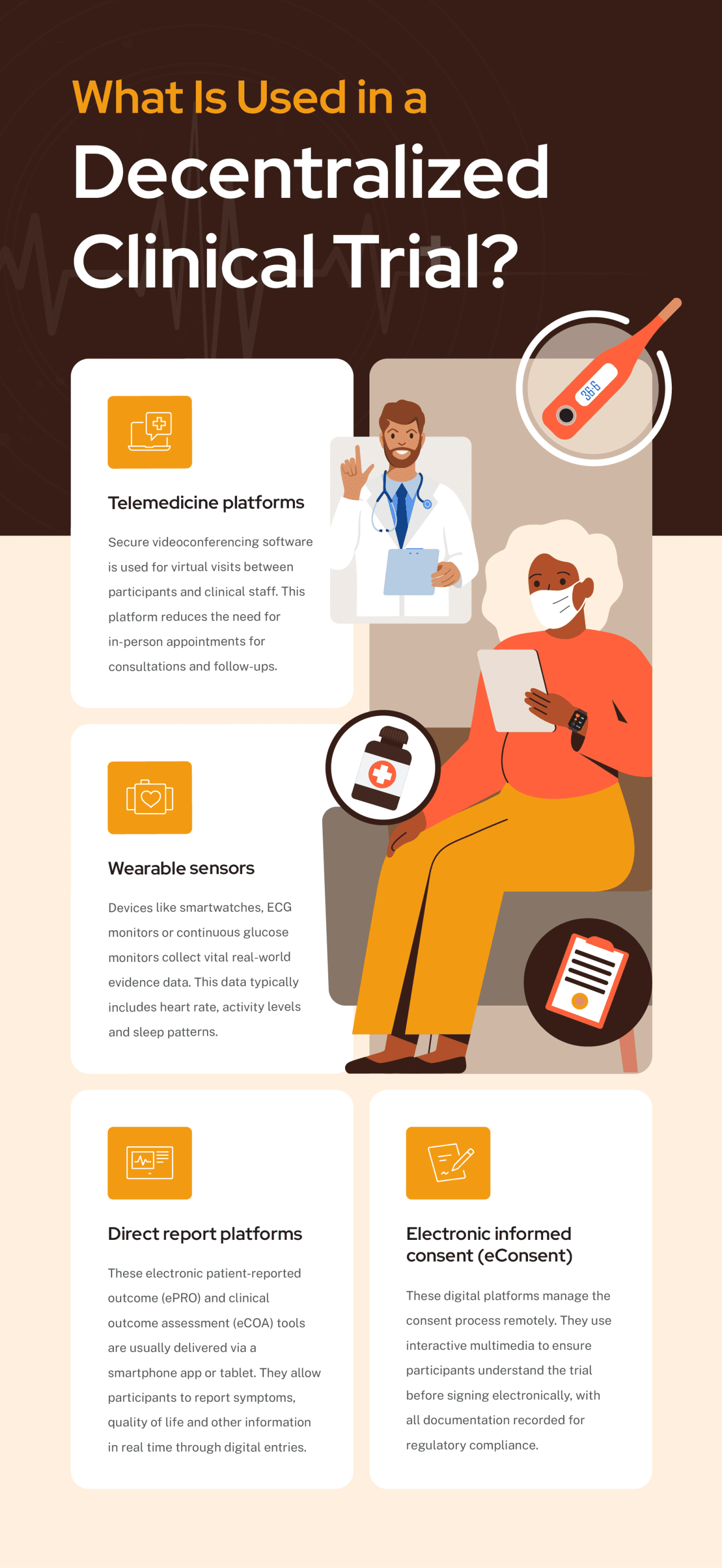
These advancements help underserved people in rural areas participate in clinical trials.
The Benefits of a Hybrid Model
While decentralized clinical trials help generate invaluable data, some in-person interactions remain important to maintain. However, adopting a more hybrid approach offers more flexibility. Organizations can benefit from having a centralized site with the added reach of decentralized solutions.
The hybrid approach helps ensure everyone’s needs and requirements are met, including:
- Trials that can’t be completed remotely, such as biopsies, advanced imaging (MRIs, PET scans) or the administration of intravenous drugs.
- Participants who require periodic in-person contact due to serious health conditions or concerns about using technology.
- Early-stage trial phases or studies that involve unknown side effects and require close monitoring.
- Participants who lack reliable access to the internet or digital literacy and require additional equity support in person.
This approach allows for site visits when necessary, while decentralizing anything else that can be done remotely.
Strategies for Improving Recruitment With DCTs
A strong recruitment strategy requires a combination of digital convenience, trust and a trial that’s easy for participants to take part in. Checking all these boxes ensures that a DCT achieves its desired results while earning the dedication of its participants.
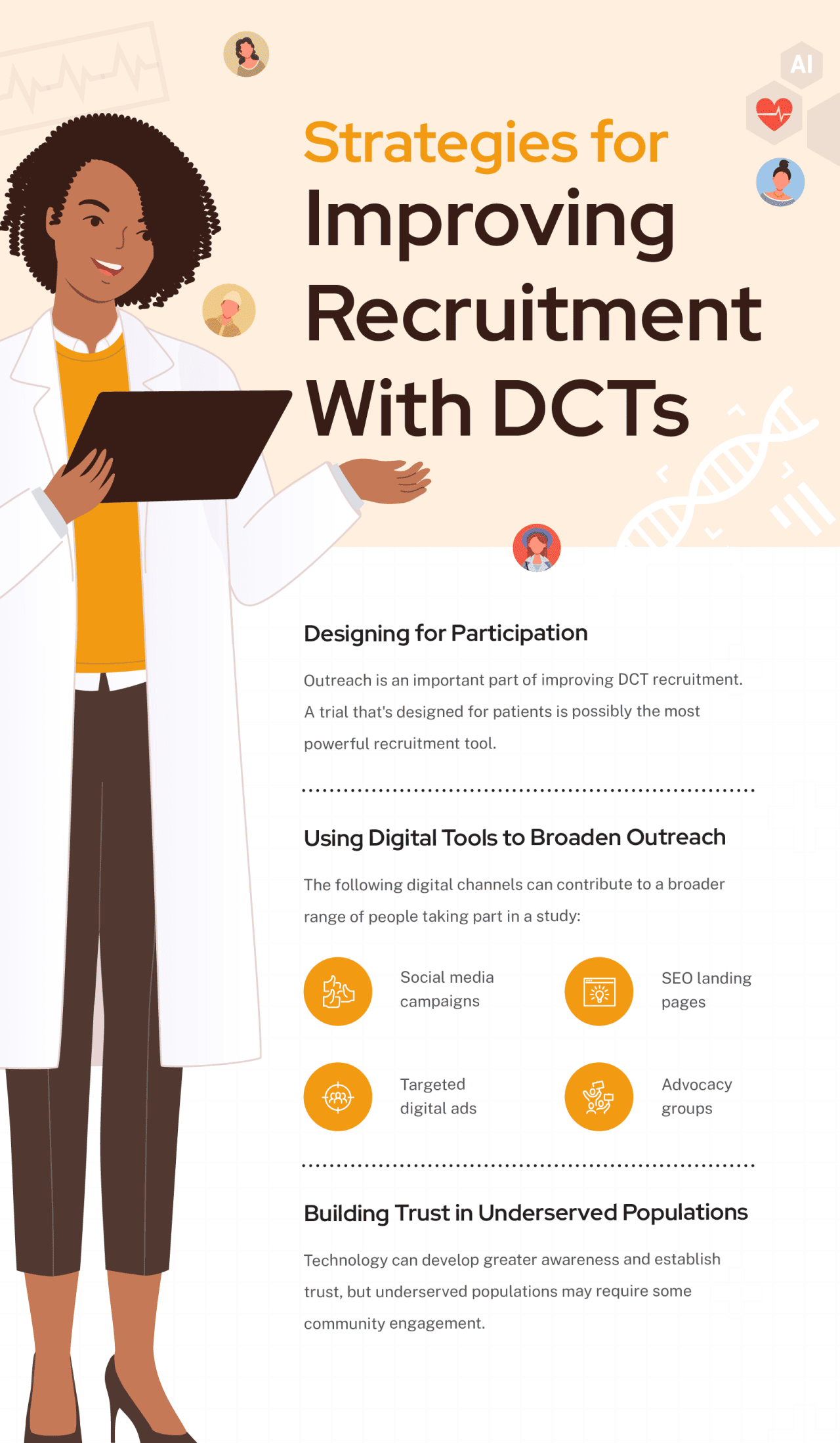
Designing for Participation
Outreach is an important part of improving DCT recruitment. However, a trial that’s designed for patients is possibly the most powerful recruitment tool.
Making the trial as convenient as possible keeps participants actively interested — whether through flexible scheduling or a simple, easy-to-follow user experience on digital platforms. Either way, look for any opportunity to reduce the physical, financial or time-related burdens participants face.
Using Digital Tools to Broaden Outreach
Many tools are available to help you reach participants. The following digital channels can contribute to a broader range of people taking part in a study:


- Social media campaigns: You can use social media to reach specific patient demographics or post on community forums with details about the trial.
- SEO landing pages: Create dedicated web pages using specific words that people eager to participate in a trial are already looking for. This strategy can increase potential sign-ups.
- Targeted digital ads: You can advertise directly on health-related websites, encouraging people who are browsing online to click for more information.
- Advocacy groups: By collaborating with online patient advocacy groups, you can share information with established readers while using the group’s credibility to build trust.
AI is also being used in patient recruitment, streamlining the process of finding patients and matching them to ideal studies.
Building Trust in Underserved Populations
Technology can develop greater awareness and establish trust, but underserved populations may require some community engagement. Many people nationwide still have a historical mistrust of medical studies.
One of the many benefits of decentralized clinical trials is the opportunity to change perceptions. In populations like this, openly addressing past mistrust and partnering with local organizations can help build a more trusting relationship.
The Role of Mobile Health Fleets in DCT Success
Mobile health fleets are an integral part of a successful decentralized clinical trial. They handle logistics and ensure compliance and effective supply chain management. Without dedicated mobile clinics, remote trials aren’t as effective or feasible.
Single-source deployment partners work with you to bring the trial directly to patients. This partnership is crucial for decentralized clinical trials that face geographical constraints. They achieve dependable, trustworthy results in several ways.
Home and Mobile Health Services
This process involves deploying well-trained healthcare professionals to a participant’s home. They perform tasks that can’t be done remotely, including drawing blood, administering infusions or performing physical assessments.
This bridges the gap between what technology can do and what requires a hands-on clinical touch.
Direct-To-Patient (DTP) Logistics
DTP logistics represent the entire supply chain. They manage the shipment of any investigational drugs and study materials. This process will also typically include sending the necessary equipment directly to a participant’s home.
The logistics of getting drugs and materials to their intended destination are complex. They may include taking steps to protect the integrity of the products, such as keeping items in temperature-controlled packaging.
Fleet Compliance and Regulatory Management
Managing a fleet of vehicles can entail significant legal and administrative responsibilities. Some of these crucial management and compliance actions include:
- Ensuring that all vehicles, staff and trial participants are covered for the correct medical services.
- Managing commercial driver’s licenses (CDLs) and specialized training for operating large vehicles.
- Adhering to the different laws and regulations for providing mobile clinics in each state the fleet operates in.
- Sticking to a complex maintenance schedule to keep vehicles operational and reduce costly downtime.
Due to the significance of these duties, many organizations partner with an enterprise physical infrastructure provider with certified professional operators to manage these challenges. Some key decision-makers may rely on an experienced turnkey solution for fleet logistics, leaving them to focus on clinical trial objectives.
Challenges and Strategic Considerations
A successful transition to a more hybrid or decentralized model requires an understanding of its challenges. With this knowledge, organizations can prepare in advance to ensure an effective trial.
Data Quality and Integrity
The quality of any gathered data must be ensured. This strategy maintains accurate information when participants aren’t in a supervised setting. As remote data can come from a variety of devices, validating their accuracy when self-reported is crucial.
Strategic ways to overcome this challenge include implementing training on remote management for investigators, or using centralized platforms to flag inconsistencies.
Compliance and Data Privacy
DCT studies typically include home nurses, couriers and having to comply with several data and patient privacy laws. These regulations may include Europe’s General Data Protection Regulation (GDPR) or the Health Insurance Portability and Accountability Act (HIPAA).
Laws can vary by region, and engaging with regulatory bodies as soon as possible is an important strategy. Protecting sensitive patient data requires a secure digital process with end-to-end data encryption for all transmissions.
Mitigating the Digital Divide
Participants in low-income areas and the elderly are key demographics in many decentralized clinical trials. Expecting these people to have personal technology that can log information is unrealistic. To accurately measure results while maintaining diversity, it’s important to provide participants with preconfigured devices.
Patient Engagement and Retention
Maintaining patient engagement can be challenging without regular face-to-face interaction. The hybrid model helps reduce dropout rates during a clinical trial. By combining the convenience of remote monitoring with an in-person visit to establish trust and build rapport, studies can remain on track.
Logistics and Operational Complexity
The operational complexities of DCTs can be challenging. They typically involve managing the shipment of temperature-sensitive drugs, coordinating home lab collections and tracking materials across hundreds of locations.
Having a prepared logistics partnership plan in place can resolve many of these complexities. Entrusting these logistical requirements to a single-source deployment partner can streamline the process.
Charting the Future of Your Clinical Trial Strategy
For many organizations, the future of clinical trials will be an evolution of traditional trials. Instead of thinking of it as a replacement for traditional trials, it should be seen as a more strategic and balanced approach to obtaining valuable data.
Technology is a crucial component of this evolution. However, mobile solutions are a key contributor to advancing clinical research. By reaching patients where they live, complex logistical barriers of the past can be overcome. For patients, this means being seen and heard within an effective DCT program. For clinical trial organizers, this means greater data value and increased trust from previously untapped communities.
When combining these strategies with a scalable fleet of mobile clinics, patient recruitment and retention rates can increase exponentially. For enterprise-level organizations, this can develop into a far-reaching and rewarding logistics partnership with an enterprise physical infrastructure provider.
This story was produced by BusTest Express and reviewed and distributed by Stacker.





(0) comments
Welcome to the discussion.
Log In
Keep it Clean. Please avoid obscene, vulgar, lewd, racist or sexually-oriented language.
PLEASE TURN OFF YOUR CAPS LOCK.
Don't Threaten. Threats of harming another person will not be tolerated.
Be Truthful. Don't knowingly lie about anyone or anything.
Be Nice. No racism, sexism or any sort of -ism that is degrading to another person.
Be Proactive. Use the 'Report' link on each comment to let us know of abusive posts.
Share with Us. We'd love to hear eyewitness accounts, the history behind an article.