


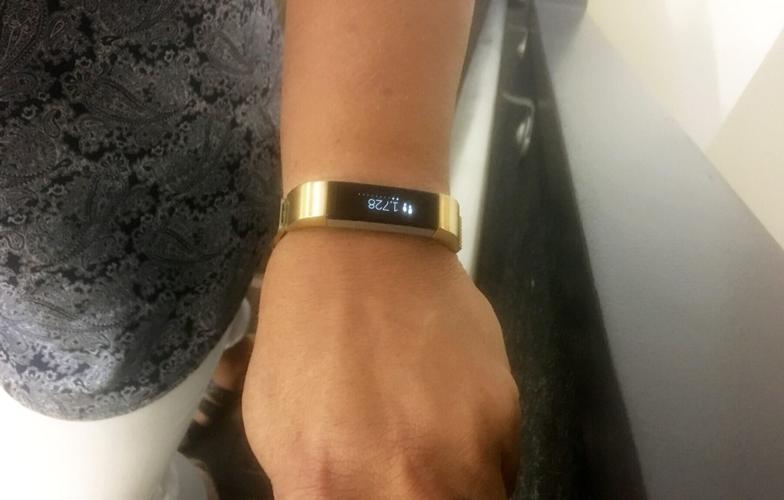


A wearable device being used with somebody climbing stairs. (American Heart Association via SWNS)
By Stephen Beech
Smartphone apps and wearable trackers help boost exercise levels for people with heart disease, according to new research.
Everyday technology increases daily step counts and participation in moderate-to-vigorous physical activity, say scientists.
A review of 14 clinical trials involving more than 1,000 adults found that people with cardiovascular disease who used smartphone apps or fitness trackers walked in excess of 1,000 more steps per day and engaged in around four extra minutes of daily physical activity compared to people not using digital technology.
Physical activity is crucial to prevent a further heart attack or stroke in people with cardiovascular disease, say doctors.
But study lead author Ajith Vemuri said: "Many people with cardiovascular disease can't participate in traditional cardiac rehabilitation programs because of time, distance or financial barriers."
Vemuri, of Penn State Health Milton S. Hershey Medical Center, added: "Smartphones and wearables are already in people's pockets and on their wrists.
"When we show that these devices can effectively support routine care, we can start designing cost-effective, personalized digital interventions that reach a much wider population."

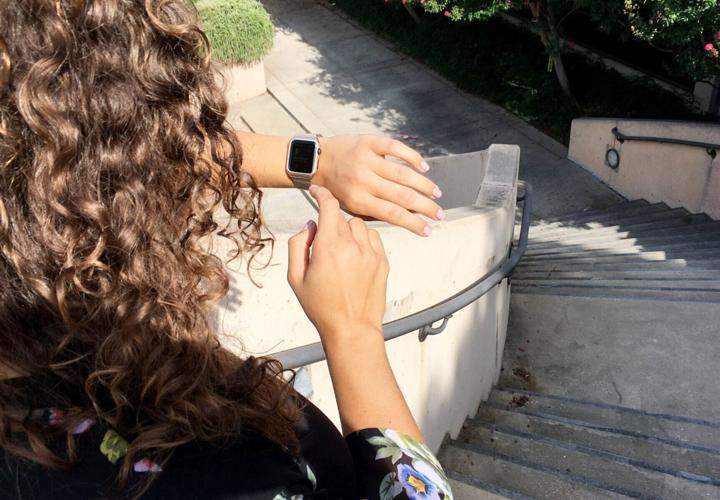
A wearable device being used on stairs. (American Heart Association via SWNS)
He explained that digital devices can set personalized daily step goals, generate reminders or motivational messages, give feedback on progress or link home-based rehab programs to health care professionals to help guide and monitor treatment.
Some of the applications also included "gamification" — such as quizzes or rewards, coaching and goal review, allowing people to track their progress and adjust their activity goals.
Study senior author Ramin Zand, of Penn State College of Medicine, said: "These devices are not just gadgets.
"When included in a treatment plan, they can support routine care and help patients take small yet important steps toward better cardiovascular health."


The research reviewed 14 clinical trials including more than 1,000 participants.
Participants in 13 of the trials were 18 or older, while one study's participants included adolescents aged 12 and older.

(Photo by Ketut Subiyanto via Pexels)
All the participants had diagnosed cardiovascular disease, such as coronary heart disease, heart failure or had suffered a heart attack or stroke.
The analysis showed that, compared to peers who didn't use digital tools, people using smartphone apps or wearable technologies walked nearly 1,100 more steps daily.
They also engaged in around four more minutes of moderate-to-vigorous movement per day more, according to the findings published in the Journal of the American Heart Association.
Zand said: "We noticed that these benefits occurred even though the tools varied and used simple behavior-change methods, such as self-monitoring, feedback and goal setting."
He added: "These tools did not significantly improve peak oxygen consumption or walking distance.
"This means that while digital programs can motivate patients to be more active, longer studies are needed to see if these changes lead to lasting improvement in fitness and overall health outcomes."
The findings were welcomed by the American Heart Association (AHA).
Damon Swift, immediate past-chair of the AHA's lifestyle physical activity committee, said: "Research has shown that fewer than one-third of people with cardiovascular disease are physically active.
"Combining mobile and wearable technologies with standard preventive measures provides a unique opportunity to potentially further reduce the risk of advanced cardiovascular disease or a second or third cardiovascular disease event."
Swift, of the University of Virginia, added: "There is a health benefit from going from inactive to somewhat active and there is reduced risk of death for even getting up to about 7,000 steps per day.
"Therefore, wearable technology may have a positive impact on cardiovascular disease by encouraging people to be a little more active."


(0) comments
Welcome to the discussion.
Log In
Keep it Clean. Please avoid obscene, vulgar, lewd, racist or sexually-oriented language.
PLEASE TURN OFF YOUR CAPS LOCK.
Don't Threaten. Threats of harming another person will not be tolerated.
Be Truthful. Don't knowingly lie about anyone or anything.
Be Nice. No racism, sexism or any sort of -ism that is degrading to another person.
Be Proactive. Use the 'Report' link on each comment to let us know of abusive posts.
Share with Us. We'd love to hear eyewitness accounts, the history behind an article.