


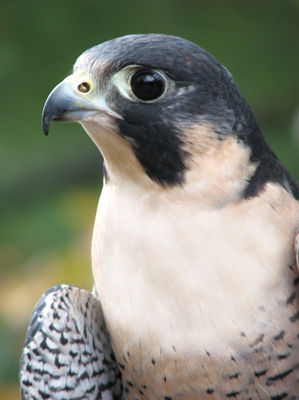
(Courtesy of the Squam Lakes Natural Science Center)
BY ADAM DRAPCHO, LACONIA DAILY SUN
HOLDERNESS — The Squam Lakes Natural Science Center set a visitor record in 2014, then again last year. With 2016 marking the 50th anniversary of the natural science center's founding, Executive Director Iain MacLeod is hoping that this year will be even better.
Chances are good that his hopes will be realized, because when the center opens for the season on May 1, it will unveil the most ambitious addition yet to the center, a 2,200-square-foot, 18-exhibit Water Matters Pavilion, incorporating informational displays, live animals and technological features, all illustrating the critical roles that water plays in New Hampshire's ecosystem.
"We've really raised the bar," MacLeod said about the Water Matters Pavilion. "I think it's the most exciting exhibit we've ever done. It's a pretty major addition."
The Water Matters Pavilion is the last of several major enhancements made possible by a capital campaign initiated in 2012 that set out to raise $3.5 million, and ended up raising $4 million. The campaign made possible previously released improvements, some of which are behind-the-scenes, such as a facility to house migratory birds during the winter, and another to house the raptors that Science Center presenters bring to off-campus programs. Other improvements are must-sees for visitors, such as the Water Matters Pavilion, which will include live mink, turtles, fish and frogs, along with live webcam views into eagle and other bird nests, whose lives revolve around the water.
Young visitors will want to be sure to reserve some time – and energy – for the Gordon Interactive Playscape, a naturalistic playground that invites humans large and small to imagine they are a red squirrel scampering through the forest as they elude predators.
"The Science Center has grown and grown over the past several years," said MacLeod.
The recent additions, coupled with a broader marketing strategy, have brought in more visitors, said Amanda Gillen, marketing and visitor services manager. Last year, the center set a new record, besting 2014's mark, with 53,000 visitors. Combined with guided lake tours and outreach programs, the science center reached 85,000 people in 2015, she said, noting that among those figures are adults who want to share their younger memories with their children.
"People are hearing about us again," Gillen said. "We're 50 years old, we have generations of visitors now."
The Squam Lakes Natural Science Center came to life in 1966, when, following the wishes of the residents of Holderness, 180 acres of land, including several buildings, were purchased and the nonprofit organization was incorporated. The public was first welcomed in the summer of 1969, when lectures were offered in the red barn on Route 3 and visitors could ply two hiking trails and visit live animal exhibits.
In a press release issued by the center, Bill Webb, executive director from 1989 to 1992, is quoted as saying, "That's the magic of the Science Center. Every generation is fascinated by the experiences found here, experiences that in many ways only get better as we get older. The challenge for the Science Center is finding new and innovative ways to keep future generations connected to the natural world around them."
MacLeod said that challenge, described by Webb, is carefully weighed while planning new facilities. The new Water Matters Pavilion makes further use of technology than in any other exhibit. However, more technology isn't always better, he noted. One perennial topic of analysis is whether the property is "blessed or cursed" to be located in an area with no data connection for smart phones. Anecdotally, parents have expressed relief that their children are forced to forget about Twitter and Instagram while at the center and focus only on the present environment. Yet, there might come a time when people will simply refuse to step into an unconnected plane.
"The jury is out," he said.
A clear bright spot is the center's Blue Heron School, a preschool and kindergarten started as a pilot program in 2010. The school employs the Montessori education philosophy and uses the natural world as its classroom, regardless of weather. With space for 18 students, the Blue Heron School has been full to capacity for the past two years and MacLeod has had to turn away several families hoping to enroll their children for the 2016-2017 session.
"How do we expand the school? Is there a market to expand that school?" he said. "It certainly is successful. Hopefully people will really get excited about what we're doing."
The center tries to add something new each year to keep people coming back.
"I think this year is going to be a blockbuster year," MacLeod said.


(0) comments
Welcome to the discussion.
Log In
Keep it Clean. Please avoid obscene, vulgar, lewd, racist or sexually-oriented language.
PLEASE TURN OFF YOUR CAPS LOCK.
Don't Threaten. Threats of harming another person will not be tolerated.
Be Truthful. Don't knowingly lie about anyone or anything.
Be Nice. No racism, sexism or any sort of -ism that is degrading to another person.
Be Proactive. Use the 'Report' link on each comment to let us know of abusive posts.
Share with Us. We'd love to hear eyewitness accounts, the history behind an article.