


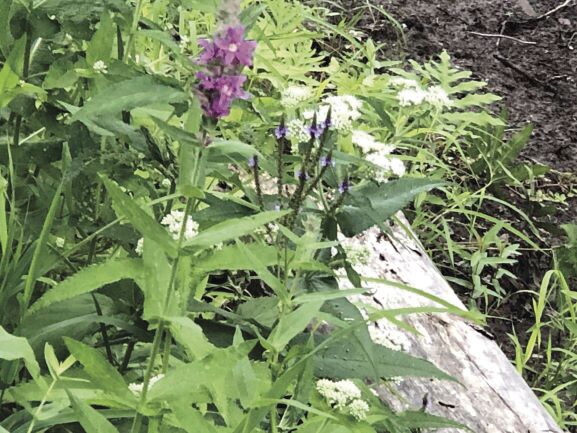
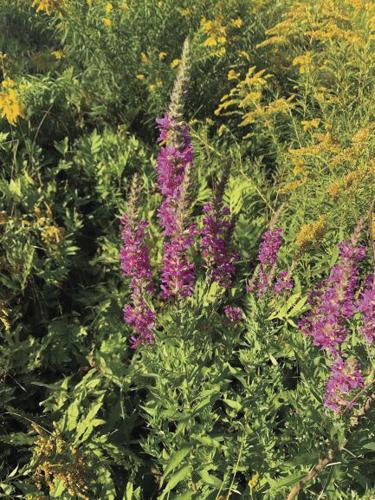
LACONIA — While beautiful, purple loosestrife is an invader in wetlands. This attractive perennial plant with purple flowers on long spikes can reach over five feet high, blooming from July through September in wet meadows, pastures, cattail marshes and edges of streams and ponds. Purple loosestrife out-competes native wetland species in part because each mature plant has over 2.5 million seeds. By replacing native plants, it adversely affects wildlife and fish habitat.
Belknap County Conservation District recommends that if purple loosestrife presence is low, it can be controlled by carefully cutting and bagging the flowering tops, then digging out the plant and disposing of tops and plants in plastic bags. Composting isn't an option as the seed are resilient and can germinate even after several years.
To address large purple loosestrife infestations in New Hampshire there have been efforts to release two species of leaf-eating beetles as biological controls, and chemical measures have also been used.
There are several native species including blue vervain that look similar to purple loosestrife. To learn more, visit des.nh.gov/organization/commissioner/pip/factsheets/bb/documents/bb-45.pdf.


(0) comments
Welcome to the discussion.
Log In
Keep it Clean. Please avoid obscene, vulgar, lewd, racist or sexually-oriented language.
PLEASE TURN OFF YOUR CAPS LOCK.
Don't Threaten. Threats of harming another person will not be tolerated.
Be Truthful. Don't knowingly lie about anyone or anything.
Be Nice. No racism, sexism or any sort of -ism that is degrading to another person.
Be Proactive. Use the 'Report' link on each comment to let us know of abusive posts.
Share with Us. We'd love to hear eyewitness accounts, the history behind an article.