





Hello my friends. This is my first photography blog, which I hope to bring to you monthly, with a goal of helping you become a better photographer.
Let’s begin with what makes a great photograph and then break this down into meaningful parts that you can work on to help improve your photos. All great photos tell a story, and all meet the following criteria: they are in focus and properly exposed, they capture light in a way to enhance the photo, they have one main subject, they are artistic and unique, and they cause the viewer to become emotionally invested in the photo. Now, let’s take a look at each of these criteria individually.
Focus: If your photo is blurry and out of focus, there is no way to fix this later. The major cause of blurry photos is due to moving or shaking the phone or camera while taking the photo. The beauty of digital photography today is that you can look at your photo and take it over again if it’s out of focus. The other causes of blurry photos have to do with the subject moving. This could be taking a photo at a sporting event, someone running, the wind blowing a flower, etc. Stopping motion when the subject is moving toward or away from you is easier than stopping motion that is moving left or right. Shutter speeds of 1/150 second to 1/1000 second may be necessary to stop motion. Digital cameras allow you to adjust the shutter speed manually or automatically, while some advanced phones have a pro mode that allows you to change the shutter speed. Another point about focus: I previously said all great photos are in focus, but what I neglected to tell you is that in many cases, part of the photo can be out of focus. For example, when taking photos of people, you often want the background out of focus, so that the background doesn’t compete with the main subject. Intentionally making the background go out of focus is easy with digital cameras, by adjusting the aperture (lens opening), or using a zoom lens, but a bit more tricky using a phone. If your phone has a zoom lens, try zooming in on your main subject and the background may automatically go out of focus.
Exposure: If your photo is either too dark (underexposed), or too light (overexposed), it won’t have the same impact on the viewer. Exposure can be a bit tricky because the light meter built into the phone or camera is often reading the overall background light, which can then make the subject over- or underexposed. There are a number of fixes for this problem. First, by uploading your photo into your computer, depending on your computer software, you can lighten or darken the photo. Many phones with advanced camera features allow you to adjust the exposure up or down to make the photo lighter or darker. This might be done through an exposure adjustment, or by changing the ISO number to a higher number, like 600 or 800. For the purpose of this article, I won’t get into ISO, but if you’re interested send me an email and I’ll explain. Most digital cameras also allow you to manually adjust the exposure if the image is too light or dark. Some of the more advanced cameras built into phones give you the ability to adjust the highlights and shadows.
Light: Someone once said photography was painting with light. Most professional photographers pay great attention to lighting conditions and the best time to photograph their subject. It all starts with what you’re photographing. For example, when photographing people, try and do so under overcast skies, or if sunny out, beneath trees, to avoid harsh lighting and shadows. Overcast skies also work well for intimate nature photos, like waterfalls or plants and flowers. In general, its best to avoid photographing any subject at noon on a sunny day. This overhead lighting is the least flattering, so if possible, choose to shoot early morning or later in the afternoon, when the light is less harsh and warmer in color. Also, try and avoid shooting into the sun.
One main subject: Keep in mind, your photo is telling a story and if you have competing story lines, the viewer can’t determine which is the more important theme. So your goal is to have one main point of focus or primary subject.
Artistic: This topic will become a future blog as it covers a lot of material, but for our purposes today, I’ll summarize what artistic means. Most professional photographers agree that an artistic photo incorporates elements of color (complimentary or harmonious), form (shape, lines, patterns, texture and volume), moment (cycle of the day, soft light, seasons), perspective (converging lines, relationship between the size of objects in the photo), view (close up, intimate landscape, grand scenic to include a horizon), light (early morning, late evening, midday, front/side/back lighting) and finally composition (arrangement of subject matter, rule of thirds, balance and proportion, rhythm, lead in lines). Much of this is subjective, as is all art, but most would agree that all artistic photos incorporate one or more of the above elements.
Unique: Photos that are unique can’t be easily duplicated again and thus have more value and emotional impact on the viewer. Examples of this could include photos of friends or loved ones, news photos and sports photos. Also, some scenic landscape photos that involve an unusual weather condition could also be described as unique.
Emotion: The more a photo has an emotional impact on you, the greater its meaning. All photos tell a story and depict a certain moment in time. Many preserve memories and all great photos create an emotion of curiosity, awe, happiness, tranquility, fear, sadness, longing, or love.
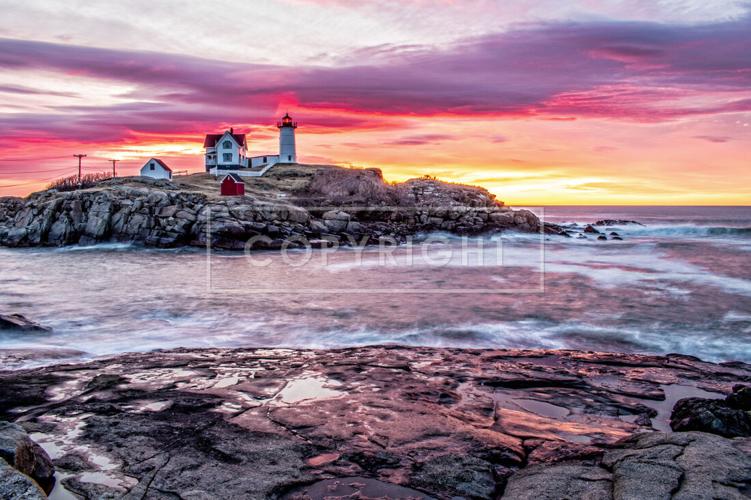
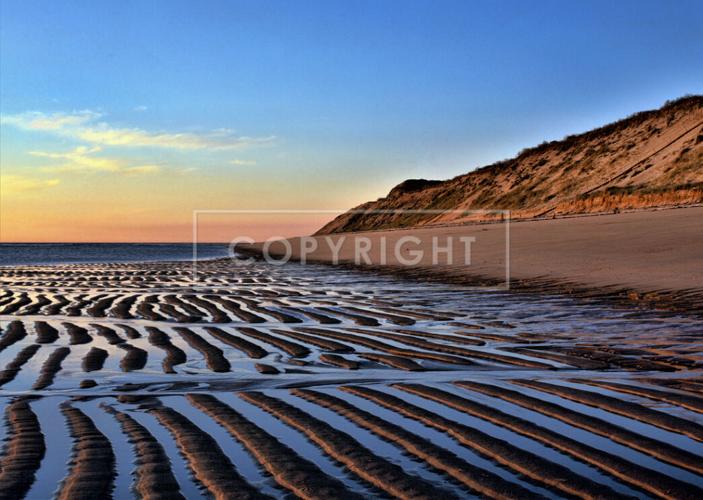
Here are some examples of photos that embody elements of a good photograph:


Thanks for reading my first photography blog. Look for my monthly blogs covering topics like creating more artistic photos, camera types, how to use your digital camera, Photoshop and other software, printing at home, photographing New England landscapes, displaying your photos, photography classes, selling your photography, and more. One of my future goals is to teach photography classes to students who own digital cameras. If you’re interested, please let me know.

•••
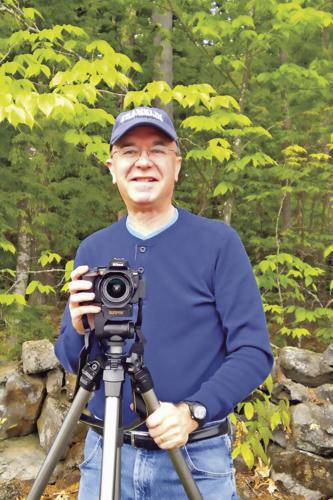
Ron Bowman is a New Hampshire photographer with 50 years experience photographing weddings, real estate and New England landscapes. He is a member of the Lakes Region Art Association and can be reached at rbphotonh@gmail.com. To view his work and read his full profile, visit rbphotonh.com.
(0) comments
Welcome to the discussion.
Log In
Keep it Clean. Please avoid obscene, vulgar, lewd, racist or sexually-oriented language.
PLEASE TURN OFF YOUR CAPS LOCK.
Don't Threaten. Threats of harming another person will not be tolerated.
Be Truthful. Don't knowingly lie about anyone or anything.
Be Nice. No racism, sexism or any sort of -ism that is degrading to another person.
Be Proactive. Use the 'Report' link on each comment to let us know of abusive posts.
Share with Us. We'd love to hear eyewitness accounts, the history behind an article.