


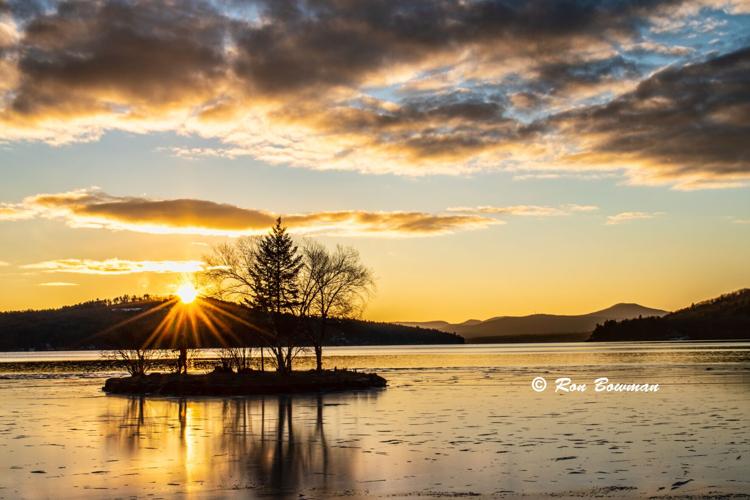

Sunrise at Meredith Bay, Lake Winnipesaukee (Ron Bowman photo)
Hello, my photography friends and welcome to my third blog.
As I discussed in my last blog, artistic photos incorporate one or more elements of color, form, moment, perspective, light, and good composition. In this article we are going to take a close look at moment, perspective, light and composition.

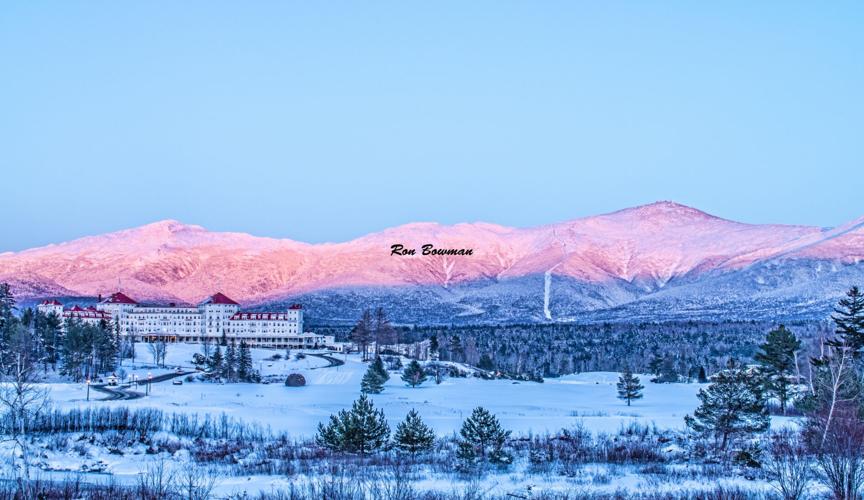
Mt. Washington (Ron Bowman photo)
Moment: This is one of the more difficult elements to describe, but usually refers to a photo that depicts a scene when the photographer is in the right place at the right time. Photos like this sunset of Mt. Washington are an example of being at the right place at the right time. The pink color, often referred to as alpenglow, only lasted a few minutes. Your photos could include a rainbow, happiness on a child’s face, an action photo of a sporting event, or waves crashing on the rocks. If your photos include an element of “moment,” they could be considered unique, as it might be difficult or impossible to re-create the same photo again.
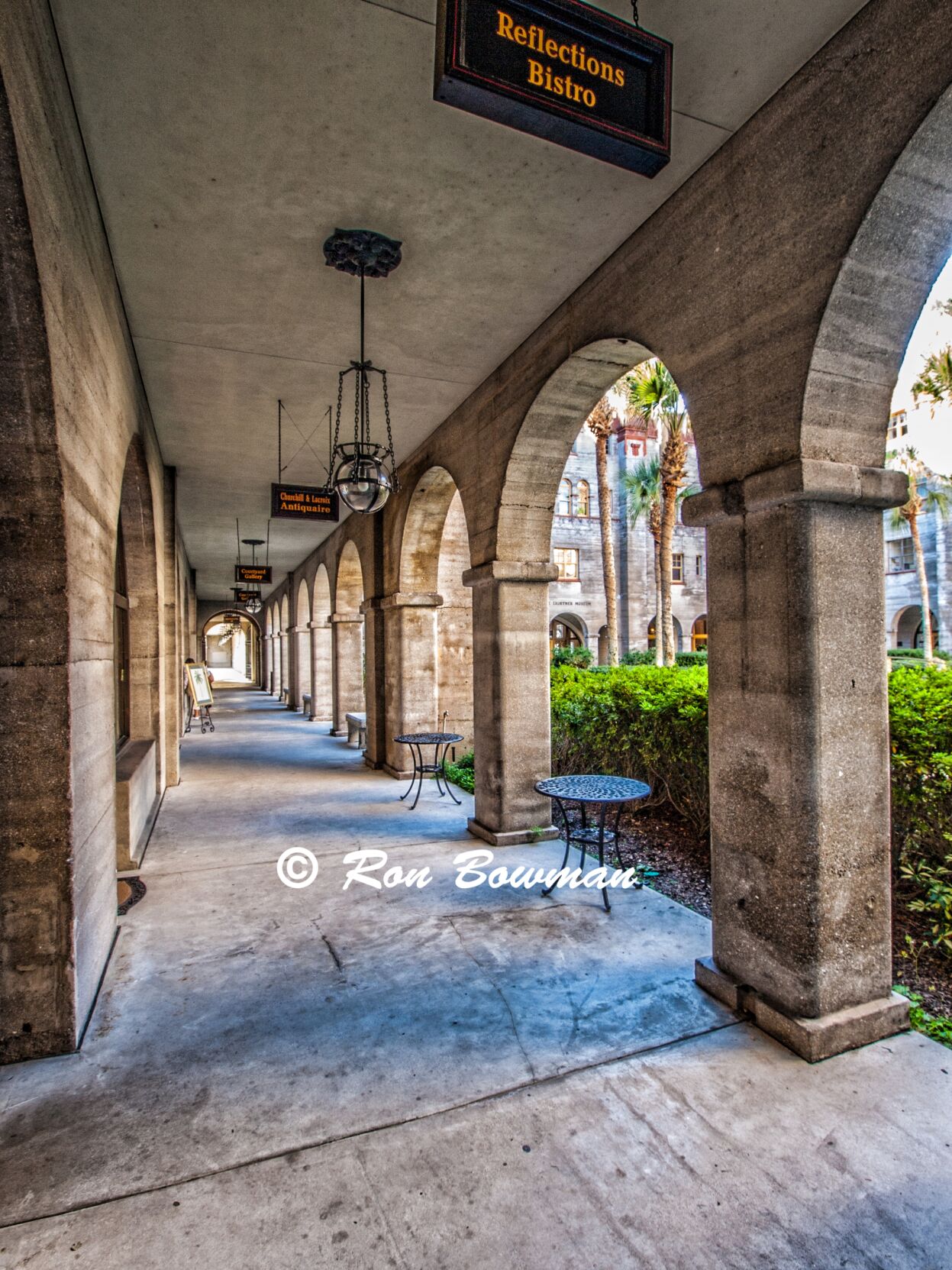
Bistro in St. Augustine, Fla. (Ron Bowman photo)

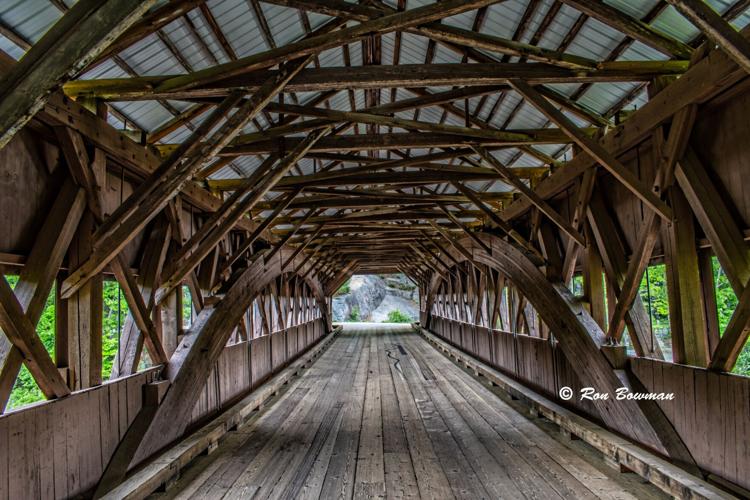
Covered bridge (Ron Bowman photo)
Perspective: A photo showing great perspective displays converging lines and the relationship between the size of objects in the foreground and background. The photo of the bistro in St. Augustine, Fla., is an example of converging lines and the relationship of the size of the columns in the foreground compared with the background. The second photo of the interior of a covered bridge is also an example displaying converging lines (floor planks and rails), which gives the feeling of distance (depth), or perspective. Your examples could include the interior of a building, a bridge, a railroad tracks receding into the background, or boats in a harbor.
Light: Outdoor or indoor lighting can be dramatic, soft, romantic, warm, or cool, and will help establish the mood and tone of a photograph. Light includes overhead, side, front, and back lighting. This subject alone could be the basis for another blog, so I will keep it simple for now. Although there are exceptions to the rule, you should avoid direct overhead lighting on a sunny day, or shooting into the sun, unless you are shooting at sunrise and including the sun burst in the photo. You can’t control the light outdoors, but you can plan your photo shoot around the weather, or time of day. I have found early morning or late afternoon light to be best for nature and landscape photography due to the warmer color of the light. Photos of people tend to come out better on overcast days, or under shade trees on sunny days where the light is more even and doesn’t cast strong shadows.

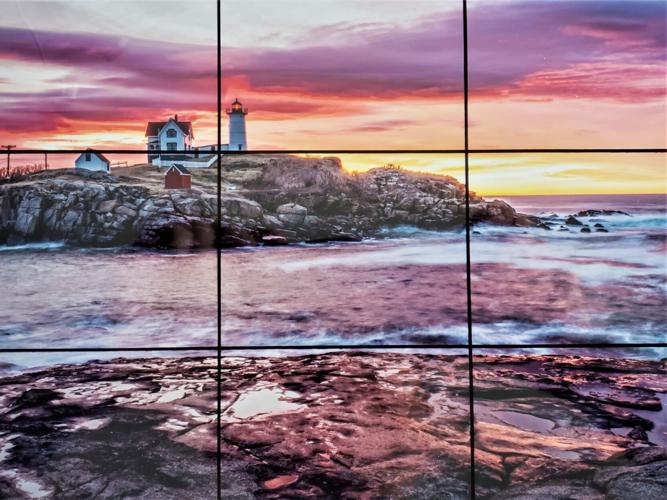
An example of the rule of thirds. (Ron Bowman photo)
Composition: This happens to be one of my favorite elements, or ingredients, of a good photograph. A good composition will draw the viewer’s attention to the main point of focus, subject or theme of the photo. Assuming your photo is in focus, properly exposed, includes elements of being artistic and creates an emotional response with your viewer, then the last element is a good composition. Where you place the main point of focus, the subject, in relation to the rest of the photo will help determine the overall impact of the photo. Most professional photographers compose their photographs according to the “rule of thirds.” The example shown here could be your template for understanding this composition rule. The rule is to place your main point of focus, the subject, at the junction where one of these four lines intersect. Notice how the lighthouse is placed at the intersecting lines in the upper left quadrant. Another example is the sun burst located in the left lower quadrant in the photo of Meredith Bay on Lake Winnipesaukee. You will find that most great photographs follow this guideline. The key is not to place your main subject directly in the middle of the photo. I know this sounds counter intuitive, but trust me, it works.
Thanks for reading my third photography blog. My next article is going to cover an actual photo shoot that took place in late December, at Meredith Bay on Lake Winnipesaukee. I will analyze the decisions I made regarding the location, time of day, camera settings and composition. Look for future articles covering topics like camera types, how to use your digital camera, Photoshop and other software, printing at home, photographing New England landscapes, displaying your photos, photography classes, and selling your photography. Please contact me if you have any questions or comments about my blogs.

•••
Ron Bowman is a New Hampshire photographer with 50 years experience photographing weddings, real estate and New England landscapes. He is a member of the Lakes Region Art Association and can be reached at rbphotonh@gmail.com. To view his work, visit the Lakes Region Art Association gallery at Tanger Outlets in Tilton, or rbphotonh.com.
(0) comments
Welcome to the discussion.
Log In
Keep it Clean. Please avoid obscene, vulgar, lewd, racist or sexually-oriented language.
PLEASE TURN OFF YOUR CAPS LOCK.
Don't Threaten. Threats of harming another person will not be tolerated.
Be Truthful. Don't knowingly lie about anyone or anything.
Be Nice. No racism, sexism or any sort of -ism that is degrading to another person.
Be Proactive. Use the 'Report' link on each comment to let us know of abusive posts.
Share with Us. We'd love to hear eyewitness accounts, the history behind an article.