


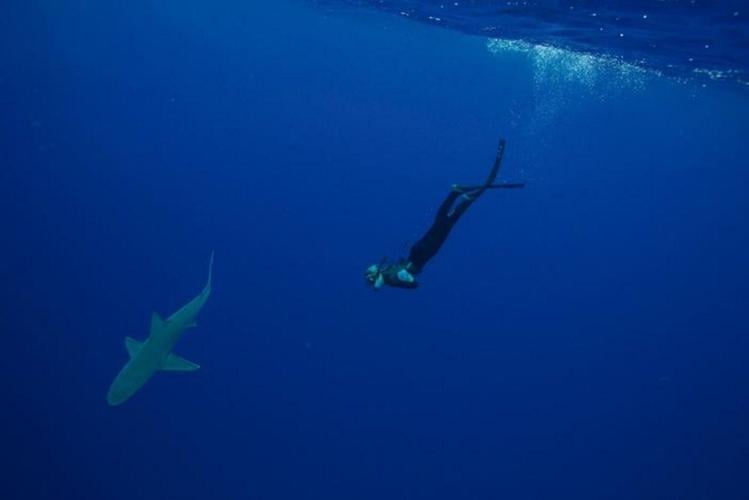

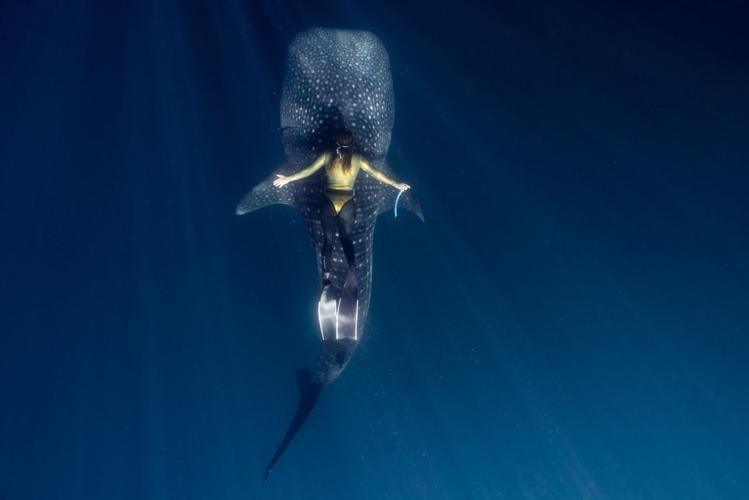
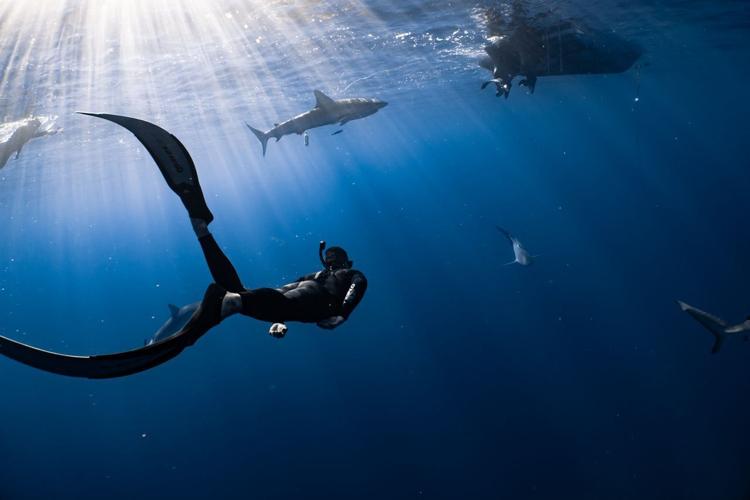

Diver swimming with shark during an experiential shark ecotourism program in O'ahu, Hawai'i. (Ocean Ramsay via SWNS)
By Stephen Beech
Shark ecotourism is fueling long-term conservation efforts to save the fearsome predators, according to new research.
Immersive experiences alongside sharks deepen commitments to preserve the threatened species, suggests the study.
Researchers found that people who join shark ecotourism tours are more likely to take action to protect the apex predators.
These include donating to related causes, signing petitions or speaking up online, according to the findings of the Australian study published in the journal npj Ocean Sustainability.
The University of Sydney research is the first to show an enduring commitment, of at least two years, to conservation by shark ecotourists.
Coupled with positive shifts in news media and online sentiment toward sharks in recent years, the findings suggest the benefits of the burgeoning industry are more than economic — offering the potential to help conserve dwindling shark numbers.

(Photo by Thomas balabaud via Pexels)
Globally, shark populations have declined by 71% in the last 50 years, with a third of species now threatened with extinction.
Conversely, participation in shark ecotourism — immersive, in-water experiences observing them in their natural habitats — has risen.
More than 500,000 people a year are estimated to participate in interactive eco-activities with sharks and rays.
The activities are offered in at least 20 countries, including Australia, the Baamas, Hawaii, South Africa, Fiji, Palau and French Polynesia.
Study leader Carmen Dobszewicz and her colleagues surveyed two groups of people in Hawaii.

(Photo by Elianne Dipp via Pexels)
The first group comprised tourists participating in an experiential shark ecotourism tour in Oahu.


They snorkeled or free dived with sharks while accompanied by a marine biologist who surveyed the sharks to support ongoing research and provided educational information about shark conservation.
The comparison group comprised members of the public sampled from Waikiki Beach.
Each group was surveyed at the time of the tour and again two years later.
On each occasion, respondents were asked whether they had engaged in shark conservation activities.
The study found, two years after their tour, participants were 40% more likely to be engaging in shark conservation efforts than would be expected had they not taken part.
Conservation activity increased in both groups over the two years, but the rise was considerably larger among tour participants.
The findings held after accounting for differences between the groups at the start of the study including demographic traits and prior involvement in conservation.
Among tour participants, the biggest increases were in posting on social media, signing petitions, making donations and advocating for legislation.

(Photo by Daniel Torobekov via Pexels)
University of Sydney Ph.D. candidate Dobszewicz said the study is the first to track the long-term conservation impact of responsibly conducted shark encounters, and offers guidance to ecotourism operators on how their efforts can benefit conservation efforts.
She added: “Our findings suggest responsible tour operators can be a much-needed boon to efforts to halt the rapid decline in shark populations and help shift widely held misconceptions about sharks.
“Supplementing the underwater experience with educational information on the role sharks play in the ecosystem, the threats they face, and what can be done to mitigate these threats leaves tourists with a better understanding on the precarity of shark populations and what we can do to try and rebuild them.”
Study senior author Michele Barnes said the research adds to the university’s work on the relationships between people and nature that underpin a sustainable future.
Barnes added: “Conservation ultimately depends on people.
“When we build or strengthen meaningful connections between people and the natural world, we create the conditions for lasting change, and that is essential for a sustainable future.”


(0) comments
Welcome to the discussion.
Log In
Keep it Clean. Please avoid obscene, vulgar, lewd, racist or sexually-oriented language.
PLEASE TURN OFF YOUR CAPS LOCK.
Don't Threaten. Threats of harming another person will not be tolerated.
Be Truthful. Don't knowingly lie about anyone or anything.
Be Nice. No racism, sexism or any sort of -ism that is degrading to another person.
Be Proactive. Use the 'Report' link on each comment to let us know of abusive posts.
Share with Us. We'd love to hear eyewitness accounts, the history behind an article.