



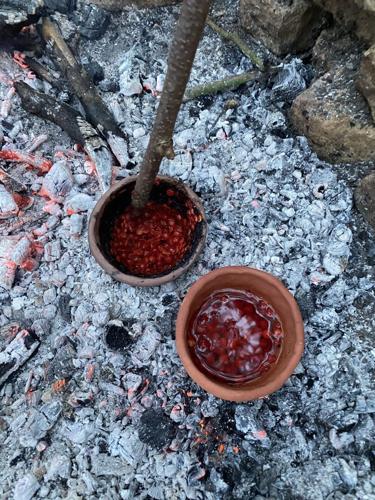

Experimental cooking with modern replica pottery vessels to recreate prehistoric recipes. (Lara González Carretero via SWNS)
By Stephen Beech
Stone Age families enjoyed a "surprisingly complex" range of cuisine - including herbs and seafood as well as meat, according to new research.
The study revealed an "unprecedented" variety of plants in human diets thousands of years ago.
People living in Britain and Europe as long ago as the 6th millennium BC used a wide range of plant, animal and seafood products to create "elaborate" meals, according to the findings.
The study was led by Dr. Lara González Carretero, of the University of York, and also involved researchers from Ireland, Denmark, Germany, Norway, Poland, Russia and Spain.
The research team examined organic remains found in 58 pieces of pottery uncovered at 13 archaeological sites across Northern and Eastern Europe dating between the 6th and 3rd millennium BC.
They recovered tissue samples of a wide variety of plants- including grasses, berries, leaves, and seeds.

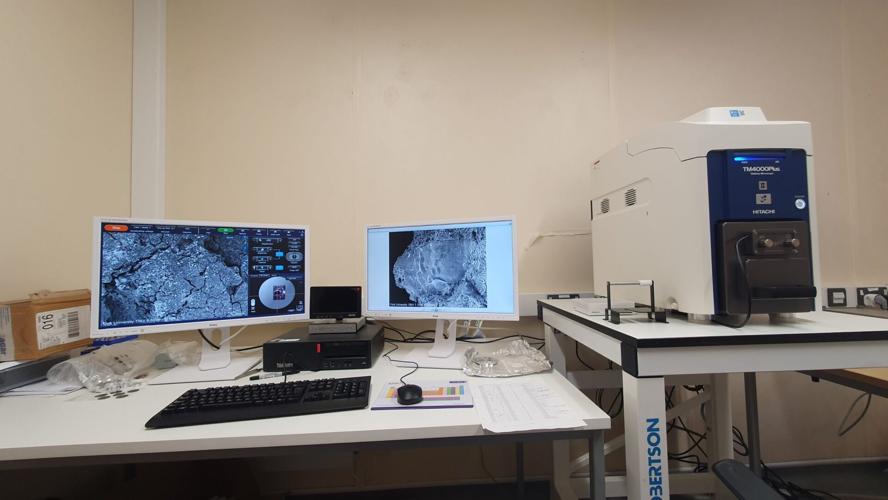
Scanning Electron Microscopy. (Lara González Carretero via SWNS)
A common technique for interpreting the diets of ancient cultures involves analysing fatty residues in ancient pottery.
But Dr. Carretero said that method is limited as it mostly provides insights only into animal remains.


For the new study, published in the journal PLOS One, the research team instead combined multiple techniques, including microscopic examination and chemical analysis, to identify the remains of plants that were eaten by ancient European hunter-gatherers.
She said: "In many cases, plant remains were found alongside those of animals, most often fish and other seafood.
"The exact mixtures and ingredients varied from region to region, most likely reflecting which resources were locally available as well as local cultural practices.

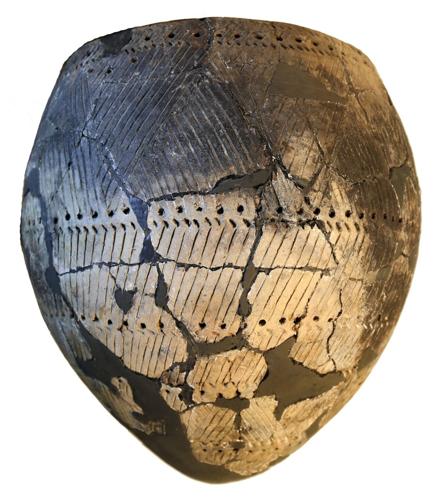
Example of Mesolithic pottery vessel analyzed in this study. (Lara González Carretero via SWNS)
"These findings emphasize the important role of plants and aquatic foods in the diets of early Europeans.
"These results also support the idea that these communities regularly used pottery technology for food preparation and that each culture had their own complex culinary traditions.
"This study also demonstrates that combining multiple analytical techniques can yield detailed insights that are overlooked by traditional methods, particularly when it comes to the plants that ancient peoples were eating."

An "unprecedented" variety of plants were in human diets thousands of years ago. (Lara González Carretero via SWNS)
Dr. Carretero added: “While conventional chemical analysis tends to highlight the animal-based components of ancient meals, our combined microscopic approach has brought these prehistoric recipes back into focus.
"We found that hunter-gatherer-fishers were not living on fish alone; they were actively processing and consuming a wide variety of plants.
"This research underscores that to truly understand ancient diets, we need to take a closer look at these food crusts, quite literally.”


(0) comments
Welcome to the discussion.
Log In
Keep it Clean. Please avoid obscene, vulgar, lewd, racist or sexually-oriented language.
PLEASE TURN OFF YOUR CAPS LOCK.
Don't Threaten. Threats of harming another person will not be tolerated.
Be Truthful. Don't knowingly lie about anyone or anything.
Be Nice. No racism, sexism or any sort of -ism that is degrading to another person.
Be Proactive. Use the 'Report' link on each comment to let us know of abusive posts.
Share with Us. We'd love to hear eyewitness accounts, the history behind an article.