


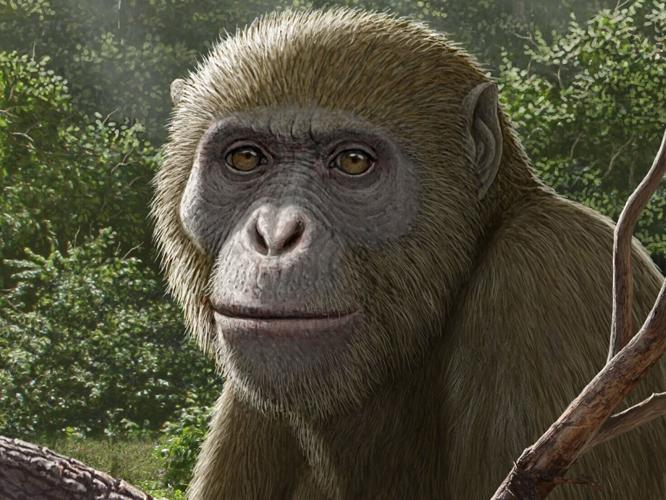
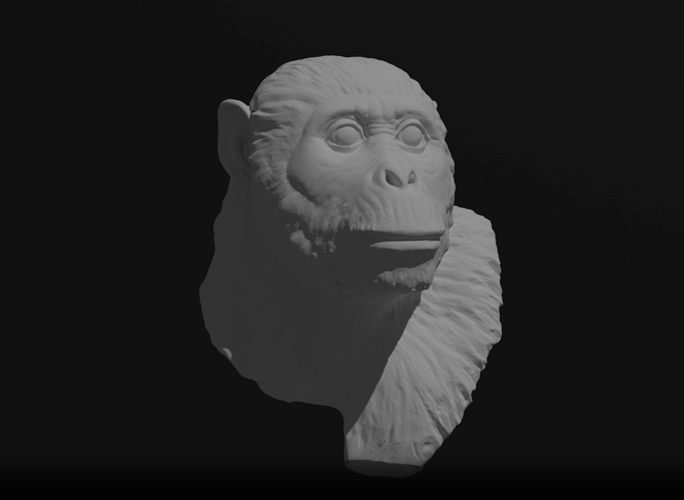
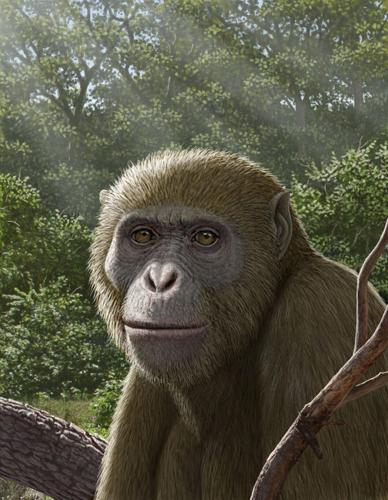
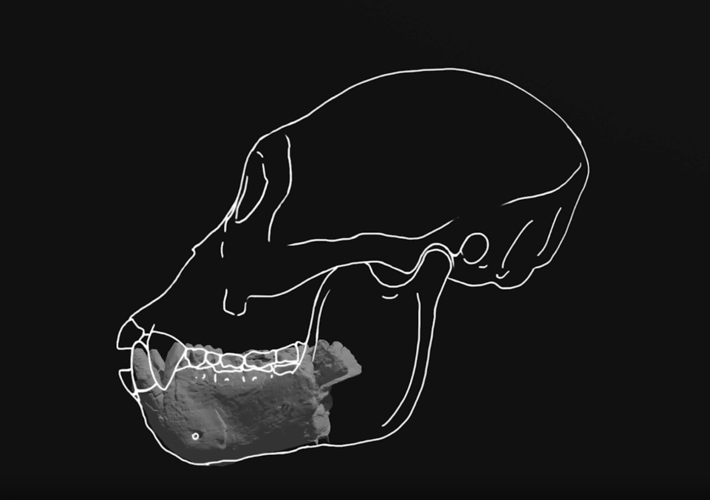

Digital reconstruction of Masripithecus moghraensis, the ancient ape species. (Mansoura University / The Leakey Foundation / STDF via SWNS)
By Stephen Beech
The discovery of a new ape species that lived in Egypt 17 million years ago is "reshaping" the understanding of evolution.
The fossil find suggests that the closest ancestors to modern apes may have emerged in northern Africa rather than in the traditionally studied regions of East Africa, scientists say.
The new species, named Masripithecus, represents the closest known hominoid relation to the lineage that ultimately gave rise to all living apes, including humans, according to a study published in the journal Science.
Today, it is widely accepted that the earliest apes originated in Afro-Arabia during the Oligocene Epoch, more than 25 million years ago, and diversified there before spreading into Eurasia around 14 million to 16 million years ago.
However, the emergence of modern apes — the group that includes all living species and their last common ancestor — remains uncertain, as fossils from that period are scarce and difficult to interpret.
The newly identified ape was discovered in the Wadi Moghra region of northern Egypt and lived around 17 million to 18 million years ago.

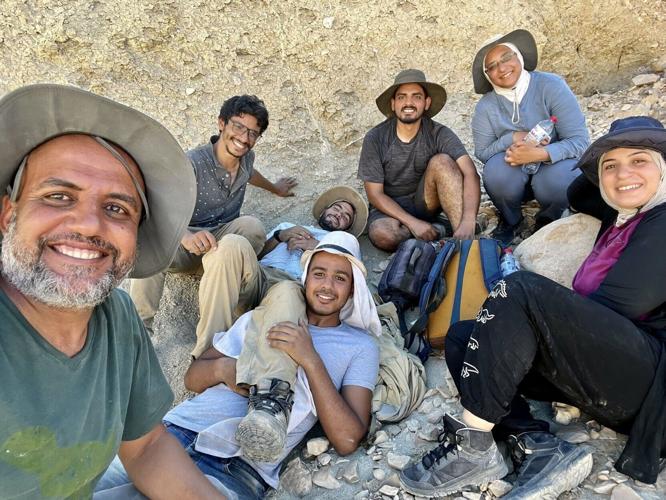
Sallam Lab team from Mansoura University Vertebrate Paleontology Center. (Professor Hesham Sallam via SWNS)
Researchers say the remains represent the first definitive fossil ape known from North Africa.
Study senior author Hesham Sallam, a paleontologist at Mansoura University in Egypt, said: “We spent five years searching for this kind of fossil because, when we look closely at the early ape family tree, it becomes clear that something is missing — and North Africa holds that missing piece.”
Previously, Early Miocene sites in North Africa had yielded fossils of monkeys, but not apes.
As a result, early apes and their close relatives were believed to be confined largely to more southern parts of Africa during that period.
Geologically younger ape fossils have been reported from Africa, Asia, and Europe, but their relationships and geographic roots are subject to debate.
Now it appears likely that the uneven fossil record obscured understanding of the origin of crown Hominoidea — the group that includes all living apes, chimpanzees, and humans, along with their last common ancestor.

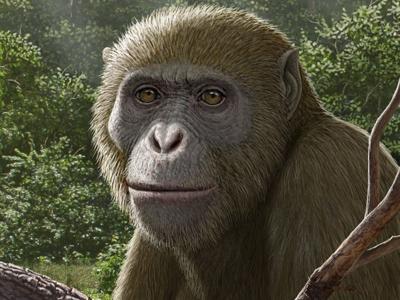
Reconstruction of Masripithecus moghraensis in the wild. (Mauricio Antón / Hesham Sallam via SWNS)
The discovery of Masripithecus not only reveals that apes were present in North Africa during that time period, but also that the new species was quite distinct from similar-aged species in East Africa.
Researchers explained that the genus name Masripithecus combines Masr, the Arabic word for Egypt, with the Greek píthÄkos, meaning ape.
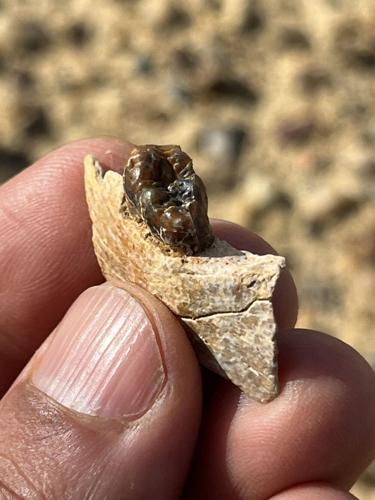
Although the new fossil material is limited to the lower jaw, the team says it preserves a "distinctive" combination of features not seen in any other known ape from that time.


These include exceptionally large canine and premolar teeth, molar teeth with rounded and heavily textured chewing surfaces, and a notably robust jaw.
Study first author Shorouq Al-Ashqar, also of Mansoura University, said: “Together, they suggest that Masripithecus was adapted for versatility.
"The study interprets its chewing anatomy as evidence of a flexible, mainly fruit-based diet, with the ability to process harder foods such as nuts or seeds when needed.

Masripithecus moghraensis mandibular fragment with right M3 at the moment of discovery. (Professor Hesham Sallam via SWNS)
"This flexibility would have helped Masripithecus to thrive at a time when climatic changes were leading to more pronounced seasonality in northern Africa and Arabia.”
Al-Ashqar said Masripithecus occupies a "key" position on the ape family tree.
The research team combined anatomical evidence from living and extinct apes, DNA from living apes, and the geological ages of fossil species to determine how living and extinct species are related and when they all split from each other.
The analysis found that Masripithecus is more closely related to the living apes than are any species known from the Early Miocene of East Africa.
Further analysis pointed to northern Africa and the Middle East as the most likely home for the common ancestor of all living apes, which is estimated to have lived during the Early Miocene.
During that time period, this region occupied a key position as the African and Arabian plates moved to the north during their final phase of collision with Asia.
Shifting sea levels periodically reduced marine barriers, turning the region into a natural corridor for animal dispersal.

Side view of the digital reconstruction of Masripithecus moghraensis, the ancient ape species. (Mansoura University / The Leakey Foundation / STDF via SWNS)
The team says Masripithecus provides a "crucial" intermediate link between the previously disjunct African and Eurasian fossil records, revealing that apes were already diversifying in the area and therefore positioned to expand into Europe and Asia as soon as land connections were established.
Study co-author Erik Seiffert, a paleontologist from the University of Southern California, says the discovery has changed his perspective on ape origins.
He said: “For my entire career, I considered it probable that the common ancestor of all living apes lived in or around East Africa.
"But this new discovery, and our new and novel analysis of hominoid phylogeny and biogeography, now strongly challenge that idea.
"And, importantly, the likelihood of this scenario doesn’t depend on Masripithecus — but it is very much consistent with it.”
The researchers believe that renewed exploration in the region will uncover further fossils critical to understanding the origin and diversification of modern apes.


(0) comments
Welcome to the discussion.
Log In
Keep it Clean. Please avoid obscene, vulgar, lewd, racist or sexually-oriented language.
PLEASE TURN OFF YOUR CAPS LOCK.
Don't Threaten. Threats of harming another person will not be tolerated.
Be Truthful. Don't knowingly lie about anyone or anything.
Be Nice. No racism, sexism or any sort of -ism that is degrading to another person.
Be Proactive. Use the 'Report' link on each comment to let us know of abusive posts.
Share with Us. We'd love to hear eyewitness accounts, the history behind an article.