




(Flints Auctions via SWNS)
By Ed Chatterton
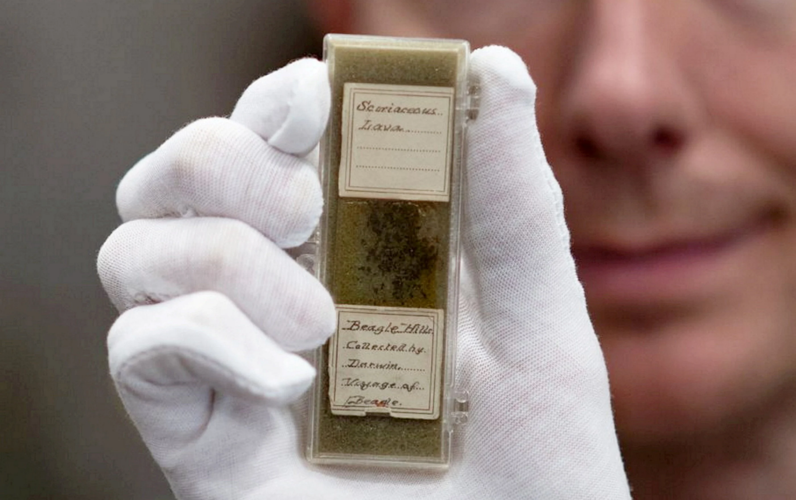
A microscope slide from Charles Darwin's HMS Beagle voyage has sold at auction for three times its estimate - after being found in a cardboard box.
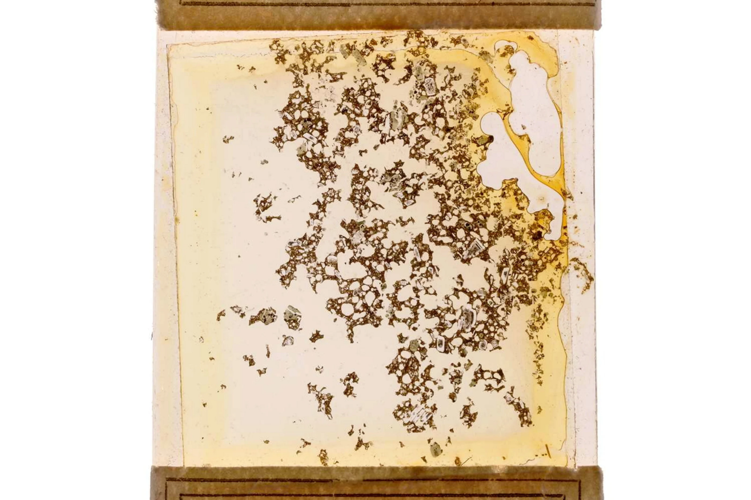
The slide, which Darwin used to examine volcanic rock as part of his groundbreaking research, was purchased at a local auction as part of a job lot.
The vendor never realized the hidden treasure was tucked away inside the box of 250 slides, mainly recording insects and rocks.
It contains lava collected on the boffin's HMS Beagle voyage across four continents from 1831 to 1836 which led to his theory of evolution.

(Flints Auctions via SWNS)
The tiny piece of history is believed to be the only slide from Darwin's research to ever publicly go under the hammer.
Despite bids from around the world, the slide was purchased yesterday (Wed) by a private UK buyer for $2,173.


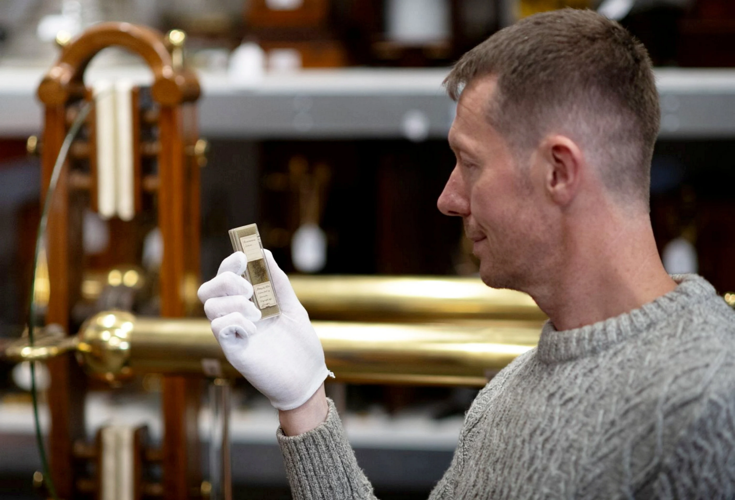
Matt Nunn, scientific instrument specialist at Flints Auctions, which handled the sale, said: "I knew this slide was a rare find, but its appeal was unknown as a Darwin specimen has never been seen at auction.
"Having received online bids from around the world, I am pleased that this fascinating piece of history has been bought by a private collector and is staying in the UK."
The specimen contained Scoriaceous Lava and its glass sample's label simply reads: "Collected by Darwin. Voyage of Beagle."

(Flints Auctions via SWNS)
Scoriaceous Lava is a rare material and its discovery by Darwin was key to the understanding of the geology of the volcanic islands and it represents some of the earliest scientific observations of the rock types in the Atlantic and Pacific.
The rock type itself, scoria, is now recognized as a widespread product of explosive basaltic volcanism.
Nunn said previously: “This is the first time I have ever seen anything related to Darwin and his scientific research outside of a museum or institution.
"To have a specimen that actually relates to him is really quite phenomenal.
"This piece of history will have a broad appeal and I anticipate interest from museums as well as collectors of Charles Darwin ephemera and those who are fascinated by scientific instruments.”


(0) comments
Welcome to the discussion.
Log In
Keep it Clean. Please avoid obscene, vulgar, lewd, racist or sexually-oriented language.
PLEASE TURN OFF YOUR CAPS LOCK.
Don't Threaten. Threats of harming another person will not be tolerated.
Be Truthful. Don't knowingly lie about anyone or anything.
Be Nice. No racism, sexism or any sort of -ism that is degrading to another person.
Be Proactive. Use the 'Report' link on each comment to let us know of abusive posts.
Share with Us. We'd love to hear eyewitness accounts, the history behind an article.