


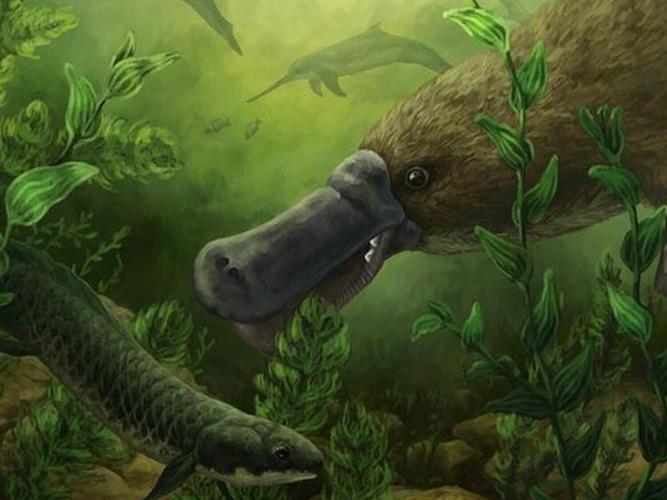
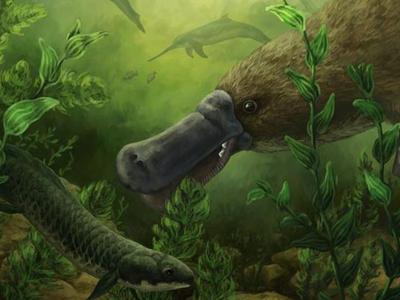
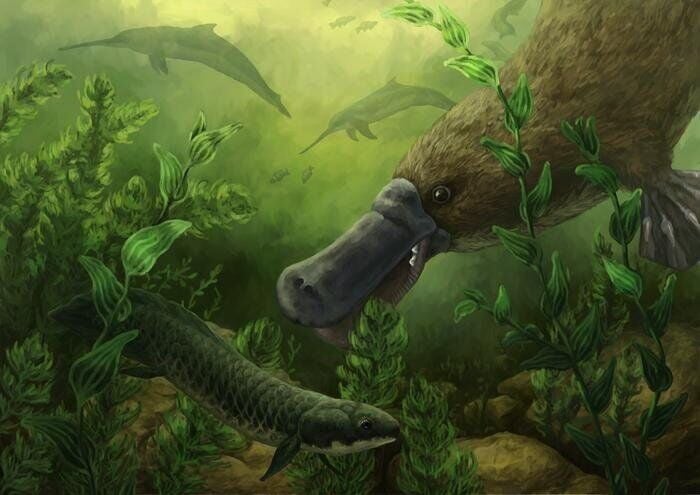
Artist's impression of the toothed platypus that lived 25 million years, probably with other other aquatic animals including ancient lungfish, flamingos and freshwater dolphins. (Gen Conway / Flinders University Palaeontology Lab via SWNS)
By Stephen Beech
Platypuses swam with dolphins 25 million years ago, reveals an "exciting" new platypus fossil find.
Paleontologists made the rare discovery east of the Flinders Ranges in remote outback South Australia.
They say it shows ancient platypuses with well-formed teeth munched on a varied diet in huge inland lakes and rivers 25 million years ago, alongside flamingos and freshwater dolphins.
Aaron Camens, of Flinders University, Adelaide, said: "Platypuses are extremely rare in the fossil record and are often restricted to teeth, so it's exciting to find new material and learn more about these unique mammals."
The well-preserved fossils of the oldest known species, Obdurodon insignis, described in the journal Australian Zoologist, show that a toothed ancestor of the modern platypus lived during the late Oligocene period around 25 million years ago in the lakes, slow-flowing rivers and forested lowlands of central Australia.
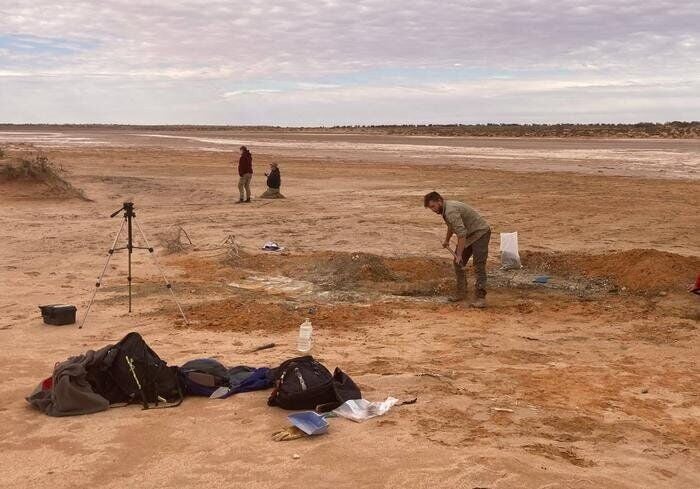
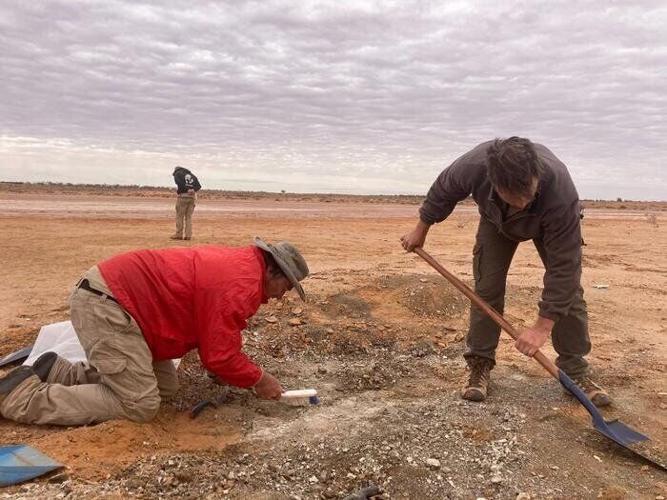
Excavations at the fossil site in Billeroo Creek in 2017 when one of the fossils was recovered. (Aaron Camens / Flinders University via SWNS)
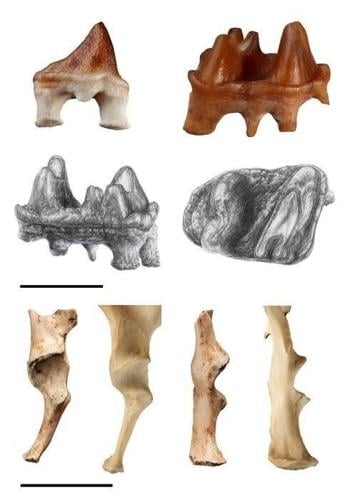
Camens said Obdurodon insignis mainly differs from modern platypuses by having well-formed teeth — molars and premolars.
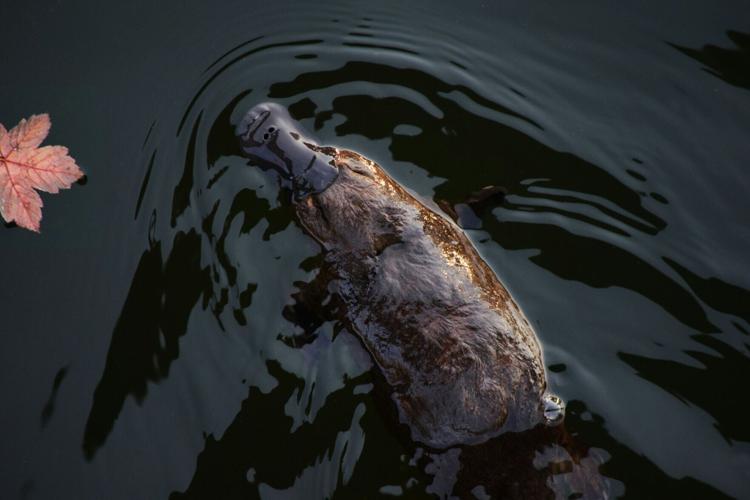
The modern platypus has vestigial teeth on hatching, but soon loses them and only has small horny pads to chew its food with as adults.
Previously, the ancient platypus was known only by one-and-a-half molar teeth, a jaw fragment and a pelvis fragment.
Study co-author Professor Trevor Worthy, from the Paleontology Lab at Flinders University, said: "The new material includes the first premolar, an important tooth in front of the molars.
"The new premolar for Obdurodon insignis shows this species also had large, pointed front teeth, which with its large robust molar teeth could easily have crushed animals with shells or robust exoskeletons like yabbies.
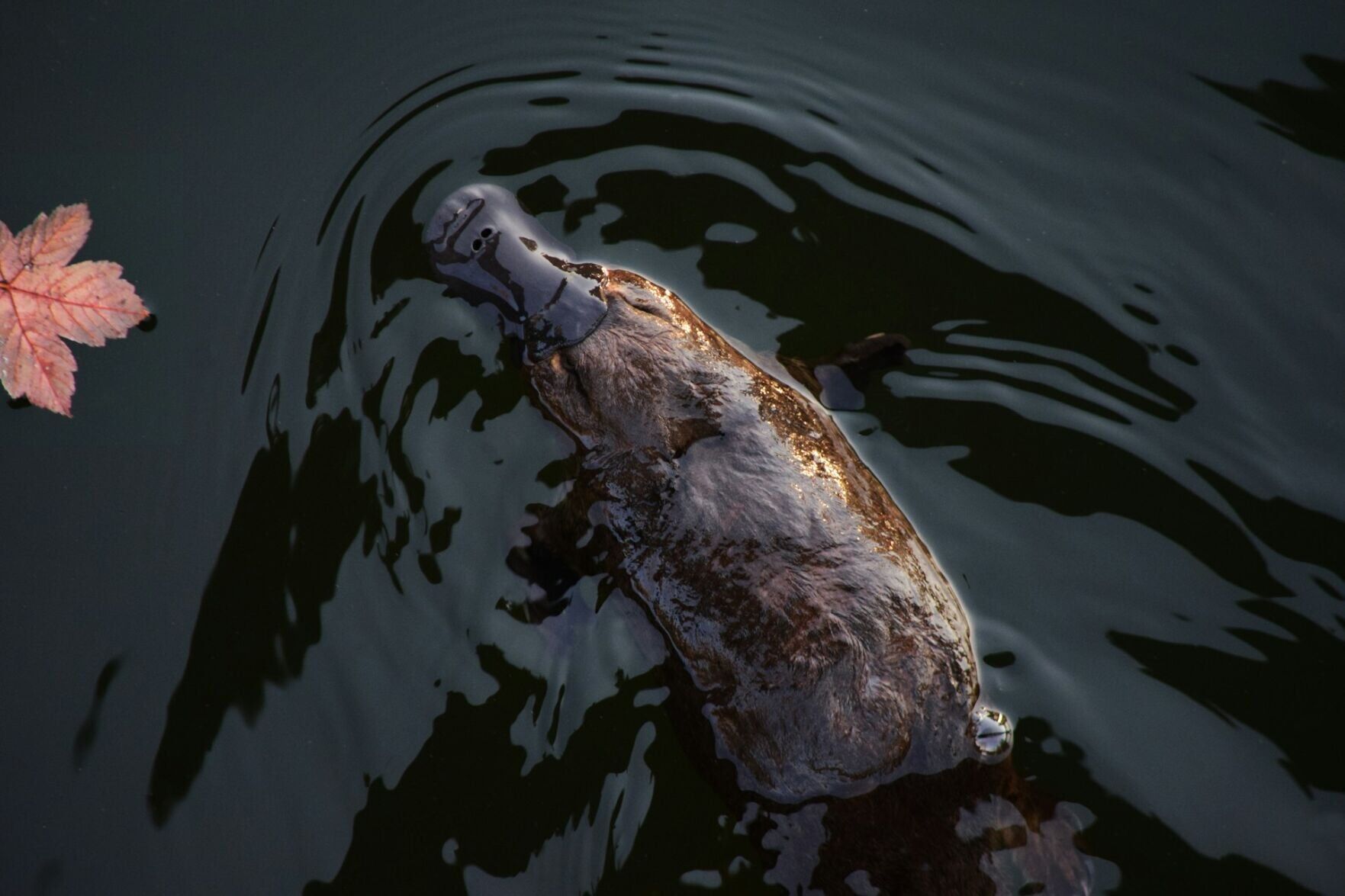
Michael Jerrard
"The other rare find was the discovery of a partial scapulocoracoid, or bone that supports the arm or front limb.
"This reveals a very similar forelimb structure to the modern platypus, indicating it could swim just as well as its modern descendant."
He added: "These fossils show that 25 million years ago Obdurodon insignis was very similar to the modern platypus.
"It differed mainly by being slightly larger and having teeth."


The Flinders University team has organized expeditions to an outback desert location east of the Flinders Ranges for over 20 years to study rocks containing fossils.
As the rocks erode and sand shifts, more evidence emerges of the "lost world" of the region's evolutionary past.
More than a thousand fossils of non-fish vertebrate animals have been collected, including just three fossils of the toothed platypus.

The new fossils of Obdurodon insignis. Lower premolar (upper left). Lower molar (upper right), and drawings (by Gen Conway, Flinders University) of other views (middle row). Two views of the shoulder bone - scapulocoracoid - next to the same bone of a modern platypus. (Gen Conway / Flinders University Palaeontology Lab / via SWNS)
Worthy says the forests then were home to diverse communities of arboreal of tree-dwelling mammals, such as koalas and many types of possums.
He said: "Below, on the ground, sheep-sized marsupials browsed, with many other animals at their feet.
"These included familiar-looking skinks, frogs and small carnivorous marsupials.
"In the trees, numerous birds including the giant eagle Archaehierax lived.
"The lakes supported many kinds of lungfish and other smaller fish.
"Feeding on the fish, or plants and small invertebrates in the lake or along its shores, were several species of waterfowl, cormorants and flamingos.
"Little known, is that a small dolphin also lived in these freshwater ecosystems.
"Its teeth and bones have been found at several places where the rocks expose this ancient community.

Associate Professor Trevor Worthy (left) excavating the fossil layer at Billeroo Creek in 2020 when the scapulocoracoid was found. (Gregg Borschmann via SWNS)
"But as the new fossils show, another mammal swam with the dolphins.
"An ancient, toothed platypus lived in these lakes and rivers as shown by the bones of one that settled to the floor of the lake 25 million years ago."
He says the rainforests and lakes have long gone, but platypuses have been swimming in Australian waterways ever since.
Worthy added: "I have studied this lost ecosystem for many years now, and it is for exquisite fossils like these that I return again and again to the desert.
"One never knows what erosion or one's efforts will reveal next."


(0) comments
Welcome to the discussion.
Log In
Keep it Clean. Please avoid obscene, vulgar, lewd, racist or sexually-oriented language.
PLEASE TURN OFF YOUR CAPS LOCK.
Don't Threaten. Threats of harming another person will not be tolerated.
Be Truthful. Don't knowingly lie about anyone or anything.
Be Nice. No racism, sexism or any sort of -ism that is degrading to another person.
Be Proactive. Use the 'Report' link on each comment to let us know of abusive posts.
Share with Us. We'd love to hear eyewitness accounts, the history behind an article.