


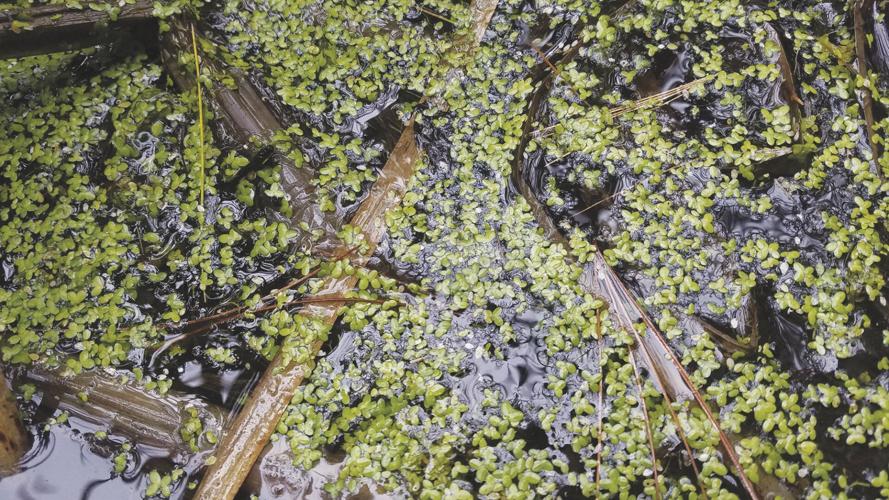
DURHAM — Duckweed, a common aquatic plant in New Hampshire’s lakes, ponds and streams could help filter water contaminants like excess nutrients and then be used as a green manure in agricultural systems. Research by New Hampshire Agricultural Experiment Station scientists seek to understand how effectively growing duckweed in different bodies of water can capture excess nutrients, and then how to safely use the resulting harvested living duckweed as fertilizer on farms. If successful, the discoveries could not only help mitigate adverse impacts of increasing urbanization across the state but increase the sustainability of New Hampshire’s food production.
“Unlike chemical fertilizers, which provide quick nutrient boosts but when mismanaged can also lead to adverse environmental impacts, green manure releases nutrients slowly and supports microbial activity, thus enhancing benefits to plants,” said Anna O’Brien, an assistant professor in the UNH College of Life Science and Agriculture and a scientist with the NHAES. “We chose duckweed as a possible green manure because it’s a native plant in New Hampshire, it’s naturally abundant in our waterbodies, and research shows that it can recapture nutrients in runoff and agricultural wastewater.”
In previous studies led by O’Brien, she found that duckweed, when interacting with microbial organisms that live on or inside the plants, can transform certain pollutants into forms that are predicted to be less toxic. Through similar mechanisms, the duckweed microbiomes could significantly reduce how much nitrogen and phosphorus can run off agricultural operations end up in lakes, rivers and oceans, where an overabundance of these nutrients can impact groundwater and drinking water quality and lead to large algal blooms and oxygen-depleted “dead zones” in which fish and other species struggle to survive.
Common duckweed grows rapidly and easily, and can be found in ponds, lakes and slow-moving streams across the world, including New Hampshire and northeastern New England. This makes this aquatic plant ideal plant for applied and experimental use, O’Brien said.
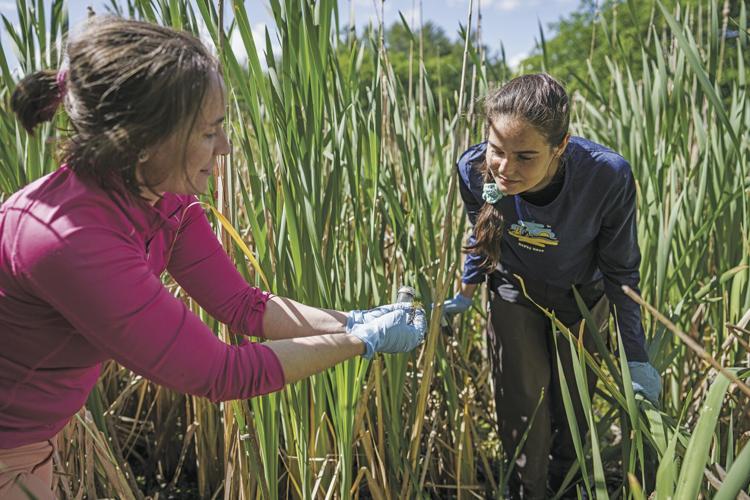
O’Brien and her team, including Alyssa Daigle, a microbiology graduate student at the UNH College of Life Sciences and Agriculture, are first focusing on how differences in the genetic makeup of duckweed species — and their associated microbial communities — impact the effectiveness of nutrient remediation as well as the ability of the resulting green manure to promote crop growth. To do this, they’ve collected duckweed samples from across New Hampshire and are growing them in small micro-environments, called microcosms, and then testing how many nutrients each microcosm recaptures.
Daigle is leading the research that evaluates whether duckweed poses risks for transferring toxic compounds from the water source to crops produced with duckweed-based fertilizer. If so, the researchers will investigate whether other aquatic microbes could mitigate these effects.
“Previous work showing plant- or microbe- specific effects on nutrient uptake and their interactions with cyanobacteria suggests that some duckweed-microbiome combinations are likely to enhance nutrient uptake and reduce the overall risk of toxin transfer relative to others, thus paving the way for safer and more effective green manure applications,” said Daigle.
The research will include applying duckweed green manure to germinating lettuce and measuring for toxin transfer in the resulting crop. The results of that study will help the research team identify the feasibility of using duckweed as a soil amendment for agricultural operations and backyard growers.
“Ultimately, our findings could have significant implications for New Hampshire farmers, offering a more sustainable and more affordable alternative to chemical fertilizers and practical solutions to integrating green manure into agricultural practices,” said O’Brien.


(0) comments
Welcome to the discussion.
Log In
Keep it Clean. Please avoid obscene, vulgar, lewd, racist or sexually-oriented language.
PLEASE TURN OFF YOUR CAPS LOCK.
Don't Threaten. Threats of harming another person will not be tolerated.
Be Truthful. Don't knowingly lie about anyone or anything.
Be Nice. No racism, sexism or any sort of -ism that is degrading to another person.
Be Proactive. Use the 'Report' link on each comment to let us know of abusive posts.
Share with Us. We'd love to hear eyewitness accounts, the history behind an article.