


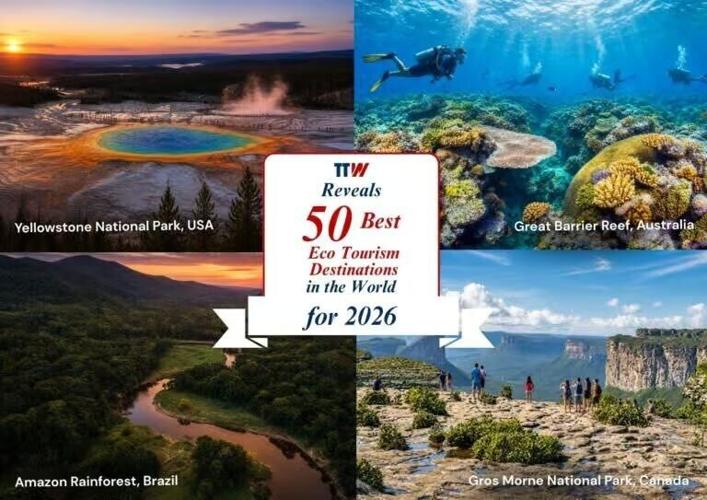

NEW YORK, May 3, 2026 /PRNewswire/ -- Travel and Tour World (TTW) has released its 2026 rankings 50 Best Eco Tourism Destinations in the World for 2026 highlighting a major shift in global travel driven by eco tourism. The report, based on insights from TTW's editorial team and over 25 million readers, highlights a strong alignment between traveller values and spending habits.
The data highlights powerful market expansion, with the sector projected to approach $1 trillion by 2035, confirming that eco tourism has evolved from a niche segment into a central force in global travel.
The new trends in tourism globally is now to emphasise on eco tourism, the beauty of ecology and nature, and deeper environmental connection. Biodiversity conservation is restoring ecosystems, while nature travel infrastructure integrates renewable energy and efficient systems.
Community-led models are strengthening local economies and ensuring inclusive growth. Overall, eco tourism is reshaping global travel by aligning economic progress with environmental responsibility and the growing demand for nature-focused experiences.
"We are witnessing a clear shift in how people approach travel today. It is no longer just about visiting a destination. Travellers are seeking deeper meaning. They want to contribute and give something back. There is a growing belief that the planet is under pressure, and this awareness is shaping behaviour. People are becoming more conscious about ecology and the environment. They are focusing more on natural beauty. They want to genuinely experience the world around them. Traditional luxury is losing its appeal, while the idea of preserving destinations is becoming more valuable. This is where eco tourism is gaining strong momentum. It is not just an option anymore. It is becoming a key driver of travel decisions, as people look for authentic connections with nature and local communities," said Anup Kumar Keshan, Founder and Editor-in-Chief of Travel and Tour World.
50 Best Eco Tourism Destinations in the World for 2026
Rank | Country | Destination |
1 | United States | Yellowstone National Park |
2 | Australia | Great Barrier Reef |
3 | Brazil | Amazon Rainforest Conservation Zones |
4 | Canada | Gros Morne National Park |
5 | South Korea | Jeju Island |
6 | Mexico | Calakmul Biosphere Reserve |
7 | United States | Big Island (Hawaii Eco Tourism Zones) |
8 | Italy | Abruzzo (National Parks Region) |
9 | Iceland | Vatnajökull National Park |
10 | Japan | Yakushima Island (Kagoshima) |
11 | Costa Rica | Corcovado National Park |
12 | United States | Glacier Bay National Park (Alaska) |
13 | Tanzania | Serengeti National Park |
14 | Russia | Kamchatka Peninsula |
15 | United States | Mosquito Bay (Puerto Rico) |
16 | Saudi Arabia | Al Ahsa Oasis |
17 | India | Kaziranga National Park |
18 | United Kingdom | Isle of Skye & Highlands |
19 | Thailand | Khao Sok National Park |
20 | Norway | Tromsø Northern Lights Eco Experiences |
21 | Ecuador | Galápagos Islands |
22 | Madagascar | Andasibe-Mantadia National Park |
23 | Peru | Colca Canyon |
24 | Germany | Freiburg im Breisgau |
25 | China | Jiuzhaigou Valley (Sichuan) |
26 | France | Finistère (Brittany) |
27 | India | Sundarbans National Park |
28 | Switzerland | Jungfrau Region & Alpine Eco Trails |
29 | Turkey | Dalyan (Muğla) |
30 | Indonesia | Raja Ampat (West Papua) |
31 | Singapore | Sungei Buloh Wetland Reserve |
32 | Kenya | Turtle Bay & Marine Conservation |
33 | New Zealand | Fiordland National Park |
34 | Croatia | Plitvice Lakes National Park |
35 | Guatemala | Lake Atitlán & Nature Reserve |
36 | Portugal | Peneda-Gerês National Park |
37 | Guyana | Iwokrama International Centre |
38 | Fiji | Barefoot Manta Coral Gardening (Yasawa Islands) |
39 | Belize | Cockscomb Basin Wildlife Sanctuary |
40 | Philippines | Palawan & Puerto Princesa Underground River |
41 | Slovenia | Logar Valley (Logarska Dolina) |
42 | Argentina | Iberá Wetlands (Corrientes) |
43 | South Africa | Kruger National Park |
44 | Jamaica | Blue Mountains |
45 | Bhutan | Phobjikha Valley (Gangtey) |
46 | Sweden | Tiveden National Park |
47 | Poland | Masurian Lake District |
48 | Dominican Republic | Samaná Peninsula |
49 | Nepal | Chitwan National Park |
50 | Bahamas | Andros Island |
50 Best Eco Tourism Destinations of the World
1. United States – Yellowstone National Park
Yellowstone National Park is one of the world's most iconic eco tourism destinations, defined by vast wilderness, geothermal wonders, and thriving wildlife habitats. The landscape stretches across forests, rivers, alpine meadows, and geyser basins, creating a dynamic ecosystem that supports species such as bison, grey wolves, elk, and grizzly bears. The park's geothermal features, including Old Faithful and colourful hot springs, create rare natural environments shaped by volcanic activity.
The park is widely popular for wildlife safaris, geothermal basin hiking, backcountry trekking, fly-fishing, birdwatching, snowshoeing, scenic drives, camping, and landscape photography. Trails cut through forests and valleys, offering close encounters with nature, while rivers and lakes provide peaceful fishing environments. Seasonal shifts introduce varied exploration, from summer hiking to winter snow-based activities. Ranger-led eco walks add educational depth to the experience.
Surrounding rural communities such as Gardiner and West Yellowstone offer immersive village experiences. Local crafts, ranch-style living, and storytelling rooted in Native American heritage enrich cultural engagement. Homestays and small lodges create authentic connections with regional life.
Eco-lodges like the Old Faithful Inn reflect nature-inspired architecture, blending timber construction with environmental awareness. Energy efficiency, resource conservation, and nature-focused design contribute to a seamless eco tourism experience.
How to reach: Accessible via flights to Bozeman Yellowstone International Airport or Jackson Hole Airport, followed by road travel. Scenic drives connect major entrances, making car access the most convenient option.
2. Australia – Great Barrier Reef
The Great Barrier Reef is one of the most spectacular marine eco tourism destinations, stretching across turquoise waters with vibrant coral formations and rich marine biodiversity. It is home to thousands of species including colourful fish, sea turtles, reef sharks, and coral systems that create one of the most diverse underwater ecosystems in the world.
This marine wonder is globally popular for snorkelling, scuba diving, whale watching, sailing, reef swimming, paddleboarding, glass-bottom kayaking, and island-hopping across coral-rich environments. Crystal-clear waters reveal intricate reef formations, while guided dives uncover deeper marine ecosystems. Seasonal whale migrations add a dynamic dimension to ocean exploration.
Coastal villages and island communities offer a strong rural tourism dimension. Fresh seafood traditions, handcrafted goods, and relaxed coastal lifestyles define the region. Indigenous heritage, particularly from the Gunggari people, adds cultural depth through storytelling and ancestral knowledge.
Eco-resorts such as Wilson Island provide low-impact stays surrounded by nature. Renewable energy systems, minimal waste practices, and eco-conscious operations ensure close interaction with the reef environment.
How to reach: Reachable via international and domestic flights to Cairns, Townsville, or Hamilton Island, followed by boat transfers or guided reef tours.
3. Brazil – Amazon Rainforest Conservation Zones
The Amazon Rainforest is one of the most extraordinary eco tourism destinations, offering dense tropical landscapes filled with unmatched biodiversity. Towering trees, winding rivers, and layered canopies create habitats for species such as jaguars, sloths, macaws, and countless insects and plant varieties.
The rainforest is especially popular for jungle trekking, canopy walks, river canoeing, wildlife spotting, birdwatching, piranha fishing, and immersive night safaris. Hidden waterfalls, rare plant species, and vibrant birdlife create a rich sensory experience. River journeys often reveal pink dolphins and other aquatic life, enhancing exploration.
Rural tourism is deeply rooted in indigenous communities and river villages. Homestays provide opportunities to engage with traditional crafts, local practices, and daily life connected to the forest. Cultural interactions offer insights into long-standing ecological knowledge.
Eco-lodges built from natural materials blend into the forest surroundings, offering simple yet comfortable stays. Solar energy, natural ventilation, and locally sourced materials support a nature-aligned experience.
How to reach: Accessible via flights to Manaus, followed by riverboats or guided eco-tours into conservation zones and remote forest lodges.
4. Canada – Gros Morne National Park
Gros Morne National Park is a remarkable eco tourism destination known for dramatic landscapes shaped by ancient geological forces. Fjords, coastal cliffs, forests, and wetlands create a striking natural environment filled with diverse plant and animal life, including moose, caribou, and seabirds.
The park is increasingly popular for fjord boat tours, long-distance hiking, sea kayaking, coastal walking, birdwatching, scenic photography, backcountry trekking, and seasonal whale watching. Western Brook Pond offers breathtaking fjord views, while inland trails reveal quiet valleys and rugged terrain ideal for exploration.
Nearby villages such as Rocky Harbour offer strong rural tourism experiences. Fishing traditions, handcrafted goods, and community customs shape everyday life. Homestays and small inns provide a warm and personal environment.
Eco-friendly accommodations integrate sustainable materials and energy-efficient designs, maintaining harmony with the surrounding landscapes while enhancing the nature-focused travel experience.
How to reach: Accessible via flights to Deer Lake Regional Airport, followed by a scenic drive to the park along Newfoundland's coastal routes.
5. South Korea – Jeju Island
Jeju Island is a vibrant eco tourism destination shaped by volcanic landscapes, coastal scenery, and rich biodiversity. Lava tubes, crater lakes, forests, and beaches create a varied ecosystem that supports unique plant and animal life.
The island is highly popular for volcanic trail trekking, hiking Hallasan Mountain, coastal cycling, snorkelling, kayaking, swimming, lava cave exploration, and sunrise viewing at Seongsan Ilchulbong. Coastal waters invite marine exploration, while inland trails reveal scenic volcanic terrain and forested paths.
Rural tourism thrives in traditional villages where local crafts, farming practices, and cultural heritage are preserved. The Haenyeo female divers represent a unique tradition closely tied to the sea. Homestays allow deeper engagement with local lifestyles.
Eco-lodges and environmentally conscious accommodations offer comfortable stays while maintaining harmony with nature. Renewable energy use and nature-sensitive design enhance the island's eco tourism appeal.
How to reach: Easily accessible via Jeju International Airport with frequent domestic flights from Seoul and international connections from major Asian cities.
6. Mexico – Calakmul Biosphere Reserve
Calakmul Biosphere Reserve is one of Mexico's most significant eco tourism destinations, combining dense tropical forests with remarkable archaeological heritage. The reserve forms part of the Maya Forest, one of the largest remaining rainforests in the Americas, supporting species such as jaguars, toucans, howler monkeys, and countless bird varieties. Towering trees and lush vegetation create a rich ecosystem that sustains both wildlife and plant diversity.
The reserve is widely popular for Mayan ruin exploration, guided jaguar tracking, jungle photography, birdwatching, and forest trekking. Trails lead through thick rainforest towards the ancient city of Calakmul, where pyramids rise above the canopy, offering sweeping views of the surrounding wilderness. The area combines cultural discovery with immersive nature-based exploration.
Rural tourism is shaped by nearby villages where traditional crafts, local food, and community life remain central. Homestays provide opportunities to experience regional customs and connect with local traditions influenced by Mayan heritage.
Eco-lodges in the region blend into the forest environment, using natural materials and low-impact design. These accommodations offer close proximity to nature while maintaining a strong connection to the surrounding ecosystem.
How to reach: Accessible via flights to Campeche or Mérida, followed by a road journey through forested routes leading to the reserve.
7. United States – Big Island (Hawaii Eco Tourism Zones)
The Big Island of Hawaii presents a diverse eco tourism landscape shaped by volcanic terrain, rainforests, and coastal ecosystems. Active volcanoes, black sand beaches, and lush valleys create a varied environment supporting unique species such as the Hawaiian monk seal and green sea turtles. The island's natural diversity offers a wide range of ecological experiences.
The island is highly popular for manta ray night snorkelling, volcanic crater hiking, coffee plantation eco-tours, lava field exploration, coastal swimming, and marine wildlife observation. Volcanic trails reveal dramatic landscapes, while ocean waters provide opportunities to encounter marine life in clear tropical conditions.
Rural tourism is deeply connected to agricultural communities and traditional Hawaiian culture. Visitors experience local farms, handcrafted goods, and cultural practices rooted in island heritage. Homestays and eco-retreats offer immersive stays surrounded by nature.
Eco-lodges such as Hawaiian Sanctuary and Volcano Eco Retreat provide nature-focused accommodation using sustainable practices and environmentally sensitive designs. These stays enhance the connection between visitors and the island's natural surroundings.
How to reach: Accessible via Ellison Onizuka Kona International Airport or Hilo International Airport, with road connections across the island.
8. Italy – Abruzzo (National Parks Region)
Abruzzo, often called the green heart of Italy, is a leading eco tourism destination defined by its national parks, mountains, and protected wildlife habitats. The region hosts rare species such as the Apennine wolf, Marsican brown bear, and golden eagle, supported by forests, rivers, and alpine landscapes. Its natural diversity creates a balanced and thriving ecosystem.
The region is especially popular for Apennine wolf tracking, mountain hiking, wild canoeing on the Tirino River, cycling, and agritourism experiences. Trails wind through valleys and mountains, while rivers offer serene environments for water-based exploration.
Rural tourism thrives through medieval villages, traditional farms, and artisanal communities. Visitors engage with local cuisine, handcrafted products, and long-standing traditions. Agritourism stays provide authentic rural experiences with strong cultural connections.
Eco-lodges such as Il Casale in Gran Sasso National Park offer accommodation integrated into the natural landscape, combining comfort with environmentally conscious practices.
How to reach: Accessible via Abruzzo International Airport in Pescara, followed by road access into national park regions and rural villages.
9. Iceland – Vatnajökull National Park
Vatnajökull National Park is one of Europe's largest protected natural areas, known for its glaciers, volcanic landscapes, rivers, and diverse ecosystems. The park supports species such as Arctic foxes and a wide variety of birdlife, with landscapes shaped by ice and volcanic activity creating a striking natural environment.
The park is widely popular for glacier hiking, ice cave exploration, zodiac lagoon tours, volcanic landscape photography, and trekking across dramatic terrains. Ice formations, glacial lagoons, and rugged volcanic features create a visually striking experience.
Rural tourism is supported by small Icelandic communities where traditional lifestyles and local crafts are preserved. Visitors experience regional culture through homestays and locally guided excursions.
Eco-friendly accommodations near the park blend into the surrounding environment, offering modern comfort with minimal visual and environmental impact.
How to reach: Accessible via Keflavík International Airport, followed by a scenic drive along Iceland's Ring Road to reach the park.
10. Japan – Yakushima Island (Kagoshima)
Yakushima Island is a unique eco tourism destination known for its ancient cedar forests, rich biodiversity, and mist-covered landscapes. The island is home to the famous yakusugi trees, some thousands of years old, along with species such as the Yakushima macaque and Japanese black bear. Dense forests and flowing rivers create a tranquil and immersive natural environment.
The island is highly popular for ancient cedar forest hiking, river kayaking, waterfall exploration, turtle nesting observation, and forest trekking in areas like Shiratani Unsuikyo. Trails pass through moss-covered landscapes, offering a peaceful and immersive experience.
Rural tourism is shaped by small island communities where traditional lifestyles remain closely connected to nature. Local crafts, food, and cultural practices reflect a deep respect for the environment. Homestays provide authentic engagement with island life.
Eco-lodges such as Yakushima Eco Resort offer low-impact accommodation designed to blend into the forest surroundings, enhancing the connection with nature.
How to reach: Accessible via flights from Kagoshima Airport to Yakushima Airport, followed by local transport to eco tourism zones across the island.
11. Costa Rica – Corcovado National Park
Corcovado National Park, located on the Osa Peninsula, is one of the most biologically rich eco tourism destinations, known for dense rainforests, coastal habitats, and extraordinary biodiversity. The park shelters species such as scarlet macaws, jaguars, tapirs, and a wide variety of amphibians and plant life, creating a vibrant and interconnected ecosystem.
The park is widely popular for tropical rainforest trekking, tapir spotting, birdwatching, coastal boat tours, wildlife photography, and night jungle walks. Trails pass through thick jungle terrain, revealing waterfalls, rivers, and diverse flora, while coastal routes offer views of marine life and secluded beaches.
Rural tourism is shaped by nearby communities that are closely connected to the forest environment. Local villages offer homestays, traditional food, and handcrafted goods, providing an authentic cultural experience. Community participation strengthens the connection between conservation and daily life.
Eco-lodges such as Lapa Rios Lodge provide nature-focused accommodation with sustainable design and strong links to conservation initiatives.
How to reach: Accessible via flights to Puerto Jiménez Airport, followed by a short drive or boat transfer into the park.
12. United States – Glacier Bay National Park (Alaska)
Glacier Bay National Park is a striking eco tourism destination defined by glaciers, fjords, and rich marine ecosystems. Located in Alaska, the park supports species such as humpback whales, sea otters, seals, and brown bears, with icy landscapes creating a unique natural environment shaped by glacial movement.
The park is highly popular for glacier viewing, sea kayaking among icebergs, whale watching, wildlife observation, boat excursions through fjords, and nature photography. Expansive waterways and towering ice formations create an immersive setting for exploration and observation.
Rural tourism is influenced by the cultural presence of the Tlingit people, whose traditions remain closely tied to the landscape. Small communities offer local crafts and cultural insights through guided experiences and homestays.
Eco-lodges such as Glacier Bay Lodge provide comfortable accommodation integrated into the surrounding wilderness, allowing close interaction with the natural environment.
How to reach: Accessible via Juneau International Airport, followed by a boat journey or small aircraft transfer into the park.
13. Tanzania – Serengeti National Park
Serengeti National Park is one of Africa's most renowned eco tourism destinations, known for vast savannah landscapes and exceptional wildlife diversity. The park supports the Great Migration, where millions of wildebeest, zebras, and gazelles move across the plains, alongside predators such as lions, leopards, and cheetahs.
The park is especially popular for hot air balloon safaris, Great Migration tracking, game drives, wildlife photography, and Maasai-led walking safaris. Open grasslands provide expansive views of wildlife movement, while guided experiences offer deeper understanding of animal behaviour.
Rural tourism is closely linked with Maasai communities, where traditional lifestyles, crafts, and cultural practices are preserved. Visitors engage with local traditions through village visits and homestay experiences.
Eco-lodges such as Serengeti Migration Camp offer accommodation that blends into the natural surroundings, providing comfort while maintaining a strong connection with the landscape.
How to reach: Accessible via Kilimanjaro International Airport, followed by a domestic flight to Seronera Airstrip or a guided safari drive.
14. Russia – Kamchatka Peninsula
The Kamchatka Peninsula is a remote eco tourism destination known for dramatic volcanic landscapes, hot springs, and rich wildlife habitats. The region is home to brown bears, salmon-filled rivers, and diverse bird species, with active volcanoes shaping the terrain into a striking natural environment.
The peninsula is widely popular for volcano trekking, brown bear viewing, hot spring bathing, river fishing, wildlife photography, and heli-skiing across snow-covered peaks. Expansive wilderness areas provide a sense of isolation and untouched natural beauty.
Rural tourism is influenced by indigenous communities such as the Koryaks and Itelmens, whose traditions are deeply connected to the land. Local crafts, cultural practices, and community life offer meaningful engagement with regional heritage.
Eco-lodges such as Vulkan Hotel provide nature-integrated accommodation with minimal environmental impact, allowing close access to surrounding landscapes.
How to reach: Accessible via flights to Petropavlovsk-Kamchatsky Airport, followed by regional flights or road travel into eco tourism zones.
15. United States – Mosquito Bay (Puerto Rico)
Mosquito Bay, located on the island of Vieques, is one of the most unique eco tourism destinations, known for its bioluminescent waters created by microscopic organisms that glow when disturbed. The bay's calm waters and surrounding mangroves support a delicate and fascinating ecosystem.
The bay is highly popular for bioluminescent kayaking, nocturnal paddleboarding, night photography, and guided eco tours through glowing waters. Clear-bottom kayaks allow a closer view of the luminous effect, creating a distinctive experience in natural darkness.
Rural tourism is shaped by the Viequense community, where local traditions, crafts, and coastal lifestyles define daily life. Homestays and small lodges offer close interaction with the island's culture and environment.
Eco-lodges such as Hix Island House provide low-impact accommodation designed to blend into the natural surroundings while maintaining comfort and simplicity.
How to reach: Accessible via flights to Vieques Airport from San Juan or by ferry from mainland Puerto Rico, followed by a short drive to the bay.
16. Saudi Arabia – Al Ahsa Oasis
Al Ahsa Oasis is one of the world's largest natural oasis systems and a distinctive eco tourism destination set within a desert landscape. The region features extensive date palm groves, freshwater springs, and fertile land that supports a unique ecosystem of plants and wildlife adapted to arid conditions. The oasis landscape creates a striking contrast between greenery and surrounding desert terrain.
The oasis is widely popular for date palm grove cycling, cave exploration at Al-Qarah, cultural walks, traditional pottery tours, and heritage site exploration. Pathways through palm plantations offer shaded cycling and walking routes, while caves provide a cool natural environment shaped by geological formations.
Rural tourism is rooted in long-standing agricultural communities where traditional irrigation systems, farming practices, and handicrafts continue to thrive. Homestays and local experiences provide insights into daily life centred around oasis cultivation and heritage.
Eco-friendly accommodations and nature-integrated stays allow visitors to experience the oasis environment while maintaining a close connection to its landscape.
How to reach: Accessible via Al Ahsa International Airport, with domestic flights from Riyadh and Jeddah, followed by a short drive to the oasis region.
17. India – Kaziranga National Park
Kaziranga National Park is one of India's most renowned eco tourism destinations, located in Assam and known for its rich biodiversity and thriving wildlife habitats. The park is home to the largest population of the Indian one-horned rhinoceros, along with tigers, elephants, wild buffaloes, and diverse bird species. Floodplains, grasslands, and wetlands create a vibrant and dynamic ecosystem.
The park is especially popular for jeep safaris, rhino spotting, birdwatching, elephant observation tours, riverine landscape photography, and tea estate walks in surrounding areas. Open grasslands and wetlands provide excellent opportunities for wildlife viewing and nature exploration.
Rural tourism is closely linked with local communities such as the Bodo and Mishing, where traditional crafts, weaving, and village life reflect a deep connection to nature. Homestays offer immersive cultural experiences alongside natural exploration.
Eco-lodges such as Wildgrass Lodge provide comfortable stays with nature-focused design, enhancing the connection between visitors and the surrounding environment.
How to reach: Accessible via Jorhat Airport or Guwahati Airport, followed by a scenic drive to the park.
18. United Kingdom – Isle of Skye & Highlands
The Isle of Skye and the Scottish Highlands offer a dramatic eco tourism landscape of rugged mountains, coastal cliffs, lochs, and open moorlands. The region supports species such as red deer, golden eagles, and seabirds, creating a diverse natural environment shaped by wind, water, and ancient geological formations.
The area is widely popular for mountain hiking, Munro bagging, wild swimming, fairy pool walks, coastal exploration, birdwatching, and sea eagle boat trips. Trails wind through valleys and highlands, offering panoramic views, while coastal routes provide access to cliffs and hidden beaches.
Rural tourism thrives through small villages and historic communities where Gaelic traditions, local crafts, and heritage sites remain central to daily life. Homestays and countryside lodges offer authentic experiences connected to the land.
Eco-conscious accommodations blend into the landscape, offering stays that reflect the natural surroundings while maintaining comfort and simplicity.
How to reach: Accessible via Inverness or Glasgow Airport, followed by a scenic drive to the Highlands or across the Skye Bridge to the Isle of Skye.
19. Thailand – Khao Sok National Park
Khao Sok National Park is a lush eco tourism destination in southern Thailand, known for one of the oldest rainforests in the world. The park features dense jungle, limestone cliffs, rivers, and Cheow Lan Lake, supporting species such as elephants, gibbons, and diverse birdlife. Its tropical ecosystem is rich in both flora and fauna.
The park is highly popular for jungle trekking, bamboo rafting, kayaking, wildlife spotting, birdwatching, cave exploration, and floating lodge stays on Cheow Lan Lake. Forest trails lead through dense vegetation, while waterways provide peaceful exploration routes surrounded by limestone formations.
Rural tourism is influenced by local communities living near the park, where traditional practices, local cuisine, and village life remain closely tied to the forest environment. Homestays offer immersive cultural and nature-based experiences.
Eco-lodges such as Khao Sok Rainforest Resort provide nature-integrated accommodation, allowing close interaction with the surrounding jungle landscape.
How to reach: Accessible via Surat Thani Airport, followed by a road journey to the park.
20. Norway – Tromsø Northern Lights Eco Experiences
Tromsø, located above the Arctic Circle, is a unique eco tourism destination known for its Arctic landscapes and natural light phenomena. Snow-covered mountains, fjords, and open tundra create a pristine environment supporting species such as reindeer, Arctic foxes, and seabirds.
The region is widely popular for Northern Lights viewing, dog sledding, reindeer sledding with Sami guides, whale watching, snowshoeing, and Arctic wildlife observation. Winter landscapes provide ideal conditions for exploring snow-covered terrain and observing natural phenomena.
Rural tourism is closely connected to Sami communities, where traditional reindeer herding, crafts, and cultural practices continue to shape local life. Cultural experiences offer insights into Arctic heritage and ways of living.
Eco-conscious accommodations such as Arctic TreeHouse Hotel provide stays designed to blend with the surrounding environment while offering clear views of the Arctic sky.
How to reach: Accessible via Tromsø Airport, with direct flights from Oslo and other major Norwegian cities.
21. Ecuador – Galápagos Islands
The Galápagos Islands are one of the world's most extraordinary eco tourism destinations, known for rare biodiversity and unique ecosystems shaped by volcanic activity and ocean currents. The islands are home to endemic species such as the Galápagos tortoise, marine iguanas, and blue-footed boobies, creating a living natural laboratory of evolution and wildlife.
The islands are globally popular for snorkelling with sea lions, giant tortoise trekking, marine wildlife observation, kayaking along volcanic coastlines, birdwatching, and underwater photography. Crystal-clear waters reveal vibrant marine life, while island trails pass through lava landscapes and coastal habitats.
Rural tourism is influenced by small island communities where local traditions, fishing practices, and handcrafted goods reflect a close connection to nature. Homestays and locally guided experiences provide meaningful engagement with island life.
Eco-lodges such as Galápagos Safari Camp offer low-impact accommodation integrated into the natural surroundings, allowing close interaction with the environment.
How to reach: Accessible via flights to Baltra or San Cristóbal Airport from Quito or Guayaquil, followed by boat transfers between islands.
22. Madagascar – Andasibe-Mantadia National Park
Andasibe-Mantadia National Park is a rich eco tourism destination in eastern Madagascar, known for dense rainforests and extraordinary endemic biodiversity. The park is home to the Indri Indri, the largest living lemur, along with chameleons, frogs, and rare plant species, creating a unique and vibrant ecosystem.
The park is especially popular for lemur spotting, night forest walks, birdwatching, endemic orchid photography, and guided jungle trekking. Dense forest trails reveal unique wildlife sounds and sights, while nocturnal walks highlight rare species active after dark.
Rural tourism is shaped by nearby communities where traditional practices, local crafts, and forest-based livelihoods are central. Homestays offer close interaction with local culture and everyday life connected to the forest.
Eco-lodges such as Vakona Forest Lodge provide nature-focused accommodation surrounded by rainforest landscapes, enhancing the immersive experience.
How to reach: Accessible via Antananarivo, followed by a scenic three-hour drive to the park.
23. Peru – Colca Canyon
Colca Canyon is one of the deepest canyons in the world and a remarkable eco tourism destination known for dramatic landscapes and high-altitude ecosystems. The canyon supports species such as the Andean condor, along with diverse flora adapted to mountainous terrain and terraced valleys shaped by centuries of cultivation.
The region is widely popular for condor watching, canyon trekking, mountain biking, thermal bath experiences, and scenic valley exploration. Viewpoints along the canyon provide opportunities to observe condors gliding across vast cliffs, while trails lead through traditional villages and terraced landscapes.
Rural tourism is deeply rooted in indigenous communities such as the Collagua and Cabanas, where traditional farming, weaving, and cultural practices remain central. Homestays offer authentic experiences connected to local heritage.
Eco-lodges such as Colca Lodge provide comfortable stays set within natural surroundings, offering relaxation alongside nature-based exploration.
How to reach: Accessible via Arequipa, followed by a road journey of approximately three to four hours to the canyon region.
24. Germany – Freiburg im Breisgau
Freiburg im Breisgau is a leading eco tourism destination known for its green urban planning and proximity to the Black Forest. The city is surrounded by forests, hills, and natural reserves that support diverse flora and fauna while maintaining a strong connection between urban living and nature.
The city is widely popular for eco-city cycling tours, Black Forest hiking, nature walks, solar village exploration, and sustainable architecture tours. Trails extend into forested landscapes, while urban routes highlight environmentally conscious design and green spaces.
Rural tourism extends into nearby villages and countryside areas where traditional crafts, farming, and local markets remain active. Homestays and countryside lodges offer a blend of cultural and natural experiences.
Eco-friendly accommodations such as Green City Hotel reflect sustainable design principles, offering stays that align with environmentally conscious practices.
How to reach: Accessible via EuroAirport Basel-Mulhouse-Freiburg, followed by a short train or road journey into the city.
25. China – Jiuzhaigou Valley (Sichuan)
Jiuzhaigou Valley is a visually stunning eco tourism destination known for its colourful lakes, waterfalls, and mountain landscapes. Located in Sichuan Province, the valley supports rare species such as the giant panda and Sichuan golden monkey, creating a diverse and protected ecosystem.
The valley is highly popular for boardwalk hiking along multi-coloured lakes, waterfall photography, forest trekking, wildlife observation, and cultural tours within Tibetan villages. Scenic trails connect lakes and waterfalls, offering continuous views of vibrant natural formations.
Rural tourism is influenced by Tibetan and Qiang communities, where traditional lifestyles, crafts, and cultural practices are preserved. Homestays and village visits provide meaningful cultural engagement.
Eco-lodges and nature-integrated accommodations offer comfortable stays while maintaining harmony with the surrounding environment.
How to reach: Accessible via Chengdu, followed by a domestic flight to Jiuzhaigou Huanglong Airport or a scenic overland journey to the valley.
26. France – Finistère (Brittany)
Finistère, located at the western edge of Brittany, represents one of Europe's most distinctive coastal eco tourism landscapes, where the Atlantic Ocean shapes rugged cliffs, wetlands, and marine ecosystems. The region is anchored by the Parc Naturel Régional d'Armorique, which safeguards diverse habitats including heathlands, peat bogs, and coastal ecosystems. This protected area supports rich biodiversity, including grey seals, puffins, dolphins, and migratory seabirds, alongside marine flora sustained by nutrient-rich waters.
Eco tourism activities are deeply rooted in low-impact exploration. The iconic Sentier des Douaniers coastal trail offers extensive hiking routes with panoramic ocean views, while controlled surfing zones ensure marine ecosystem protection. Cycling routes connect oyster farms and fishing harbours, allowing visitors to experience marine-based livelihoods. Birdwatching along cliffs and wetlands further enhances nature-based tourism.
Rural tourism is integral to Finistère's identity. Traditional fishing villages provide homestays, while artisan crafts such as pottery, weaving, and seafood processing reflect local culture. Community-led initiatives encourage visitor participation in conservation and cultural preservation.
Green tourism practices are strictly enforced. Eco-lodges and certified accommodations utilise renewable energy, water conservation, and waste management systems. Coastal zoning laws protect fragile habitats from overdevelopment.
The region demonstrates a balanced eco tourism model where marine biodiversity, rural livelihoods, and cultural heritage coexist within a regulated framework.
How to reach: Accessible via Brest Bretagne Airport, followed by a scenic coastal drive through Brittany's countryside.
27. India – Sundarbans National Park
The Sundarbans National Park is one of the world's most critical mangrove ecosystems, forming part of the Ganges-Brahmaputra delta and acting as a natural shield against coastal erosion and cyclones. This UNESCO World Heritage Site supports extraordinary biodiversity, including the Bengal tiger, estuarine crocodile, spotted deer, and a wide range of bird species. Its dense mangrove forests create breeding grounds for marine and terrestrial life, maintaining ecological balance.
Eco tourism activities are carefully regulated to protect the fragile environment. Boat safaris through tidal waterways provide opportunities to observe wildlife, while guided mangrove trails offer insight into unique plant adaptations. Birdwatching and estuarine exploration further enhance eco travel experiences.
Rural tourism plays a vital role in the region. Villages such as Gosaba offer homestays, showcasing traditional fishing methods, honey collection, and handicrafts. Community involvement ensures that tourism directly supports local livelihoods while promoting conservation awareness.
Green tourism practices include solar-powered eco-resorts, water conservation systems, and strict visitor regulations. Conservation programmes focus on habitat protection, wildlife monitoring, and climate resilience.
The Sundarbans stands as a global model of how eco tourism can operate within a fragile ecosystem through controlled access and community participation.
How to reach: Travel via Kolkata, followed by a 4–5 hour road journey to the nearest jetty, then a boat transfer into the delta.
28. Switzerland – Jungfrau Region & Alpine Eco Trails
The Jungfrau Region represents one of the most advanced eco tourism systems in alpine environments, centred around the Jungfrau-Aletsch UNESCO Biosphere Reserve. This high-altitude ecosystem includes glaciers, alpine meadows, and forested slopes that support species such as ibex, marmots, and alpine flora adapted to extreme conditions.
Eco tourism activities are structured around sustainability. Glacier trekking and alpine hiking trails provide controlled access to fragile environments, while nature interpretation routes educate visitors on biodiversity and climate impacts. Electric rail systems reduce carbon emissions, making transport part of the region's green tourism strategy.
Rural tourism is deeply embedded in villages like Wengen and Mürren, where traditional Swiss lifestyles are preserved. Visitors engage with dairy farming, cheese production, and local crafts, creating authentic cultural experiences. Homestays and eco-hotels strengthen community-based tourism.
Green tourism practices include renewable energy use, waste reduction, and strict land-use regulations. Visitor management systems ensure that tourism does not exceed ecological capacity.
The Jungfrau Region demonstrates how eco tourism can integrate advanced infrastructure with conservation, maintaining biodiversity while supporting high visitor numbers.
How to reach: Accessible via train from Interlaken, with scenic rail routes leading directly into the alpine region.
29. Turkey – Dalyan (Muğla)
Dalyan in Muğla province is a unique eco tourism destination where riverine, coastal, and archaeological ecosystems converge. The Dalyan River flows through wetlands that support biodiversity including loggerhead sea turtles, migratory birds, and reed ecosystems. Iztuzu Beach is globally recognised as a protected nesting site, reinforcing conservation-focused tourism.
Eco tourism activities are designed to minimise environmental impact. Eco-certified boat tours navigate the river system, while kayaking allows close interaction with wetland habitats. Guided walks explore the surrounding landscapes, including the ancient Lycian rock tombs that add cultural significance.
Rural tourism is a key component of Dalyan's economy. Villages offer homestays, organic farming experiences, and craft markets. Local communities actively participate in tourism services and conservation initiatives.
Green tourism practices are strictly enforced. Regulations limit construction near sensitive habitats, while eco-friendly accommodations use sustainable materials and energy-efficient systems. Conservation programmes protect turtle nesting grounds and wetland ecosystems.
Dalyan stands as a strong example of how eco tourism can integrate biodiversity conservation, cultural heritage, and community livelihoods.
How to reach: Fly to Dalaman Airport, followed by a 30-minute drive to Dalyan.
30. Indonesia – Raja Ampat (West Papua)
Raja Ampat is widely regarded as the most biodiverse marine ecosystem on Earth, hosting over 75% of the world's coral species. Its waters support manta rays, reef sharks, sea turtles, and countless marine organisms, making it a global conservation priority. The surrounding islands also feature tropical forests that add terrestrial biodiversity.
Eco tourism in Raja Ampat is built around marine conservation. Diving and snorkelling offer access to coral reefs, while sea kayaking and island trekking provide low-impact exploration. Marine protected areas regulate visitor activity, ensuring reef preservation.
Local Papuan communities are central to the eco tourism model. Villages offer homestays, guiding services, and cultural experiences rooted in indigenous traditions. Tourism revenue supports community development and conservation programmes.
Green tourism practices include solar-powered eco-resorts, waste management systems, and coral monitoring initiatives. Strict visitor limits prevent over-tourism and protect fragile ecosystems.
Raja Ampat demonstrates how eco tourism can fund conservation while empowering indigenous communities, creating a sustainable balance between environmental protection and economic growth.
How to reach: Travel to Sorong via domestic or international flights, followed by a boat transfer to the islands.
31. Singapore – Sungei Buloh Wetland Reserve
Sungei Buloh Wetland Reserve stands as one of Asia's most important urban eco tourism sites, preserving mangrove forests, mudflats, and coastal ecosystems within a highly developed city-state. This protected reserve lies along the East Asian–Australasian Flyway, making it a crucial stopover for migratory birds such as sandpipers, herons, and plovers. The ecosystem also supports estuarine crocodiles, mudskippers, monitor lizards, and a wide variety of mangrove flora that stabilise coastal environments.
Eco tourism activities are carefully structured to minimise ecological disruption. Elevated boardwalk trails allow visitors to explore sensitive habitats without disturbing wildlife, while birdwatching platforms provide vantage points for observing migratory species. Guided nature walks and environmental education programmes deepen understanding of wetland ecosystems and conservation efforts.
Despite its urban setting, rural-style tourism elements are reflected through community participation. Volunteers, conservation groups, and educators play a central role in guiding visitors and promoting environmental awareness. Small-scale local initiatives support eco education and nature engagement.
Green tourism practices are highly advanced. The reserve integrates habitat restoration, waste management systems, and strict zoning policies. Sustainable transport access reduces carbon impact, while visitor limits protect biodiversity.
Sungei Buloh demonstrates how eco tourism can coexist within a metropolitan environment, balancing accessibility with ecosystem preservation.
How to reach: Easily accessible via public transport from central Singapore, with direct access to the Visitor Centre.
32. Kenya – Turtle Bay & Marine Conservation (Watamu)
Turtle Bay, located near Watamu Marine National Park, represents a leading marine eco tourism destination focused on coral reef ecosystems and endangered species conservation. The region supports diverse marine biodiversity, including sea turtles, dolphins, reef fish, and mangrove forests that serve as critical breeding grounds. The protected marine park ensures long-term ecosystem stability.
Eco tourism activities are centred on marine exploration. Snorkelling and diving reveal vibrant coral reefs, while dhow sailing offers traditional, low-impact coastal experiences. Mangrove canoeing allows visitors to explore delicate ecosystems, and turtle conservation programmes provide educational engagement.
Rural tourism is closely linked to coastal communities. Fishing villages offer homestays, cultural experiences, and local crafts. Community involvement is strong, with residents employed as guides, conservation workers, and hospitality providers.
Green tourism practices include strict marine protection laws, regulated fishing zones, and eco-resorts powered by renewable energy. Conservation initiatives focus on turtle nesting protection and coral reef monitoring.
Turtle Bay highlights how eco tourism can drive marine conservation while supporting local economies, creating a balanced model of sustainable coastal tourism.
How to reach:
(0) comments
Welcome to the discussion.
Log In
Keep it Clean. Please avoid obscene, vulgar, lewd, racist or sexually-oriented language.
PLEASE TURN OFF YOUR CAPS LOCK.
Don't Threaten. Threats of harming another person will not be tolerated.
Be Truthful. Don't knowingly lie about anyone or anything.
Be Nice. No racism, sexism or any sort of -ism that is degrading to another person.
Be Proactive. Use the 'Report' link on each comment to let us know of abusive posts.
Share with Us. We'd love to hear eyewitness accounts, the history behind an article.