



The rapid growth of data centers, driven by artificial intelligence, cloud computing and digital infrastructure, is creating an unprecedented demand for reliable, efficient and sustainable cooling. Every megawatt of electrical power consumed by servers is ultimately converted into heat, and that heat must be continuously removed to ensure operational security, equipment reliability and long-term performance.
In many data centers, cooling strategies still rely on evaporative towers, adiabatic systems or hybrid solutions that require water to reject heat. While these technologies can be energy efficient, they also create a growing environmental and regulatory challenge: water consumption. In regions where water availability, permitting, sustainability goals and community acceptance are increasingly important, reducing or eliminating water use for cooling is becoming a major competitive advantage.
This is where DCL Geoenergía, a Spanish technology company belonging to the ITECON Group, offers a highly innovative solution. Its DCL — Dynamic Closed Loop — geothermal system allows data centers to use the thermal capacity of the subsurface for cooling without extracting groundwater, without consuming water and without relying on evaporation.
The Midwest and Upper Midwest regions offer a particularly attractive opportunity for this type of technology. Many areas have favorable aquifer and subsurface conditions that can provide significant geothermal exchange capacity beneath or near data center sites. Instead of treating the ground only as a construction platform, DCL turns it into a local energy infrastructure capable of supporting large cooling loads.
Unlike open-loop geothermal systems, DCL does not pump groundwater to the surface. It does not extract, discharge or consume aquifer water. The system operates as a closed-loop geothermal exchanger, transferring energy with the subsurface while keeping the working fluid separated from the groundwater environment. This is a key advantage for data centers seeking to reduce water risk, simplify environmental positioning and improve long-term resilience.
Compared with evaporative cooling towers, DCL avoids continuous water make-up, blowdown, chemical treatment and dependence on local water allocations. It also helps reduce the environmental impact associated with water-intensive cooling systems. For data center developers, operators and investors, this means a stronger ESG story, lower exposure to water-related constraints and a more sustainable approach to thermal management.
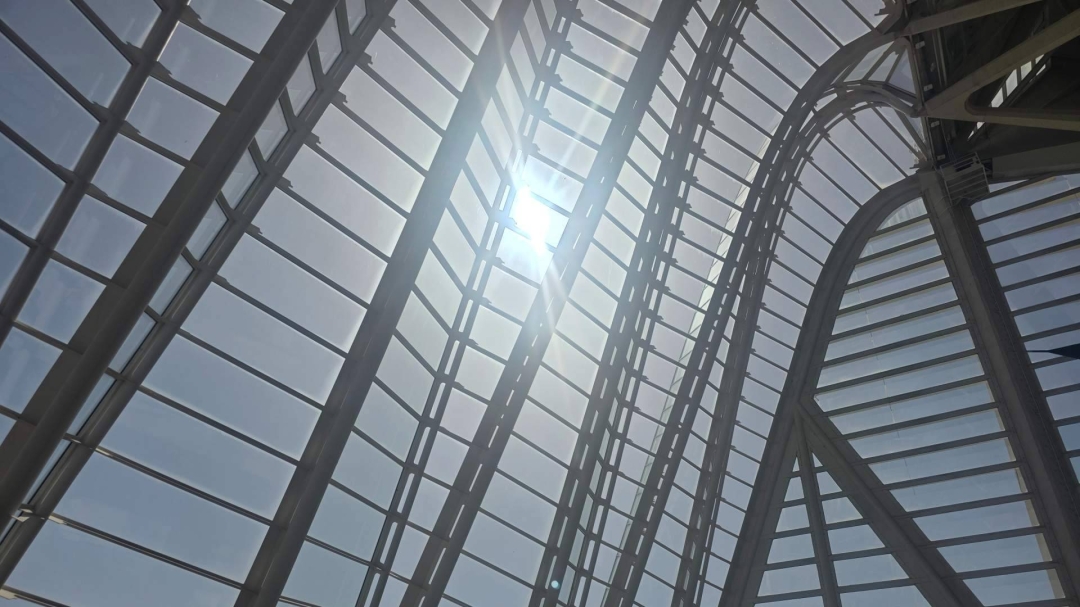
A representative example of the potential of geothermal cooling is the geothermal installation that provides cooling to the Príncipe Felipe Science Museum, located in the City of Arts and Sciences in Valencia, Spain. This project demonstrates that geothermal energy can support the cooling needs of large, complex and high-demand buildings. The same principle is especially relevant for data centers, where heat rejection is constant, predictable and mission-critical.
For Midwest data centers, DCL offers a clear value proposition: access to substantial subsurface cooling capacity without groundwater extraction and without operational water consumption. As digital infrastructure expands, the most sustainable cooling strategy may not be to use less water, but to design systems that do not need to consume it at all.
DCL transforms the ground beneath a data center into a powerful, water-free geothermal cooling resource.
Media Contact
Company Name: JOSE SALIDO
Contact Person: Press Office
Email:
Send EmailCountry: United States
Website:
https://www.dclgeoenergia.com/es/
(0) comments
Welcome to the discussion.
Log In
Keep it Clean. Please avoid obscene, vulgar, lewd, racist or sexually-oriented language.
PLEASE TURN OFF YOUR CAPS LOCK.
Don't Threaten. Threats of harming another person will not be tolerated.
Be Truthful. Don't knowingly lie about anyone or anything.
Be Nice. No racism, sexism or any sort of -ism that is degrading to another person.
Be Proactive. Use the 'Report' link on each comment to let us know of abusive posts.
Share with Us. We'd love to hear eyewitness accounts, the history behind an article.