


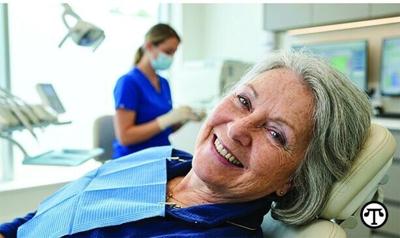
(NAPSI)—As people live longer and keep more of their natural teeth, maintaining good oral health becomes an increasingly important part of healthy aging. While oral health problems are not an inevitable part of getting older, changes in health, medications, and physical abilities can affect the teeth and gums. These may include dry mouth, receding gums, and difficulty brushing or cleaning between the teeth.
“Growing older doesn’t mean losing your teeth or accepting poor oral heath as inevitable,” said Nadia M. Fugate, DMD, Delta Dental of Washington’s associate dental director. “With preventive care, good daily oral hygiene and regular dental visits, many people can maintain healthy teeth and gums throughout their lives.”
Because of better dentistry and overall oral health, older adults are retaining their teeth for much longer and that makes preventive and restorative dental care so much more important.
Why oral health can change with age
Older adults can face several oral-health challenges:
- Dry mouth: Some medications reduce saliva production. Saliva helps protect teeth, so dry mouth can increase the risk of cavities, particularly on exposed tooth roots.
- Root decay: Receding gums can expose the roots of teeth, which are more vulnerable to decay than enamel.
- Gum disease: Plaque buildup can cause inflammation and contribute to gum disease. Certain health conditions, including diabetes, may increase the risk or severity of periodontal disease.
- Changes in dexterity or mobility: Arthritis, limited mobility, vision changes or other physical or cognitive challenges can sometimes make brushing and cleaning between teeth more difficult.
- Changes in health or medications: Dentists need to know about medical conditions and all medications and supplements a patient takes because they can affect oral health and dental treatment.
What older adults can do every day
Brush twice a day with fluoride toothpaste and clean between the teeth daily using floss, or a water pick, or floss holder. Regular dental examinations and professional cleanings can help identify oral health concerns early, when they may be easier to manage and treat.
For people experiencing dry mouth, staying hydrated and discussing the problem with a dentist or physician can help. A dentist may also recommend additional fluoride protection for people at increased risk of tooth decay.
Talk with your dentist as your health needs change
Most older adults can continue receiving care from their regular dentist. What matters most is keeping your dental team informed about changes in your health, medications and ability to manage daily oral hygiene.
If medical conditions, medications, mobility or cognitive changes begin to affect your oral health or dental care, talk with your dentist. Your dentist can adapt care to your individual needs and, when appropriate, coordinate with other health care professionals or recommend additional resources or specialized care.
Don’t hesitate to ask questions or discuss any concerns about comfort, accessibility, medications or changes you’ve noticed in your mouth. Dental care can be individualized as your needs change over time.
For more information about dental care for seniors, check out the Delta Dental Knowledge Center: https://www.DeltaDentalWA.com/Knowledge-Center/Dental-Health-For-Seniors.
Editors Note: Content is approved for Washington state publications only.
Word Count: 494
 "“Growing older doesn’t mean losing your teeth or accepting poor oral heath as inevitable,” said Nadia M. Fugate, DMD, Delta Dental of Washington’s associate dental director. “With preventive care, good daily oral hygiene and regular dental visits, many pe"
(0) comments
Welcome to the discussion.
Log In
Keep it Clean. Please avoid obscene, vulgar, lewd, racist or sexually-oriented language.
PLEASE TURN OFF YOUR CAPS LOCK.
Don't Threaten. Threats of harming another person will not be tolerated.
Be Truthful. Don't knowingly lie about anyone or anything.
Be Nice. No racism, sexism or any sort of -ism that is degrading to another person.
Be Proactive. Use the 'Report' link on each comment to let us know of abusive posts.
Share with Us. We'd love to hear eyewitness accounts, the history behind an article.