


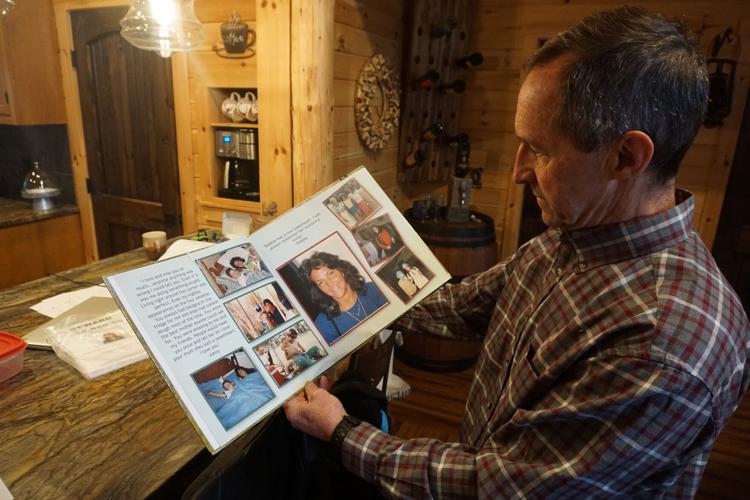
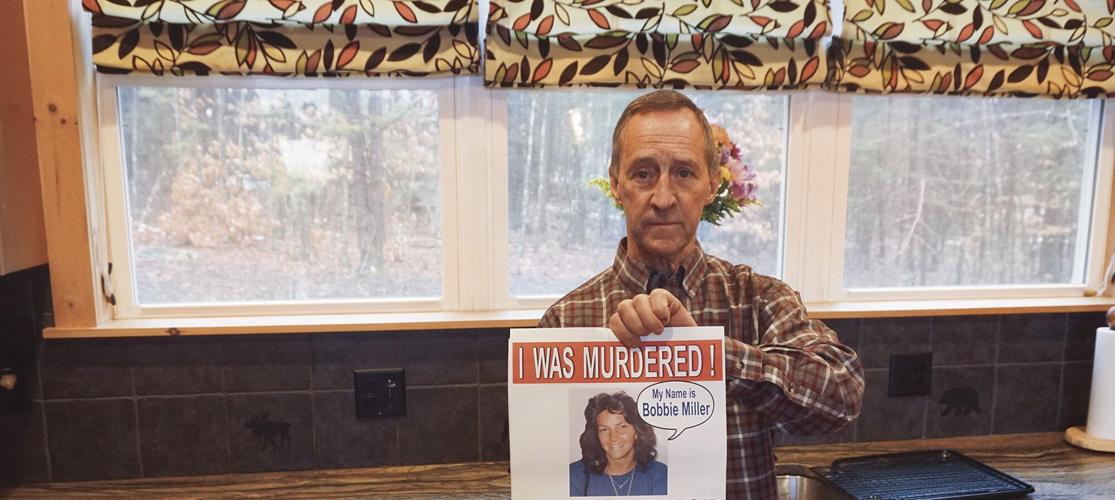
GILFORD — The cold case murder of Roberta “Bobbie” Miller was the recent topic of a true crime podcast about killings in New England, highlighting the frustration of victims' families. The families say a lack of consistent communication and support have become major barriers to finding resolution.
Kristen Seavey, of Maine, spoke with Ken Dionne, of New Boston, regarding the unsolved 2010 murder of his sister, Miller, in her home on a recent episode of "Murder, She Told."
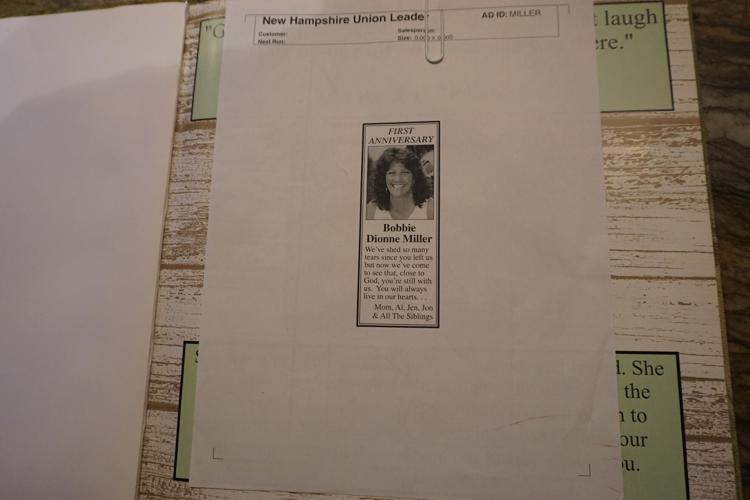
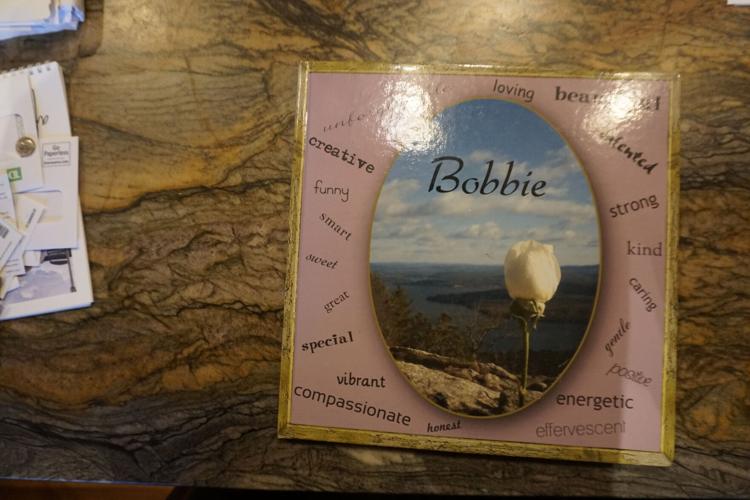
Miller, 54, was killed by multiple shotguns on or around the night of Halloween 14 years ago in her Country Club Road home. Bobbie’s dog Sport was also found shot to death.
The murder case is under investigation by the Cold Case Unit of the New Hampshire Department of Justice. The crime was initially investigated by the Gilford Police Department before being turned over to the NH DOJ. This is common practice in New Hampshire.
“In New Hampshire, all homicides, excluding negligent homicides, are prosecuted by the Attorney General’s Office, including cold case homicides,” Michael Garrity, NH DOJ director of communications and legislative affairs said Thursday.
The DOJ is still looking for clues into Miller’s murder.
“Cold case investigations are some of the most difficult and demanding investigations for law enforcement agencies. Public assistance can make the difference in furthering these investigations. If you have any information, please report it,” Garrity said. “Even the smallest observation could provide a piece of the puzzle necessary in solving this act of violence. This is especially true for anyone who saw or spoke with her between 4 p.m. on Sunday, Oct. 31, 2010, and 5 p.m. on Monday, Nov. 1, 2010.”
Miller was involved in difficult divorce proceedings with ex-husband Gary Miller, and had recently purchased the home where she was found dead by her son Jonathan. The circumstances of her death have been the subject of much speculation over the years and highlight the difficulty in prosecuting cold cases. There are 128 open investigations into cold cases in New Hampshire and nine in the Lakes Region alone.
But Miller’s family is frustrated by the perceived inability or unwillingness of the DOJ to communicate with them regarding the progress of the investigation. Communication and support was frequent for the first 11 years of the investigation, but has since fallen off a cliff, leaving the family frustrated and distraught, Dionne said.
There were apparently five investigators assigned to Bobbie’s case over the last 14 years and the relationship between them and Dionne was good at first. As the years stretched on and progress appeared to stall, the level of communication deteriorated and Dionne became increasingly frustrated.
“At the beginning, I thought this was going to get solved quickly,” Dionne said, noting he maintained a cordial relationship with the investigators in the initial stages. “I was very diplomatic at first, but after 11 years, I became more aggressive. I think I was just a thorn in their side — they have the authority and we’re not supposed to question them.”
It was around the time Portsmouth City Attorney Susan Morrell was assigned as the prosecutor on the case that Dionne’s relationship with the state fell apart, he said.
Morrell did not return requests for comment on this story.
After Morrell was assigned to the case, Dionne stopped receiving any communication from the DOJ, other than from former victim advocate Joelle Donnelly Wiggins. Donnelly Wiggins, who generally would not return Dionne’s requests for information, in the few cases would respond with nothing more than that there were no new details to share.
“When you look up the definition of advocate, it’s to fight for somebody,” Dionne explained. “They don’t do that at all — it’s an absolute waste of the taxpayers' money.”
Wiggins, who now works in the private sector, said she sympathized with Dionne but could not discuss the details of their engagements.
“I’m not going to ever take any of Ken’s feelings away from him,” she said, adding she is an advocate for the federal government to add resources to cold case investigations and victim advocacy programs.
Before Morrell’s appointment, Dionne communicated frequently with Senior Assistant Attorney General Benjamin Agati, who provided numerous updates in prior years, Dionne said.
Dionne expressed deep concern that the Cold Case Unit had no full-time staff and his sister’s case wasn’t being looked at. Numerous families of cold case victims held a protest outside the attorney general’s office in Concord in August 2023, many of whom had similar complaints and expressed frustration with inaction on their family members’ cases.
Senior Assistant Attorney General Myles Matteson said he and Garrity were present at the protest and spoke with many of the family members there.
“That listening, that communication with families continues,” he said, noting the relationship looks different with every family.
Matteson said cold cases are prosecuted full-time by Scott Chase and Rachel Harrington and the unit routinely draws on other attorneys and investigators as needed. They collaborate with law enforcement and legal officials from every level of government, he said.
“Family engagement is a high priority, especially in cold cases, because we need that relationship,” Matteson said, noting they actively engage with various law enforcement personnel as well. “We have open lines of communication with local, state and federal partners.”
While the state budget, adopted in June last year, indicates there are no employees of the Cold Case Unit, which operates with a meager budget of about $78,000, representatives of the NH DOJ say that view misrepresents the reality of operations there.
“I can tell you broadly that the New Hampshire Cold Case Unit is made up of two parts: State Police detectives and State Police staff, plus, here at the NH DOJ, our two cold case prosecutors and a seasoned NH DOJ cold case investigator, recently hired by the attorney general on from Maricopa County, Arizona,” Garrity said Thursday. “Also supporting the unit here at NH DOJ are a paralegal and a legal secretary.”
Garrity said partnerships with other agencies are vital.
“Beyond the dedication of those resources, I can tell you the unit also works closely with police detectives at local departments throughout the state as well as county, state, and federal law enforcement partners,” he said. “In fact, following national best practices, we regularly seek to leverage cooperation from our local, state, and federal partners to bring additional resources to our cold case investigations.”
Despite these resources, families of victims feel left out in the cold to wonder if any time is being spent on their loved ones at all, Dionne said.
After he hadn’t heard anything from the cold case unit for two years, Dionne complained in a letter addressed to Donnelly Wiggins, Morrell, and Agati about the lack of communication. Agati apologized a few weeks later and told Dionne there was no new information to report, Dionne said.
“There’s zero correspondence — none,” Dionne said Wednesday. “The victim advocate program is an absolute joke.”
Dionne’s experience is not unique among the families of cold case victims in New Hampshire, according to Seavey, who met Dionne at the protest.
“This is kind of a similar experience to a lot of families we’ve worked with in New Hampshire,” Seavey said, explaining she chooses murder cases where the families and law enforcement officials need help to find resolution. “Victims want to feel like they’re included in this, like they’re being supported.”
Dionne's willingness to speak out publicly regarding his family’s frustration with the cold case unit and the victim advocacy program could make a difference down the line, she added.
“I do think that it is good that Ken is putting himself out there and being a squeaky wheel,” she said. “For the most part, it’s a pretty common sentiment that they’re frustrated and do not feel supported.”
Families of victims who Seavey has worked with generally want their victim advocates to be more responsive.
“They just want them to keep in touch with them,” she said. “I feel like that’s what a lot of them want.”
Seavey suggested the cold case unit might consider publishing a yearly report, providing an update on investigations into the 128 open cold cases in New Hampshire, and that such a move could go a long way in easing the minds of family members.
“I feel like that would also help to hold them accountable,” she said.
She started recording her podcast to bring attention to unique cases that are difficult to solve, hoping increasing awareness about them may prompt individuals with useful information to come forward and speak with law enforcement officials.
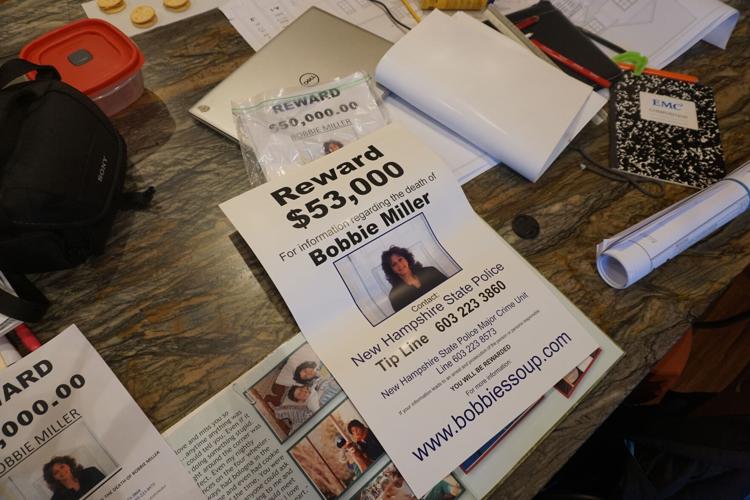
There is a $55,000 reward for information regarding Miller’s murder.
“I really focus on cases that aren’t getting any attention. And Bobbie’s case, there’s a lot of questions that I have about Bobbie’s case,” she said. “You never know what compels people to come forward in a case like this.”
Anyone with information regarding Miller’s murder is asked to speak with the NH DOJ.
“Anyone who may have knowledge of any circumstances surrounding Roberta Miller’s murder is urged to contact the Cold Case Unit at 603-271-2663 or please submit the information through the Attorney General’s Office Cold Case Unit website at doj.nh.gov/criminal/cold-case/tip-form.htm,” Garrity said.


(0) comments
Welcome to the discussion.
Log In
Keep it Clean. Please avoid obscene, vulgar, lewd, racist or sexually-oriented language.
PLEASE TURN OFF YOUR CAPS LOCK.
Don't Threaten. Threats of harming another person will not be tolerated.
Be Truthful. Don't knowingly lie about anyone or anything.
Be Nice. No racism, sexism or any sort of -ism that is degrading to another person.
Be Proactive. Use the 'Report' link on each comment to let us know of abusive posts.
Share with Us. We'd love to hear eyewitness accounts, the history behind an article.