


HOLLIS — The development of the former Laconia State School property is now in the hands of Pillsbury Realty Development, following the delayed approval of a purchase-and-sales agreement between the state and the firm.
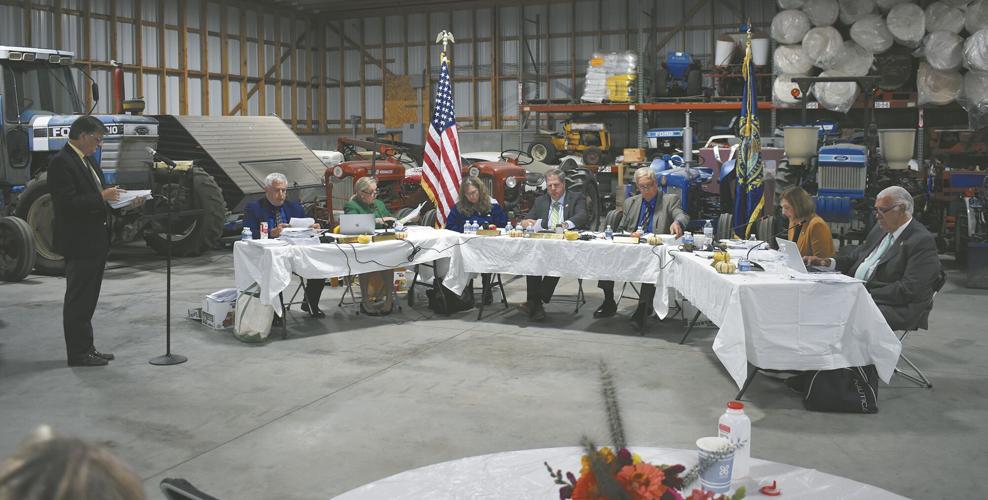
The 3-0 vote by the Executive Council was taken in a barn on Brookdale Fruit Farm on Wednesday morning. Councilors Janet Stevens and Cinde Warmington recused themselves from the vote. Prior to the meeting, Warmington said she had “personal and professional” attachments to one of the other bidders on the project, and Stevens declined to say why she wasn’t voting on the matter.
The purchase-and-sales agreement first came before the Executive Council during its meeting in August as a late addition to the agenda. At that meeting, Councilor Joe Kenney, whose district includes Laconia, moved to table the proposal, later explaining he wanted to give himself and others more time to consider the contract.
The Pillsbury proposal was not the first choice of an advisory committee which was convened this summer to evaluate five submitted proposals. The committee included Kenney, Laconia City Manager Kirk Beattie, and several state officials. The offer from Pillsbury was brought forward, explained Charlie Arlinghaus, commissioner of the state’s Department of Administrative Services, because it appeared to be the one that could garner a majority of support from the executive councilors expected to vote on the matter.
At the meeting on Sept. 24, Kenney said, despite his initial concerns, he had come around to the Pillsbury proposal, a shift in position that came about after he had the opportunity to discuss the proposal with the development team.
Kenney said his concerns included the fact that Laconia is a much different community than is Londonderry, where Pillsbury is developing the much larger Woodmont Commons mixed-use project, that there was more of an interest in protecting local natural amenities as well as overall environmental sensitivity, and that Laconia had specific desires regarding what kind of development would be built at the site.
Kenney said he came away from the discussion in favor of the proposal, specifically its plan for a “village” model of development, that they expected to close on the deal in less time than their contract allows, and that “they are willing to look at a museum” that would preserve the history of the property, which Kenney said was “paramount” for him.
“I am willing to support this developer,” Kenney said just prior to the council’s vote to approve the contract. “They weren’t my first choice, they were my second choice, but I think they’re a good choice as well.”
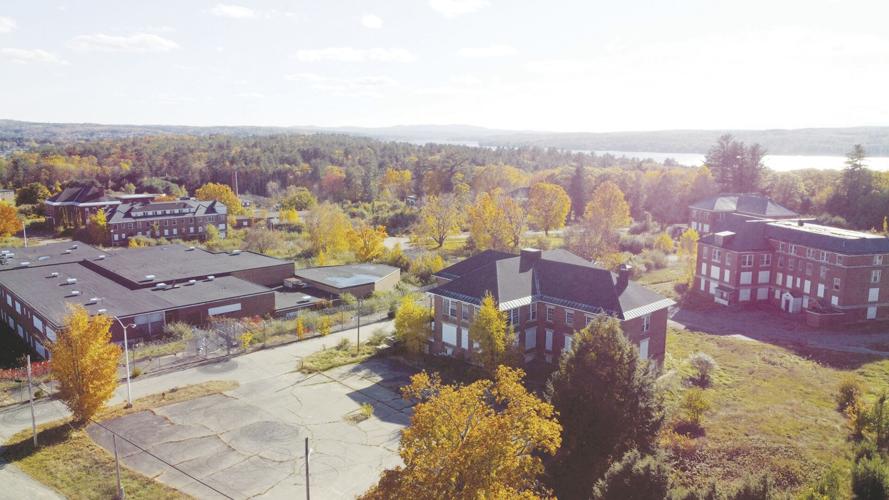
Pillsbury’s proposal was one of five offers the state received on the land, which covers 217 acres with frontage on both North Main Street and Meredith Center Road in Laconia. The offer came with a $10.5 million payment, but Pillsbury will have two years before the transaction is consummated. Initially, the developer will put down a $500,000 deposit, which will enable the buyer a six-month period for due diligence. Following that window, the buyer will have 18 months to seek the necessary permitting in order to pursue its development plan, which calls for a village model that incorporates retail and commercial uses, wellness facilities, thousands of residences, and buildings that could be used for city offices.
The property was home to a residential facility for people with developmental disabilities for many decades until its closure in 1991, then used as a state prison until 2009. Still in operation there is an emergency dispatch center.
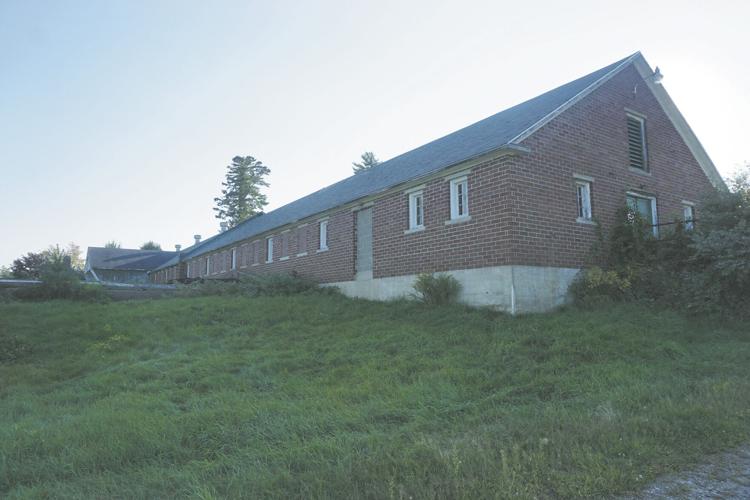
The state left behind 30 buildings on the property, a few of which could be rehabilitated, but most of which will have to be demolished before redevelopment can commence.
In a prior interview, Pillsbury principal owner Michael Kettenbach said his vision for the property would include a mix of uses, with more than 2,000 residences and a walkable infrastructure between offices, shops and homes.
Offers to purchase the property generally fell into two categories, explained Arlinghaus. There were offers that came with more modest dollar figures, but were simpler deals that would have closed quickly. Pillsbury’s offer was of another type, which promised a higher windfall for the state but which also provided the buyer with more latitude in evaluating the property between the signing of the purchase-and-sales agreement and the finalization of the transaction.
Executive Councilor Ted Gatsas, whose vote was seen as critical in approving a deal, said in a prior interview his support was for the Pillsbury proposal because it provided “more money for the state.”
Waiting for sunlight
Some in Laconia have felt the process has been rather opaque, especially considering the significance the development could have for the city. City Councilor Bruce Cheney, whose ward includes the site of the proposed development, is among them.
“The state hasn’t shared much publicly with us,” Cheney said. Although Beattie was part of the selection process, Cheney noted he wasn’t permitted to disclose much of what he learned.
“I’m looking forward to us getting a full explanation of what’s going to go on there, and what the city is expected to do, what the developer is planning for utilities, etc.,” Cheney said. “I feel — and I don’t feel that I’m alone — I’m in the dark here and I’m looking forward to seeing some sunlight.”
If the development indeed adds more than 2,000 residences to the city’s housing stock, that would be helpful, especially if they are affordable to a broad range of income levels, Cheney said. But that many new residents could also result in a significant increase in demand for city services.
“I’d like to know up front,” Cheney said, “What are the demands going to be? What are the needs going to be?
"I’m looking forward to seeing a diversity of what’s going to be put in there. I’m hoping there’s going to be a combination of homes and types of homes so they can sell to a broad range of folks.”
And as the need for city services grows, so too do the space needs for city offices, Cheney said. He was encouraged by reports Pillsbury is considering the creation of space for municipal operations.
“The city is running out of space,” Cheney said. “I can’t be specific, I don't know if that means a new fire station, a new police station, a new city hall. As the city grows, demand is going to be there for those kinds of facilities to be added.”
Once bitten, twice shy
This is the second time the state has entered into an agreement to put the property into the hands of a private buyer. In the final days of 2021, the governor and Executive Council inked a deal with Robynne Alexander, who promised to pay the state $21.5 million for the land, which she intended to develop in much the same way Pillsbury envisions. However, unlike Pillsbury, Alexander had never completed a project of similar scale, and the record of projects she had attempted was pocked by unpaid taxes, lawsuits by former business partners and investigations by state agencies.
Alexander proved unable to come up with the funds to make good on her offer and the state canceled its contract with her in April of this year.


(1) comment
This is great news on soo many levels ! It’s about time to get this project going . Congratulations to Laconia for stepping up to the challenge !!
Welcome to the discussion.
Log In
Keep it Clean. Please avoid obscene, vulgar, lewd, racist or sexually-oriented language.
PLEASE TURN OFF YOUR CAPS LOCK.
Don't Threaten. Threats of harming another person will not be tolerated.
Be Truthful. Don't knowingly lie about anyone or anything.
Be Nice. No racism, sexism or any sort of -ism that is degrading to another person.
Be Proactive. Use the 'Report' link on each comment to let us know of abusive posts.
Share with Us. We'd love to hear eyewitness accounts, the history behind an article.