


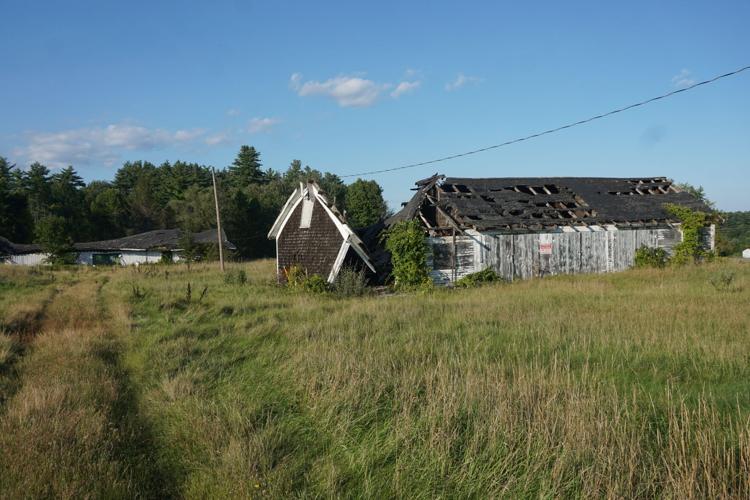
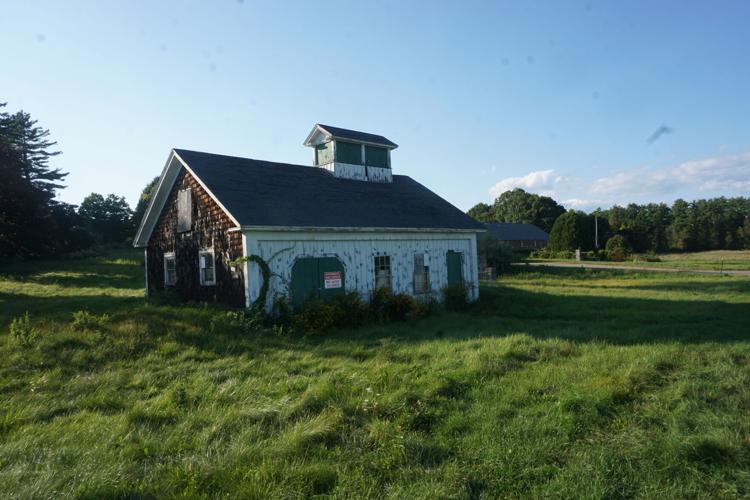
LACONIA — Pillsbury Realty Development, the firm currently being considered by the state as the potential buyer of the 217-acre parcel that once was the Laconia State School, envisions a mix of uses at the site that includes retail, residential, office spaces, sports and medical.
It’s a plan that bears much in common with that of the previous would-be developer, Robynne Alexander, whose “Legacy at Laconia” plan never got off the ground because she failed to come up with the $21.5 million offer she promised.
Pillsbury’s offer, though similar in vision, has several differences to Alexander’s. Michael Kettenbach, owner of the company, offered $10.5 million for the property. That money would only change hands if and when the project receives its necessary permitting from the state. And, unlike Alexander, who had never completed a development project as ambitious as her “Legacy” plan, Kettenbach’s resume includes Woodmont Commons in Londonderry, a build that dwarfs the Laconia property in both size and complexity.
Pillsbury’s offer was presented to the governor and Executive Council as an 11th-hour addition to the agenda for their meeting on Aug. 30, after an advisory committee evaluated a reported five proposals that came in after the state tore up the purchase-and-sales agreement with Alexander. At the meeting, Executive Councilor Joe Kenney, whose district includes Laconia, led a vote to table the proposal until its next meeting on Sept. 25, an action he said afterward was to provide the council and members of the Laconia community more time to evaluate the proposal.
Laconia Village
The state’s transaction with Alexander was first scheduled to close a year ago, but that closing was delayed several times, with Gov. Chris Sununu and Charlie Arlinghaus, commissioner of state Administrative Services, giving her a final “put up or shut up” deadline in April.
In a telephone interview on Thursday, Kettenbach said he began to consider the opportunity in Laconia after Alexander and the state parted ways and the property was again listed for sale.
“When the other deal fell apart, I started thinking about it,” Kettenbach said. “I acted on it [at] the beginning of July.”
He said his consideration of the property, which for decades was used for a state-run residential facility for people with intellectual disabilities, concluded there was a need for development in Laconia in multiple directions.
“No. 1, I think it has good retail [opportunity], I think there’s a tremendous calling for residential development there of many different types. I also see the opportunity for municipal use as well, that’s something we heard when we met with the community,” Kettenbach said.
Pillsbury’s plan organizes the development into three “nodes,” which could be developed consecutively or concurrently.
The first node calls for a “Mixed-Use Hamlet,” which speaks to the need for housing by building a broad mix of residential space: townhouses and cottages, duplexes and apartments. This node also includes commercial uses, such as shops, services and a grocery store, which would support residents of the new housing.
The second node, “The Wellness District,” would build medical office spaces and athletic and fitness facilities, and more residences. These would be positioned on the property so as to be easily accessed by both Laconia Village residents and people coming from other communities.
Finally, “The Village Center” would be located in the middle of the development. Here would be spaces to gather, such as restaurants and shops, a courtyard and civic buildings which could include a relocated City Hall. This node also nearly doubles the number of residential units.
The three nodes would be divided by strips of green space, and connected by a network of roads and foot paths. Pillsbury's design presentation makes multiple references to the natural beauty of the area, and connecting Laconia Village to existing recreational infrastructure.
In total, the plan calls for 2,017 residences, 65,000 square feet of grocery, 55,000 square feet of retail, 60,000 square feet of medical offices, 40,000 square feet of offices space, 75,000 square feet of recreation facilities and 80,000 square feet for hospitality, such as a hotel.
The build-out could take as little as three years, if all nodes are constructed at the same time, or around a decade if they are built in succession.
It’s a project that would be a milestone in Laconia’s history, but would not be the biggest development in Pillsbury’s portfolio, which includes a dozen projects, which have been built in the Carolinas, Alabama and Massachusetts. The crown jewel of these is Woodmont Commons in Londonderry, a project which covers more than 600 acres and is so large it’s getting its own exit off Interstate 93.
In comparison with Woodmont, Kettenbach said Laconia Village is about half as complex.
He suspects his success in Londonderry figured into Arlinghaus’ decision to bring his proposal forward to the Executive Council.
“I would like to think that people looked at us and saw what we were doing and know we have the capacity to do what we say,” he said.
Working with the city
Pillsbury was one of the multiple potential developers who met with city officials over the summer. Kettenbach said his team, which includes former Londonderry town manager Kevin Smith, came away from that meeting feeling “encouraged” to move forward. “I found everyone willing to communicate and pass on information, as we passed on information,” he said.
Kirk Beattie, Laconia’s city manager, said if Pillsbury is selected as the winning bidder, “we feel that his is a team we would feel comfortable working with.” He continued, “we walked out of the meeting feeling that they understood that Laconia has a significant vested interest in the project, and they are willing to work with us through this project. They understood that Laconia is looking for certain things, that housing is a big part of it. They seemed to be on board with those concerns.”
Beattie was invited by Arlinghaus to serve on the advisory committee which evaluated the proposals. The discussions that went on during those evaluations remain private. That marked a greater involvement for the city than the first round, which resulted in the ill-fated choice of Alexander as the would-be developer.
“Although I can’t discuss any of the specifics that went on in the selection behind closed doors, certainly we as the city appreciate the state having us part of the process,” Beattie said.


(2) comments
Are they taking the state park as well? We've been walking our dog there for years, and it's one of the only natural spaces left in Laconia to go for a hike. The wow trail is filled with homeless people, so we avoid it. It would be devastating to lose our park to another developer.
This project sounds AMAZING ! It seems to fulfill the NEEDS of many especially the housing shortage ! Many folks could walk to work on the property which would make sense for those who don’t have vehicles making many independent in self support ie not needing city or welfare assistance as many are now . Bringing independence to many ! Adding an assisted living facility would be helpful to many also !! This is the best news yet !! Once the housing begins can folks move into each completed unit ??
Welcome to the discussion.
Log In
Keep it Clean. Please avoid obscene, vulgar, lewd, racist or sexually-oriented language.
PLEASE TURN OFF YOUR CAPS LOCK.
Don't Threaten. Threats of harming another person will not be tolerated.
Be Truthful. Don't knowingly lie about anyone or anything.
Be Nice. No racism, sexism or any sort of -ism that is degrading to another person.
Be Proactive. Use the 'Report' link on each comment to let us know of abusive posts.
Share with Us. We'd love to hear eyewitness accounts, the history behind an article.