


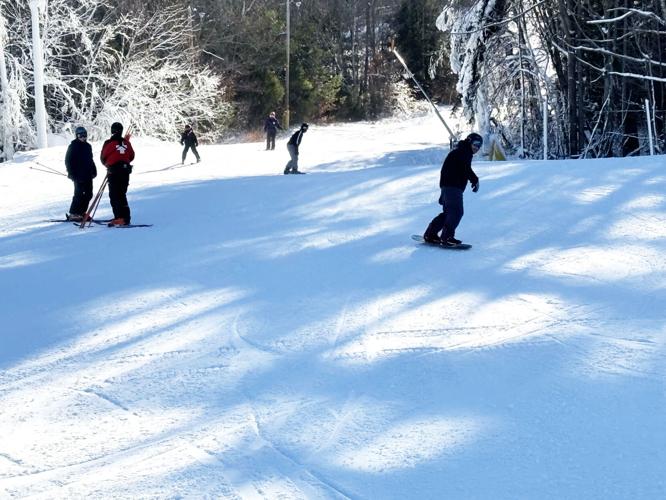
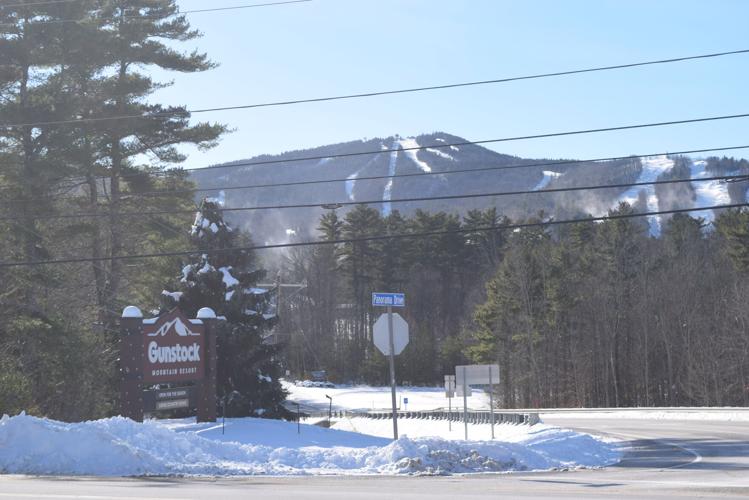
January may be National Ski Safety Awareness Month, but the dedicated ski patrol professionals at Gunstock Mountain Resort and Tenney Mountain Resort work tirelessly all season long to ensure guests to the mountains enjoy their time and leave in one piece.
Around Christmas 2010, 5-year-old Elise Johnson was learning to ski in Casper, Wyoming, when an out-of-control rider struck and killed her. Her parents, Kelli and Chauncey, offered a donation to the National Ski Areas Association to support the creation of the #RideAnotherDay campaign, meant to prevent such tragedies in the future.
The campaign encourages awareness, responsibility and common sense for snowsports, to reduce the risk of collisions on the mountain.
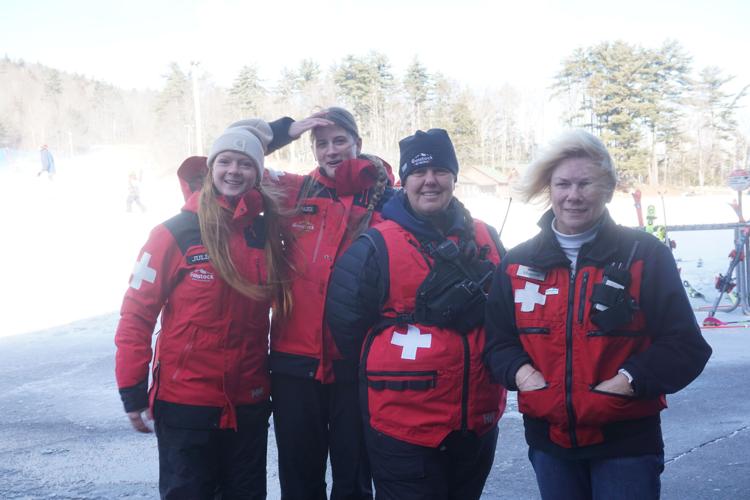
At Gunstock, the responsibility falls on a team of talented ski patrollers, led by Ski Patrol Manager Kyle Griffin, who started with the junior ski patrol when she was just 15 years old. Now, she’s in charge of the team safeguarding the mountain and its visitors each year.
Her father served with the ski patrol, Griffin said, and she thought the job was cool. Kids on junior ski patrol don’t need medical experience, necessarily, though many professionals come from emergency medical services, law enforcement, military, or other such backgrounds.
“We do get a lot of EMTs and firefighters,” she said. “The majority of what we do is risk management.”
The most important characteristic for a ski patroller: their attitude.
Ski patrol works early every day, before the slopes are open, to set ropes and fences and signs — all meant to reduce risk and prevent injury. They’re constantly reevaluating risks and hazards, and conditions on the mountain change quickly. A team of eight to 15 ski patrollers are prowling the mountain day and night.
Their days begin with a safety meeting — last week, Gunstock hosted a ski race, and ski patrol are required to man it. They open all trails and diligently evaluate them, identifying and mitigating risks. They typically spend lots of time honing their skills, too, and interacting with the public, performing guest education and keeping a watchful eye.
“We’re always training,” Griffin said.
Hazards are considered things a guest can’t necessarily see from above, like significant changes in terrain, or rocks or other items they can’t see to avoid. Some are permanent, some change daily with conditions. Snowmaking guns, for example, are padded.
“The biggest thing is making sure they are visible,” she said.
At the end of the day, they "sweep" the trails, looking for any new hazards or risks, and making sure all skiers and riders make it safely down off of the mountain.
When an injury happens, their immediate response is coordinated based on how the call comes in. They have dispatchers in charge of sending patrollers to respond, confirm injuries, and, if required, bring someone to their first aid base. They may treat an injured person and release them, or recommend calling an ambulance.
An ambulance ride is rarely necessary — for the around 600 calls they’ll get in a year, less than 10% are serious enough to warrant one.
“If a guest asks, we will call,” Griffin said.
According to the NSAA, knee and head injuries are most common for skiers, and wrist and head injuries are typical for snowboarders. In recent years, Griffin said she’s noticed a marked increase in the number of guests wearing helmets on the mountain, and a corresponding decrease in overall injuries over the last decade.
“This is my 30th winter,” Griffin said, and 15th as director. “I love being here, and I love helping people.”
At Tenney Mountain Resort in Plymouth, patrol operates in much the same way. There, head of ski patrol Tim Lewis works to keep riders and skiers safe each day atop the mountain.
“Usually, we spend a portion of the day training, simulating injuries,” he said. “Mostly, we listen for phone calls, radio calls.”
When a call does come their way, a team will deploy and conduct an initial assessment, then decide which sort of personnel or supplies are needed. They’ll typically get a report from the mountain’s trail maintenance staff from the night before regarding conditions, and conduct a morning briefing around 7:30 a.m., with first chair at 9 a.m.
On a busy day, they’ll have 10 patrollers working, and a nurse at the first aid station.
“Weekdays are typically pared back,” Lewis said.
He’s been at Tenney Mountain for three years but, like Griffin, served as a junior patroller in 1985, before serving in the United States Air Force for 24 years.
“This is really just an extension of that,” he said.
“Our main mission is a taxi service for the patient,” Lewis said. “Get them off the hill.”
Over a typical week, perhaps around a winter holiday, they might have numbers around 3,000 in terms of guests on the mountain, and maybe six injuries or so. Some days, they’ll have none. A lot of the time, injuries happen when someone is skiing beyond their ability, or panics and tries to prevent a fall.
“Just go with it,” he said. “Just don’t be afraid to fall.
“It’s about keeping people safe, allowing them to enjoy this great sport. And it’s hard for us to see people get hurt,” Lewis said.


(0) comments
Welcome to the discussion.
Log In
Keep it Clean. Please avoid obscene, vulgar, lewd, racist or sexually-oriented language.
PLEASE TURN OFF YOUR CAPS LOCK.
Don't Threaten. Threats of harming another person will not be tolerated.
Be Truthful. Don't knowingly lie about anyone or anything.
Be Nice. No racism, sexism or any sort of -ism that is degrading to another person.
Be Proactive. Use the 'Report' link on each comment to let us know of abusive posts.
Share with Us. We'd love to hear eyewitness accounts, the history behind an article.