


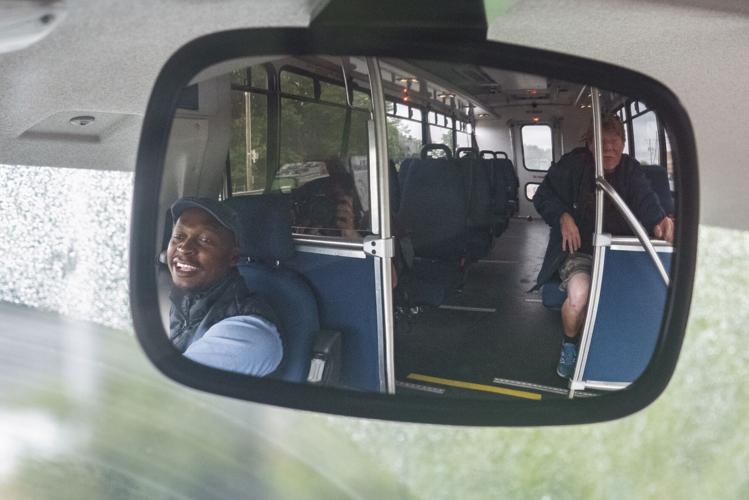
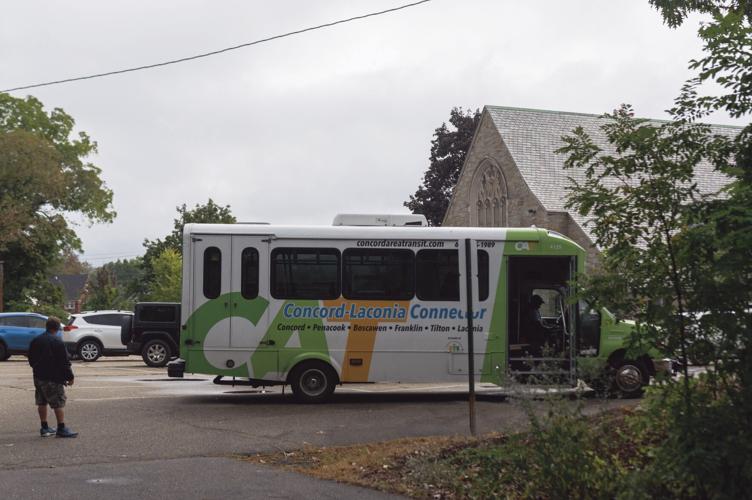

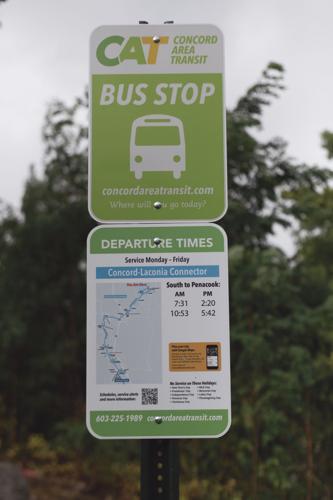
The Lakes Region has its first public bus route following the soft launch of the Concord-Laconia Connector in January. After five months of full operation, the fare-free bus is well used.
“It's called a commuter service, so that you set it up to be able to get to major hub points within the service area at times where folks would be trying to get back and forth to work,” Terri Paige, transportation director for Community Action Program Belknap-Merrimack Counties, said. “So that's ideally that would be perfect for who would be using the service.
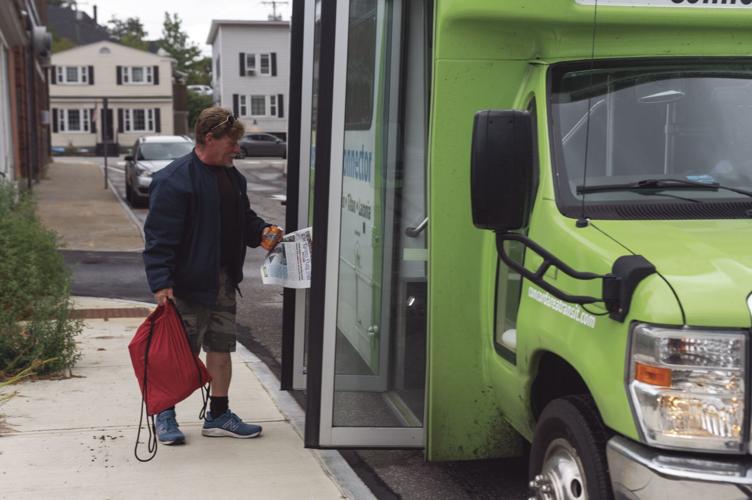
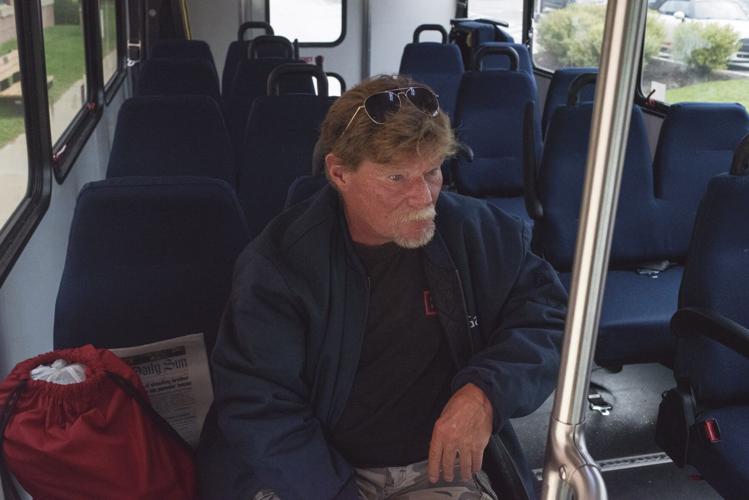
Kurt Tyler, 58, is a regular rider. Tyler works at the BJ’s Wholesale Club gas station in Tilton six days of the week, and uses the bus four out of five weekdays. On weekends, when the bus doesn’t run, he hitches a ride to work with his brother-in-law.
“That's the beauty of riding the bus here, you know, because then I don't have to ask him for a ride there. So, it kind of cuts down on using up his time,” Tyler said during a commute on Sept. 20.
The route, which is part of Concord Area Transit, has 18 stops, from Concord at Eagle Square, to Penacook, to Boscawen, to Tilton, and ending in Laconia at the Church Street parking lot downtown. The stops in Concord are available on the northbound route between 5:45 and 6:03 a.m., and from 7:14 to 7:27 p.m. on the southbound route. Two stops are by request only: New Hampshire Veterans Cemetery in Boscawen, and Hobby Lobby in Tilton.
The bus is often on time for each stop, and sometimes even arrives early. Late arrivals can be due to external factors, like construction or traffic. If the bus is running late, the driver might look to see if there are waiting passengers. If not, they would continue on the route to keep on schedule. If the bus arrives early, morning bus driver Morgan Mbuyi said he will wait.
“This stop is at 10:35, but it’s 10:36. So if there’s no one, I just go,” he said. “If I am early, I wait a little while.”
Due to the bus’ long route, it makes just four round trips throughout the day. Route deviations are not permitted within the tight schedule. Tyler, who is originally from Manchester, noticed differences between the two transportation systems.
“They only go to their stop, and they don't really let people get off unless they're at a stop, which is kind of like, weird,” he said. “You know, Manchester is totally different. You want to get off, get off.”
This means Tyler plans his work schedule around the bus' route.
“I would take the 1:13 bus and get there for 1:30, quarter of, and then punch in at 2,” Tyler said. “But then they asked me to come in at 1, and I said, ‘I can't do that. What I can do? I can come in at 12.’”
Afternoon bus driver Carlos Martinez comes from Manchester to drive the route. He said he would be in favor of adding more routes, which would mean an adjustment to the schedule. He said while there are two stops in the commercial part of Tilton near the interstate exit, there is no stop in downtown Tilton.
“If we did one more that’s fine, get more people, I’m OK with that,” Martinez said.
When Tyler takes the noon shift, he gets on the 9:40 a.m. bus in downtown Franklin, then rides it northbound to Laconia, then back southbound to the Hobby Lobby stop to arrive to work at an appropriate time.
On his day off on Wednesday, Tyler rides the bus to Laconia, grabs lunch at the Brick Front Restaurant and Lounge, then explores downtown recreationally.
The bus is free to ride, and the local organization that operates it, Community Action Program for Belknap and Merrimack Counties, plans to keep it that way. Paige said setting the price at even $1 is not ideal for riders.
“That's going to eat into what little budget you have to be able to sustain yourself,” she said. “So that's really been our focus, is to be able to make sure that those folks that need it the most don't have an additional barrier to be able to get the stuff that they need to stay whole and happy in their lives.”
Because there is no fare, anyone can access the bus. Drivers Mbuyi and Martinez said most riders are easy to transport, but some can be disruptive. Martinez said he does not tolerate poor behavior. He said there is no drug or alcohol use allowed on the bus, and anyone who engages in these activities or disrupts the experience of other riders or the driver can be kicked off.
“As a driver, I’m in charge of the bus, and I also have to take care of the people on the bus who want to ride,” he said.
Paige said the route is part of an expansion of the existing transportation network within New Hampshire. A study commissioned by NH Department of Transportation identified existing gaps for transportation in the state. This route was one such gap. In order to fund the route, NH DOT awards grants to local organizations, usually community action programs, that are then matched. The Federal Transit Administration awards grant 5311, which is specific to rural transportation.
“We had to find local match to be able to draw down those federal funds, to be able to actually get the route started. And Merrimack County granted us money through their ARPA funds that they received to be able to match those federal dollars,” Paige said. ARPA funds refer to federal monies available through the American Rescue Plan Act, passed during the COVID pandemic.
The target number of riders for the bus route is 1,000 per month. As of right now, the number is just below 400.
Paige said CAP experienced an uptick in ridership when the buses were wrapped with bus service branding. To increase ridership, CAP also has staff who do outreach to potential employers along the route and attend events, meeting with municipalities to get the word out that the service is available, including Lakes Region Mental Health Center and Merrimack County Navigator.
“They are often able to transport patients to or from appointments when our van is otherwise occupied or we can’t do it,” Bethanie Vachon, director of development and public relations for LRMHC, said of the transportation service.
Beyond the Concord-Laconia Connector, Concord Area Transit operates other bus routes. Passenger Hannah Perry lives in Concord and bus hops on the routes to make her way to Hobby Lobby to shop.
CAT and CAP also operate another bus, Mid-State Transit, used by people age 60 and up and those with disabilities to appointments and other destinations. Some riders on the blue-colored bus require some assistance from local organizations for food or clothing. Stops sometimes include food pantries. Paige said claims have been made that the bus is bringing unsheltered people into the city, but said it is not true. To use the bus service, all riders must have an address.
“They have addresses, they live in apartment buildings, they live in houses in Laconia and Gilford. But because individuals in the community see our blue buses dropping people off at these locations, they've correlated that to, ‘Oh, you're bringing those homeless people in,’” she said.
Tyler emphasized how much impact the CLC route has made. He appreciates not having to rely on his family in order to get to his job.
“The least amount that I asked them to do, the better it is for all of us,” he said. “I can be more independent.”


(1) comment
surely we can't sit here and say the overwhelming cost of $10 a week isn't a barrier to assisting yourself, are we?
Welcome to the discussion.
Log In
Keep it Clean. Please avoid obscene, vulgar, lewd, racist or sexually-oriented language.
PLEASE TURN OFF YOUR CAPS LOCK.
Don't Threaten. Threats of harming another person will not be tolerated.
Be Truthful. Don't knowingly lie about anyone or anything.
Be Nice. No racism, sexism or any sort of -ism that is degrading to another person.
Be Proactive. Use the 'Report' link on each comment to let us know of abusive posts.
Share with Us. We'd love to hear eyewitness accounts, the history behind an article.