


MEREDITH — Two department heads spoke out against a proposal to implement a remote work policy, requiring all full-time employees to adhere to a 40-hour, in-person work week.
Then-Town Manager Judie Milner said, on Sept. 28, that in addition to changes about vacation accrual from the Sept. 14 meeting, the board wishes to implement a remote work policy. The town currently has no such policy.
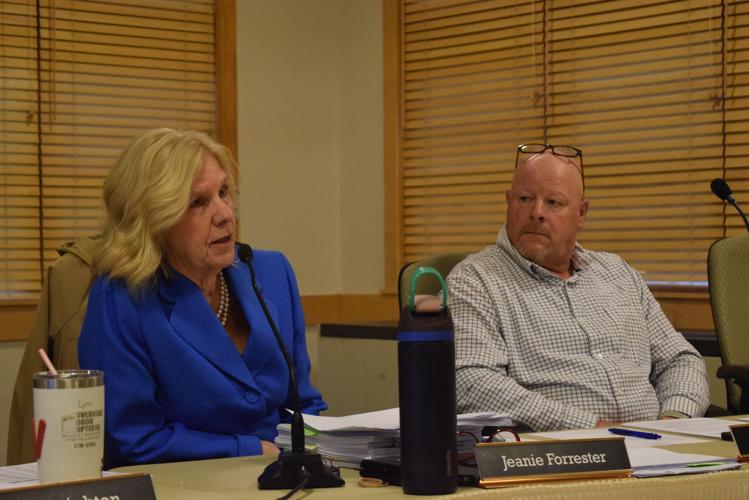
Selectboard member Jeanie Forrester noted the remote work policy has been discussed for “quite a while,” and asked if Milner was suggesting passing that specific policy because it had been in the works. Milner said it would be up to the board on whether to adopt a portion of the policy, or a policy on its own that wasn’t recommended.
“Or, if you are ready to adopt the entire personnel policy, I think you could do that, as well,” Milner said.
Forrester shook her head and said, “no,” as fellow selectboard member Mike Pelczar also shook his head. Pelczar has shared concerns about remote work previously.
Chair Steve Aiken said selectboard member Jim Gregoire asked if he could be present for the personnel policy vote, but was absent from the Sept. 28 meeting, with notice. Forrester thought it was just about the vacation accrual aspect, and not the entire policy.
Pelczar said the remote work policy had been talked about for several months, and he wondered why this couldn’t have been done back in May.
Milner said they went through a process together, and it was a directive from the board to herself, and her recommendation was to put it in the personnel policy.
Robert Carpenter, director of finance, said the board talked about being a “premier employer” in a goal-setting exercise in 2023, and again this year. This pertained to benefits like childcare, gym memberships, and flex time.
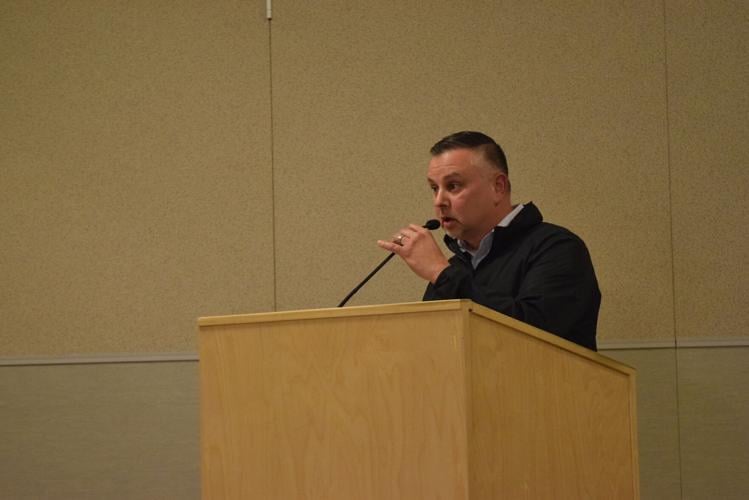
“So, when you talk about this remote work policy, I was just kind of wondering how this has been taken out of that goal setting process?” Carpenter said. “I ask, because this greatly affects my department, and all the administrative type departments, in which if they don’t have a remote work option, they don’t fall into any of the other kind of culture that attracts and trains.”
Carpenter said the finance department doesn’t have opportunities for overtime like public works, police, and fire. They don’t have options for flex time, where they can take time off instead of being paid more money, and there are no opportunities for details or on-call shifts.
“So, by taking this remote work option out of the administrative realm as part of those cultural perks, it doesn’t really leave the administrative departments with any of those opportunities we could use in recruiting and retaining our employees.”
He asked why this particular work policy was being changed without addressing other opportunities. He asked if it was fair that everyone gets the same thing, or if everyone gets the opportunity for something.
Forrester referred to his mention of “premier employer,” and said there needs to be a balance. She said being a premier employer “doesn’t mean opening your wallet,” and she doesn’t think taxpayers would support that concept.
“I feel like that concept we had in the goal-setting workshop is now being hung over our heads every single time you want something, whether it is in the personnel policy or anywhere else,” she said. “Please remember that it’s a balance. It’s not, you get everything you want.”
Carpenter said previous conversations with the board were more concerned about coverage. He said this policy looks like they want someone sitting in a seat, and the bigger concern is for coverage for the citizens when coming into an office. He assured the coverage is there, but this policy would not allow for the flexibility of taking work elsewhere.
Pelczar reiterated what he said in the past, that working for a municipality isn’t a private business, and it's expected they are in their office. Every department has different perks, he said, and police officers can’t take a day off and work from home. This also goes for firefighters.
“So, yes, we would like them at their desk 40 hours per week, because you’re a municipality.”
Pelczar said he doesn’t think it is asking too much, and the town pays well enough, and they will be able to put together solid hiring packages.
Carpenter said during the pandemic, they found they could still fulfill obligations outside the office. He said using remote work is a way to get other things done.
Pelczar said they didn’t want to take away the option, but said it's common sense, and they don’t want people remotely working consistently. He said they can agree to disagree, and he isn’t backing down.
“I disagree with the policy,” Carpenter said.
Assessor Jim Commerford was also in favor of working remotely, “occasionally, not weekly, but once in a while.” He said it isn’t a replacement for in-person service to the public. Commerford has an employee who occasionally works from home, and this is an extenuating circumstance, and not every week.
“I just wanted to say I was in support of working remotely,” Commerford said.
At the Sept. 14 meeting, the board discussed proposed changes to vacation time accrual, including for newly hire department heads to receive 160 hours on their first day of employment.
Under the changes, department heads would accrue 14 hours of vacation per month, instead of a rate being based on tenure. Also proposed is an update to part-time employee vacation time, as well as updating the accrual ceiling to 320 hours. A proposed change allows employees who reach their maximum accrued sick leave balance to use up to a day of sick leave per month.
At least one selectboard member was shocked by the proposed changes. Gregoire said these terms were more generous than any vacation package of which he could think. Milner told the selectboard she would come back with information from similar communities about their policies, but she said these were “very generous, but middle-of-the-road in our area.”
Forrester asked Milner for an analysis of any personnel policy being recommended, and the financial impact.
“Every change that you’ve recommended, I personally would like to know the financial impact to the taxpayer if we made this change, and then the overall impact,” Forrester said.
Milner was removed as town manager Thursday by selectboard vote.
Aiken said he has “gotten an earful” on the 160 hours of vacation. He thought the vacation time should be accrued and handled like “normal companies,” and the wording should be reworked.
The changes are not implemented until the policy is approved by the selectboard.


(0) comments
Welcome to the discussion.
Log In
Keep it Clean. Please avoid obscene, vulgar, lewd, racist or sexually-oriented language.
PLEASE TURN OFF YOUR CAPS LOCK.
Don't Threaten. Threats of harming another person will not be tolerated.
Be Truthful. Don't knowingly lie about anyone or anything.
Be Nice. No racism, sexism or any sort of -ism that is degrading to another person.
Be Proactive. Use the 'Report' link on each comment to let us know of abusive posts.
Share with Us. We'd love to hear eyewitness accounts, the history behind an article.