


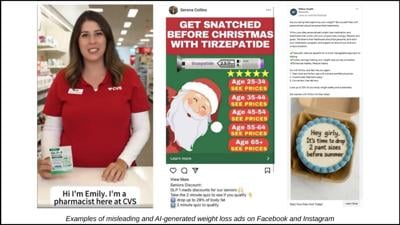
CONCORD — Attorney General John Formella and a coalition of his peers are calling on Meta, a technology company, to enforce its policies on pharmaceutical and wellness advertisements on Facebook and Instagram, and prevent AI-generated weight loss content in ads, according to a press release sent last week.
Those ads are likely to become more prevalent in the holiday season, because people tend to discuss weight and appearance more often, Formella wrote in a release on Dec. 17.
“Consumers deserve honest information, especially when it comes to their health,” Formella wrote. “Meta already has deceptive pharmaceutical and wellness advertising prevention policies in place, but those rules are meaningless if they are not enforced. We are urging Meta to take commonsense steps to stop misleading and AI-generated weight loss ads that prey on people’s insecurities, misrepresent medical risks, and undermine trust in online marketplaces.”
GLP-1 weight loss drugs have increased in popularity over recent years, Formella wrote, and so have advertisements selling those drugs to customers. Numerous companies use Meta’s advertising tools to run ads promoting GLP-1 drugs, most of which aren’t approved by the Food and Drug Administration.
Advertisers are supposed to share information about the medical effectiveness and affordability of drugs, only target adults, and not run ads that suggest a “perfect” body type, or foster unhealthy body images.
The ads on Meta’s platform make use of people’s dissatisfaction with their bodies and promote weight loss as a tool for self-confidence, desirability and social mobility, Formella wrote. Some ads use close-up or side-by-side image comparisons and promote weight loss for milestones like the holiday season, weddings, birthdays and vacations. Those ads claim, Formella wrote, the drugs will help with rapid weight loss, without disclosing the risks and side effects of those medications.
Some of the ads use unlabeled AI-generated content, including fake before and after images and nonexistent spokespeople. One ad shows an AI-generated model losing 208 pounds in three weeks, apparently. Others use fake AI-created law enforcement officers, nurses and pharmacists to support their weight loss claims.
In addition to asking Meta to enforce its existing policies, Formella asks them to: restrict prescription drug ads in the U.S. to only those which have FDA approval; require content promoting weight loss products to clearly disclose risks and side effects; prohibit weight loss drug ads that use AI-generated content; label AI-generated content more clearly and develop better tools to detect and remove content that isn’t labeled properly; and redirect people to safety and educational resources for weight loss products when they search for such products.
The New Hampshire Department of Justice Consumer Protection and Antitrust Bureau investigates unfair, deceptive or unreasonable practices involving New Hampshire consumers. To file a complaint with the New Hampshire Department of Justice, call the Consumer Protection Hotline at 888-468-4454, or visit doj.nh.gov/consumer/complaints.


(0) comments
Welcome to the discussion.
Log In
Keep it Clean. Please avoid obscene, vulgar, lewd, racist or sexually-oriented language.
PLEASE TURN OFF YOUR CAPS LOCK.
Don't Threaten. Threats of harming another person will not be tolerated.
Be Truthful. Don't knowingly lie about anyone or anything.
Be Nice. No racism, sexism or any sort of -ism that is degrading to another person.
Be Proactive. Use the 'Report' link on each comment to let us know of abusive posts.
Share with Us. We'd love to hear eyewitness accounts, the history behind an article.