


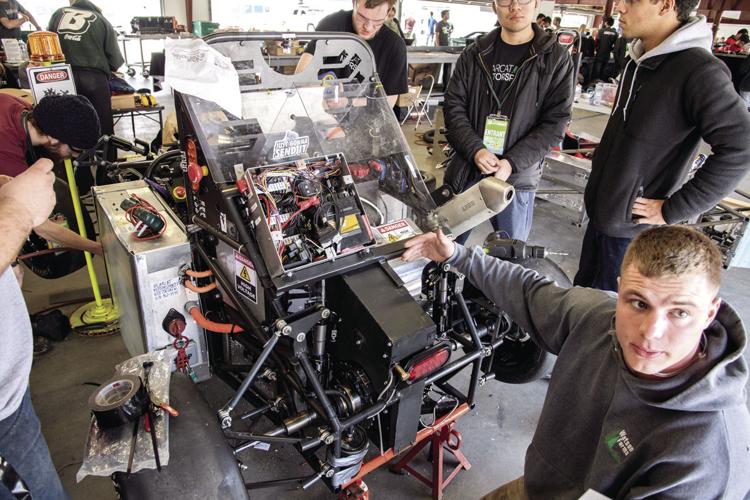
LOUDON — They look like beefed up go-carts, but looks can be deceiving.
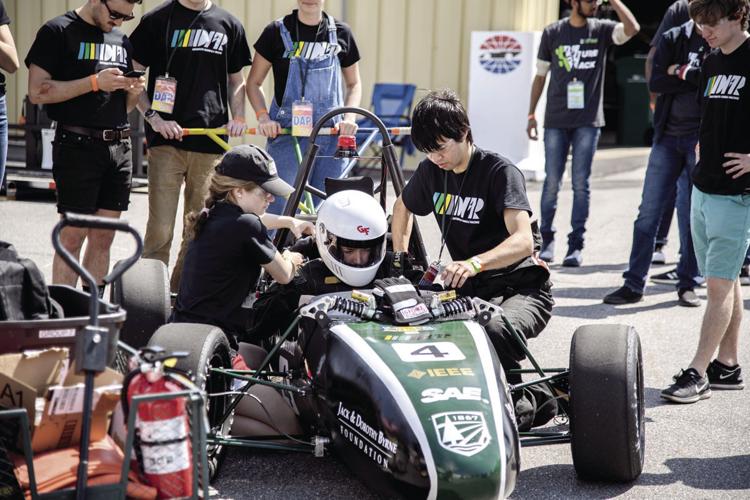
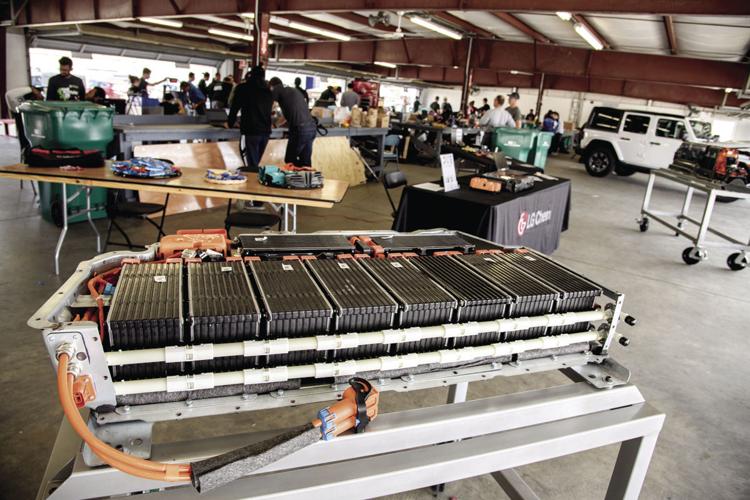
The vehicles taking part in the 13th annual Formula Hybrid competition at New Hampshire Motor Speedway are actually the leading edge of the next generation of race cars, featuring hybrid technology, which combines the power of both gasoline and electrical engines.
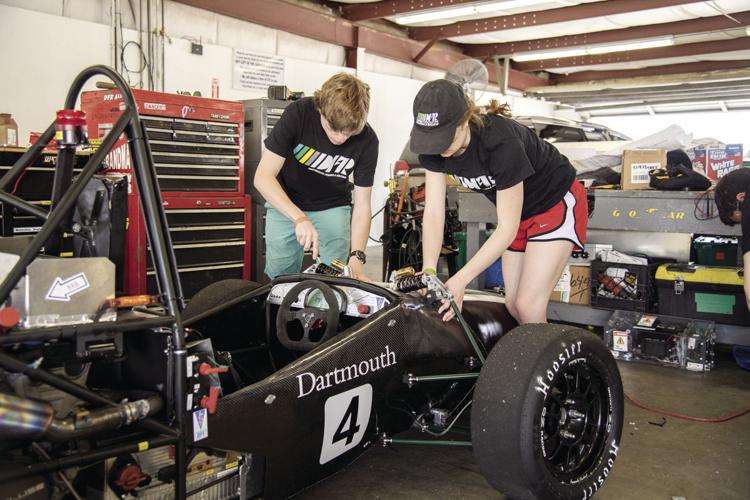
The hybrids are the product of months of design and fabrication work by college students, some of whom came from as far away as India to take part.
In fact, the team from Vellore Institute of Technology in Tamil Nadu, India, completed work on its race car more than two months ago and didn’t see the car again until they arrived at the Speedway.
“We tried it out at a track and packed it up and shipped it by container to the United States,” said Musthafa Kurappali, one of the drivers for the team.
He said the team was awaiting inspection of its car yesterday morning in order to qualify for the competition. Another team from India, SRM Engineering College, was still waiting for its car to arrive.
The competition was founded in 2006 by the Thayer School of Engineering at Dartmouth as a part of the Society of Automotive Engineers Collegiate Design Series.
Teams design and build a Formula-style race car with an open wheel and open cockpit design to be raced. The Formula Hybrid competition differs from the standard SAE International race car competition because teams have to create a gasoline-electric hybrid instead of a purely gasoline-powered vehicle.
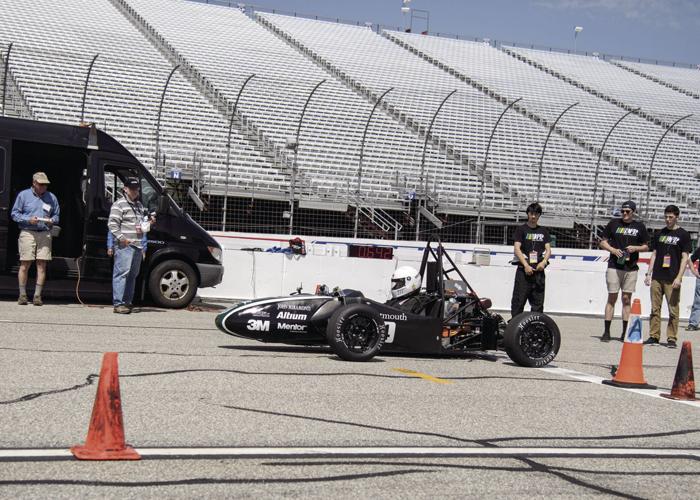
At the competition each team’s racecar must pass both a mechanical and an electrical inspection before it can compete. After passing inspection, teams compete in both static and dynamic events. For the static portion of the competition, teams are assessed based on their design and presentation. For the dynamic events, race cars compete in acceleration, Autocross and endurance.
The Dartmouth Formula Racing team, which has competed every year since the competition first started, has been looking to make a comeback this year after discouraging results the last two years. In 2016, its racecar did not pass the initial inspection. Last year, the car passed the inspection and did well in the design event, but broke down during the endurance event and was unable to complete it.
Shaun Seragupta, who is in his fifth year at the Thayer School majoring in mechanical engineering, said the team is focusing on the control system and has made modifications that reduce the weight of its vehicle, Jessica II, by 188 pounds.
“We’ve changed the center of gravity and have a better suspension. And we’ve developed a hybrid control strategy which will help us save energy we can use towards the end of the endurance event,” said Seragupta.
He said the team was pleased with its acceleration run yesterday morning with DFR’s team management captain Leina McDermott at the wheel.
Thomas Corning, a senior from the San Francisco Bay area, is also a mechanical engineering major. He said he really likes the Formula Hybrid competition because “there’s lots of room for creativity.”
The virtually all-senior team from Binghamton University in New York is looking for an improved performance this year with a vehicle that features a dual input drivetrain and its own custom-built batteries for storing electrical power.
Elliott Mueller, a senior from Lafayette, New York, says the dual input drivetrain should make a big difference in the performance of the team’s vehicle, which is named 2 Chainzs.


(0) comments
Welcome to the discussion.
Log In
Keep it Clean. Please avoid obscene, vulgar, lewd, racist or sexually-oriented language.
PLEASE TURN OFF YOUR CAPS LOCK.
Don't Threaten. Threats of harming another person will not be tolerated.
Be Truthful. Don't knowingly lie about anyone or anything.
Be Nice. No racism, sexism or any sort of -ism that is degrading to another person.
Be Proactive. Use the 'Report' link on each comment to let us know of abusive posts.
Share with Us. We'd love to hear eyewitness accounts, the history behind an article.