


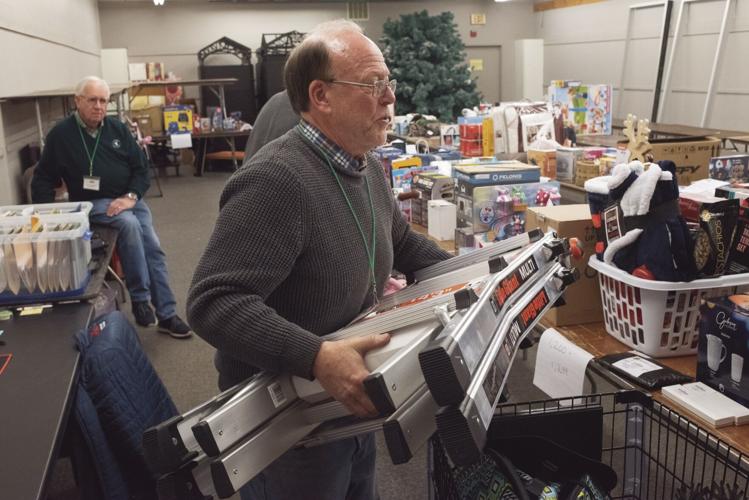
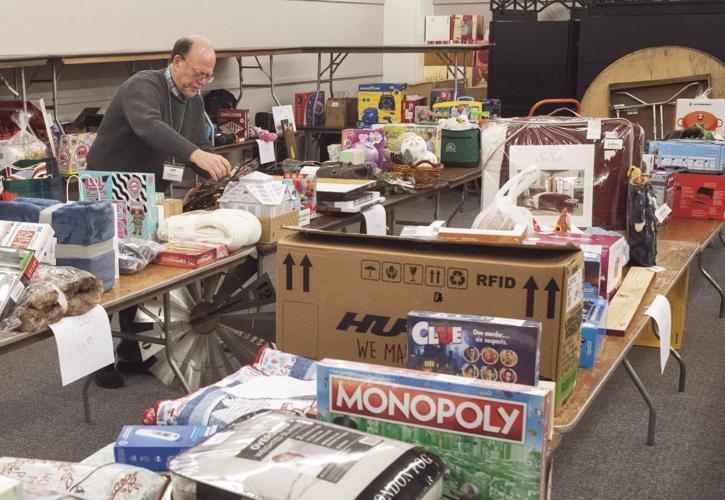
BELMONT — After collecting 1,600 donations, the Greater Lakes Region Children’s Auction is still looking for 1,000 more items to sustain the event through the week. Despite the lofty number, Lisa Cornish, who has volunteered for the Children’s Auction for 15 years, is urging people to make donations, but is not worried whether they will collect enough donations.
“This community has come through every year for us, for the kids,” Cornish said. “I’m hoping they do the same thing. I’m hoping they get it in sooner rather than later.”
But what does the process look like for a donation from start to finish?
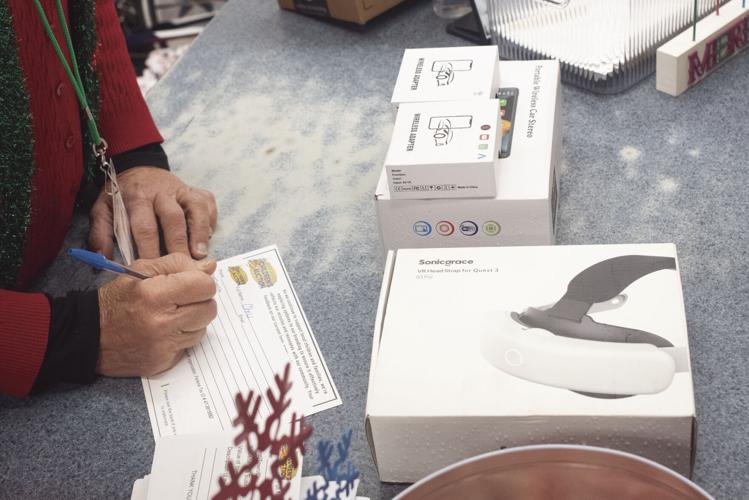
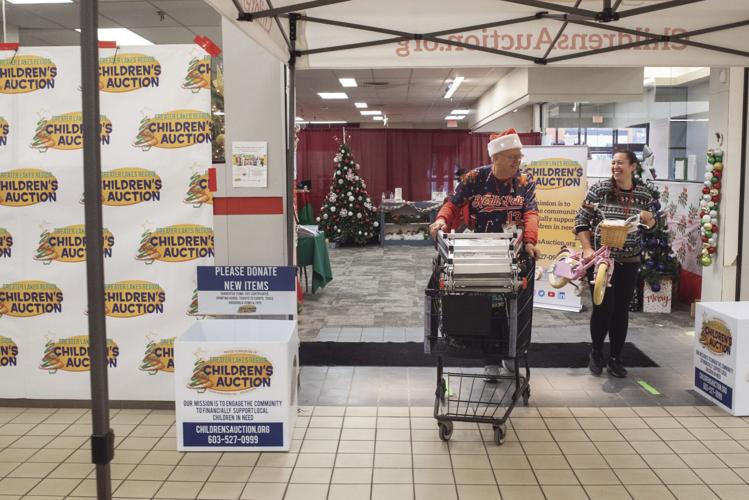
Donations have been collected throughout the year, and many people have come in this week to make in-person donations, as well as dropping off anonymous donations in drop boxes. When a donation is made, information like the name of the individual or company is written on a slip with contact information and an item description, as well as its retail value. If given anonymously, name and contact information are not recorded.
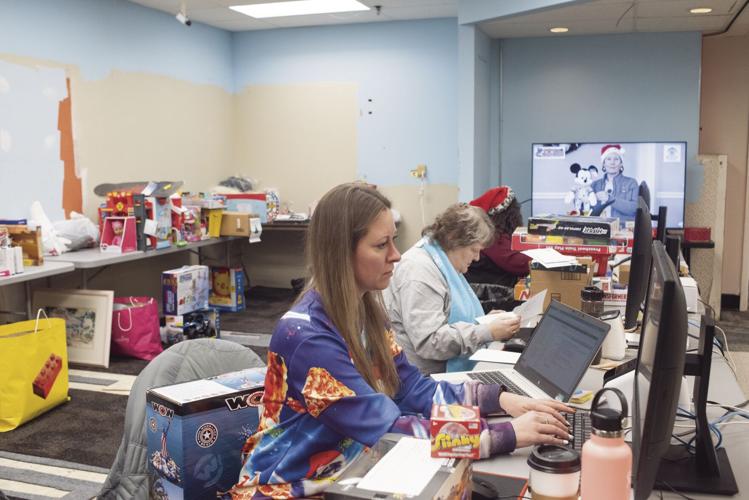
The items are quickly brought to the input team, which does quality assurance and checks information taken at the welcome desk about each item, digitizing it for properly online display and bidding.
Cornish is on the input team, and has been for almost every year she has volunteered. Her duties have changed over the years.
“The person that I started with, it was before we even had the system. She had her home computer,” Cornish said. “We were handwriting everything. We didn't even have pictures. All of it was paper.”
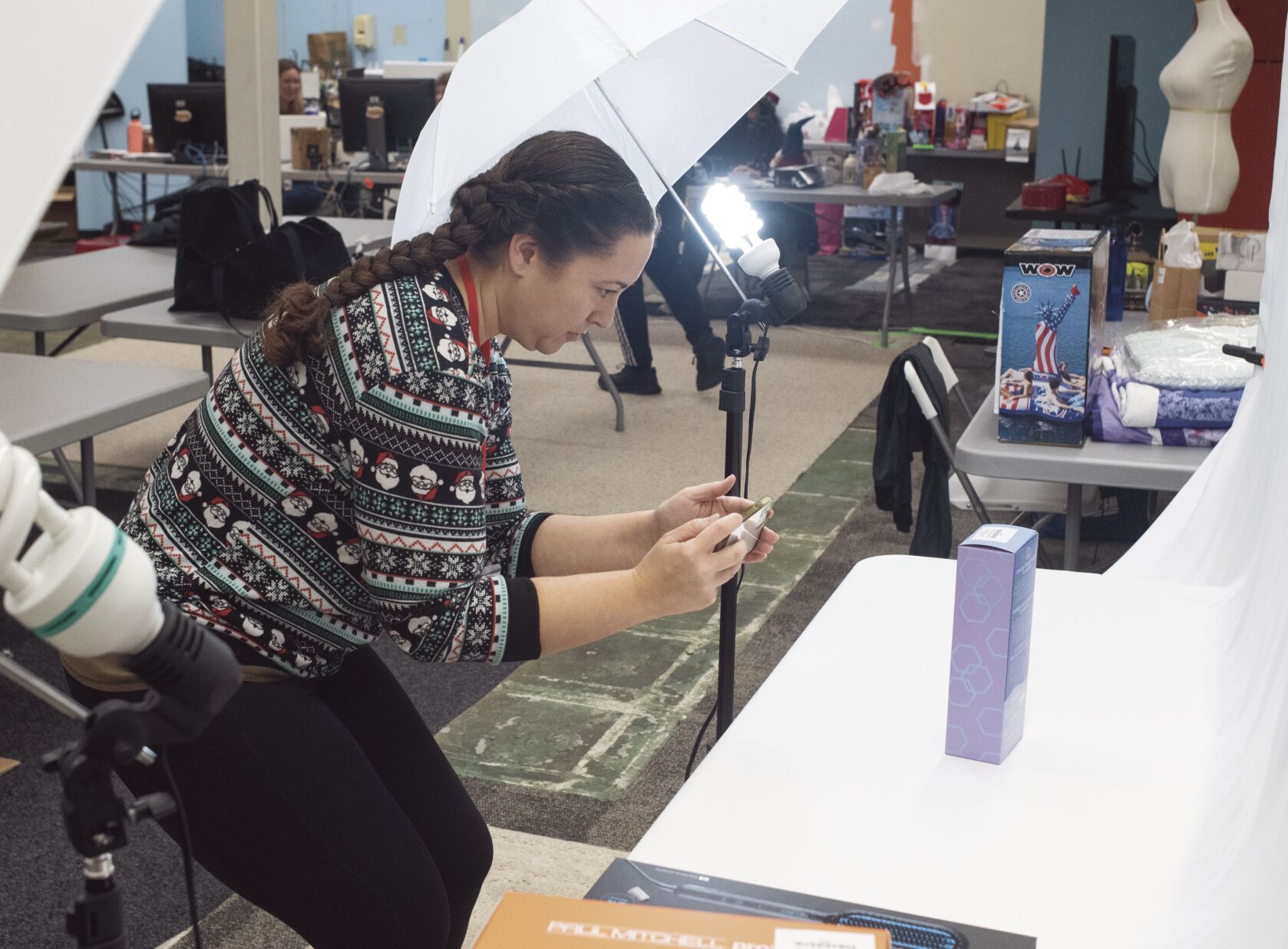
After a donation is input, items are photographed in a small makeshift studio, with a white background and two umbrella lights used to create a bright, but soft, exposure. The photos are not just to give each item a free portrait session. High-quality photos allow bidders online to properly see each item, including details and size. Board treasurer Samantha LeClair is one of the photographers. She said these higher quality images make people more likely to bid on an item, raising more money for the Children’s Auction.
“[It’s] so someone's not questioning an item or sizes,” LeClair said. “When we get blankets, clothes, we can be able to demonstrate a size of something.”
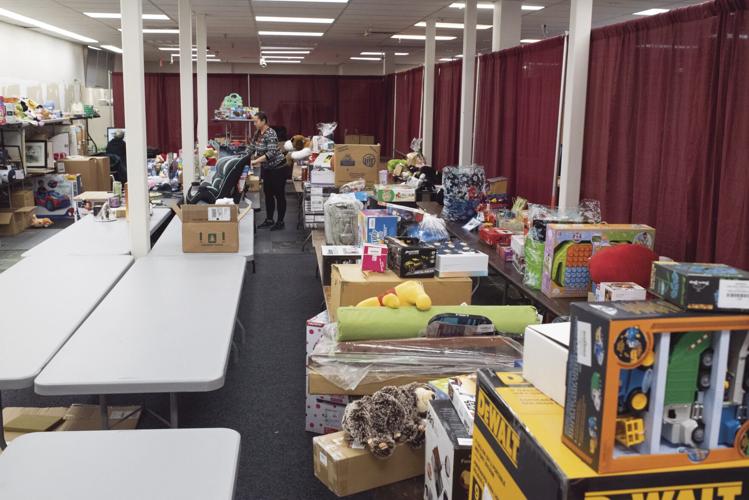
After a photo, the items are stored on tables behind the auction set, where they are assigned to a bid board. Each bid board has six items, and each board stays active for 10 minutes, allowing the auction to have six boards each hour. The goal is to assign a variety of items to each board so there is something for everybody. There are some exceptions, like an all-gift card board. Items usually end up on the board the day after they are donated.
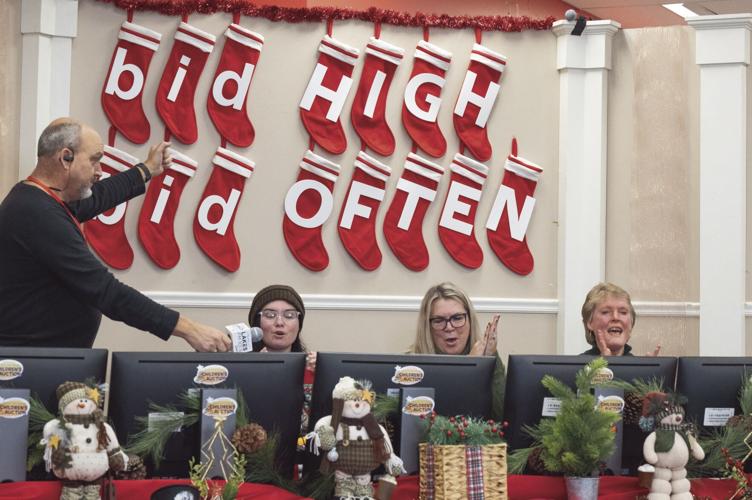
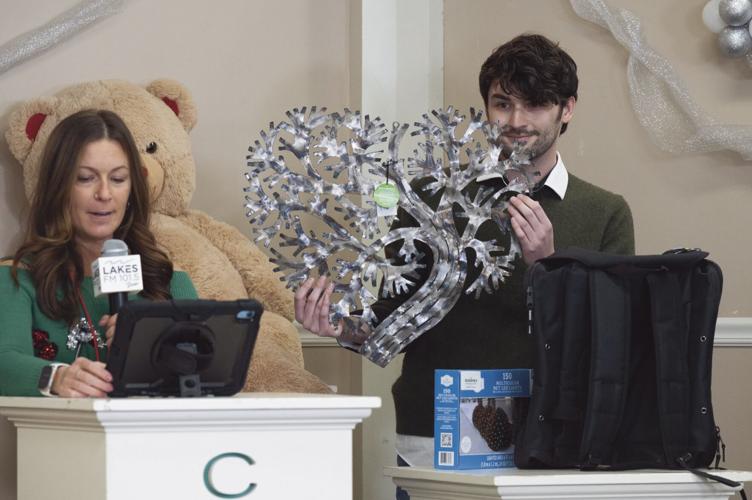
On the auction set, items are displayed live on air to demonstrate qualities that may entice bidders. The retail value of an item is discussed and displayed online, and many items are overbid, meaning the bidding value exceeds its retail one. This happens often for gift cards. LeClair explained the explicit value of gift cards makes it easy for bidders to make additional donations.
“Everyone knows they're buying for the auction, right?” she said. “I think it's because you're going to get your $50 gift card for $50 and then your extra $10 is a straight donation.”
Once the bid board closes, the highest bidder will win each item. The items are then transported to the checkout, where bidders can pickup their winnings. The auction team recommends paying for items online and scheduling a time for pickup, as it helps volunteers prepare. All items are organized by number in a room down the hall from the auction set, and available even outside of a bidder's scheduled time.
Garrett Guilmett, 28, and his brother, 31-year-old Jared Guilmett, have been volunteering with the Children’s Auction for 20 years at the checkout station. Garrett said it is common for volunteers to serve the same role year after year.
“All the people that have been here for years and years have really kind of fallen into their roles, and really helped to streamline those areas, and become pillars in those areas to help this go as smoothly as it does,” he said.
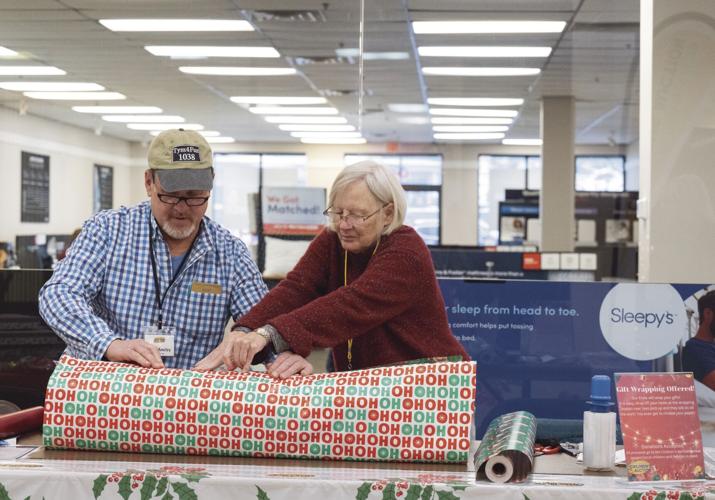
While the process used to stop there, winning bidders can now go to a station just across the hall to get their new items wrapped for a donation. They will also wrap any gifts not purchased from the auction. Volunteer Steve Anstey said it doesn’t matter how much you give.
“Someone can come here and throw $1 in there. That's fine, but we're hoping that people would throw as much as they can, because all that money is going for the Children's Auction,” he said.
Even though the life cycle of a donated item being about a day or so at the Children’s Auction, the auction itself is a year-round event. Garrett wanted to emphasize its significance.
“Seeing the impacts throughout the year that they're able to do really just helps to show the sheer impact, and the kind of, the ripple effects of what something like this can do,” he said. “It's not just a one-week event. It truly is a yearlong commitment that this community has.”


(0) comments
Welcome to the discussion.
Log In
Keep it Clean. Please avoid obscene, vulgar, lewd, racist or sexually-oriented language.
PLEASE TURN OFF YOUR CAPS LOCK.
Don't Threaten. Threats of harming another person will not be tolerated.
Be Truthful. Don't knowingly lie about anyone or anything.
Be Nice. No racism, sexism or any sort of -ism that is degrading to another person.
Be Proactive. Use the 'Report' link on each comment to let us know of abusive posts.
Share with Us. We'd love to hear eyewitness accounts, the history behind an article.