


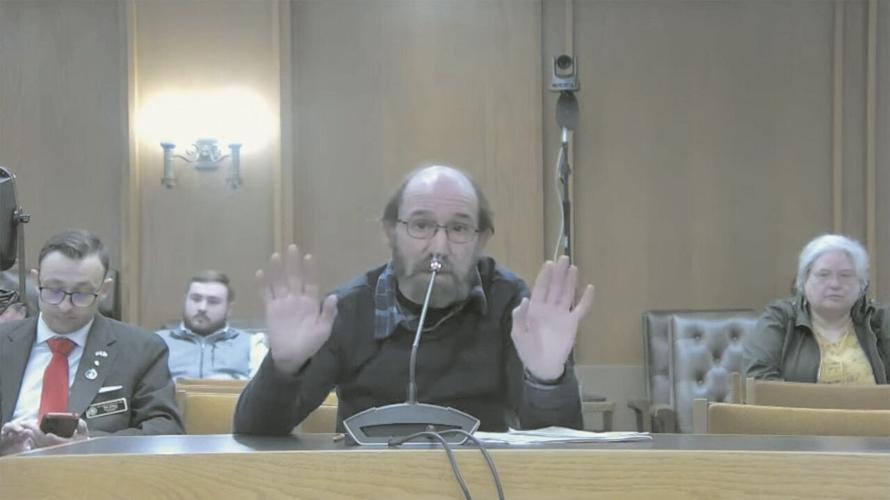
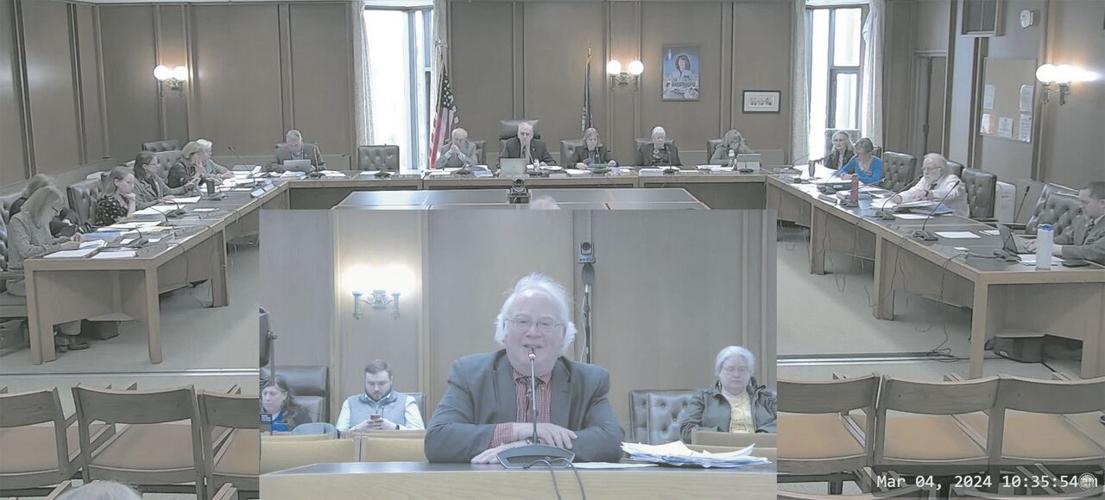
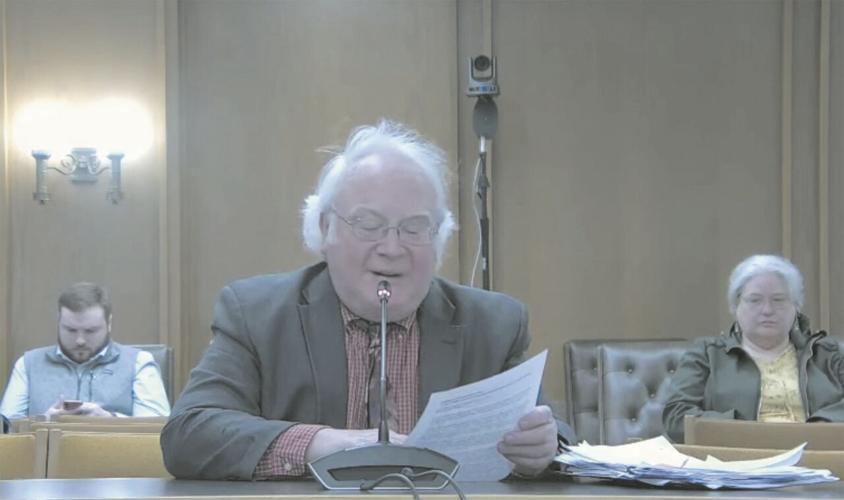
CONCORD — Durham Democrat Rep. Timothy Horrigan told members of the House Education Committee that House Bill 1592 simply reflects the state constitution’s ban on sending tax money to religious institutions, but others who testified said parents should be able to send their children to religious schools if their public schools are not performing well.
Committee members hearing the testimony on March 4 also seemed to question the validity of the bill, which would amend RSA 194-F:2 to restrict Education Freedom Account grants to accredited educational institutions and would ban their use at “a religious school or for a religious education or training.”
Information provided by the Children’s Scholarship Fund, which administers the program, indicates that about 70 current education “vendors” would be affected by the bill. During the 2022-23 school year, religious-based vendors received about $5.3 million in EFA payments.
Article 6 of the New Hampshire Constitution states, “no person shall ever be compelled to pay towards the support of the schools of any sect or denomination” — a straightforward ban, according to Horrigan.
Rep. Glenn Cordelli (R-Tuftonboro) cited a number of court decisions he believes supersede that ban, and argued the reason for putting it into the state constitution was to end the practice of sending public money exclusively to the Congregational Church.
“This was added to the constitution so you couldn’t compel someone to pay money to the Congregational Church,” Cordelli said, “but in 1791, there was a law that passed that allowed towns to do this. That was eventually repealed in 1819, as other faiths started objecting to collecting money for the Congregational churches. They felt, you know, they should have equal dibs on [those] taxpayer dollars, I guess.”
“I might respectfully disagree with that history,” Horrigan responded. “I’ve probably been in the legislature since 2008, so a lot of those events happened before my service. ... The separation of church and state didn’t really exist in the 1700s, and it kind of evolved.”
Horrigan suggested many of the historical and philosophical questions about the bill could be discussed among the committee members, but said, “I believe the taxpayer money belongs to all the taxpayers, not just some, especially within the original purview of the EFA program” which has expanded each year.
Only committee member Rep. David Luneau (D-Hopkinton) appeared to agree with Horrigan, reading from Education Commissioner Frank Edelblut’s statement to the Joint Legislative Committee on Administrative Rules that the statutes and rules pertaining to EFAs do not permit funding for religious instruction.
Matt Southerton, director of policy compliance at the Children’s Scholarship Fund, opposed the bill because it would “discriminate against” approved providers.
“We can’t make value judgments,” Southerton said. “It specifically says in the law that we can’t do that. This would strip that out.”
When Luneau pressed him on whether paying tuition to religious institutions violates the ban on state funding for religious instruction, Southerton said, “To my knowledge, no. I would have to go back and I’d definitely love to read the material that you’re reading and then read, you know, do we have a definition on what those materials are?”
Aubrey Freedman of Bridgewater told the committee, “Government schools just don’t work out for everybody. ... If you eliminate 75% of the options, what are those parents going to do?”
Freedman said he is unconcerned about any religious instruction students might receive. “I’m Jewish,” he said, “and my son went to a regular government school back in California, K-5. Then I decided no, I don’t think this is going to be the best option moving forward after elementary school. I sent him to a Catholic school, and I have absolutely no interest in Catholicism. I had to go to services and they were swinging that weird smoke around and I knew nothing about that, but I didn’t care about any of that. The school had really high academic standards. That’s what I’m interested in.”
Another speaker agreed, saying, “When you’re a father, and you’re assigned to a totally failed public school like Mount Pleasant in Nashua ... it’s a terrible thing to do because you don’t have money to send your kids to a private school.”
He said his children are not Catholics, but the Catholic school they attend has a diverse population: “There’s tons of Indians, there is atheist, Chinese. .... They’re Orthodox Jews, a Muslim family.” There are religious classes, but they also discuss other religions, he said.
“It’s enraging to think that somebody would try to force us back into failed schools,” he said. “It seems like this is a Trojan horse for teachers’ unions’ support, and not really an interest in the welfare and education of kids in New Hampshire.”


(0) comments
Welcome to the discussion.
Log In
Keep it Clean. Please avoid obscene, vulgar, lewd, racist or sexually-oriented language.
PLEASE TURN OFF YOUR CAPS LOCK.
Don't Threaten. Threats of harming another person will not be tolerated.
Be Truthful. Don't knowingly lie about anyone or anything.
Be Nice. No racism, sexism or any sort of -ism that is degrading to another person.
Be Proactive. Use the 'Report' link on each comment to let us know of abusive posts.
Share with Us. We'd love to hear eyewitness accounts, the history behind an article.