



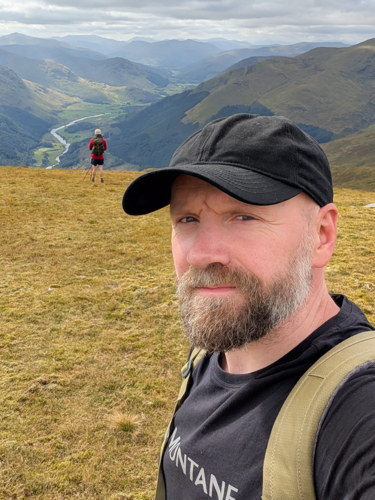

(Leukaemia Care / Scott Cassidy via SWNS)
By Jake Meeus-Jones
A man who was told the "strobe light effect" in his eyes was caused by a migraine has been diagnosed with leukemia.
Scott Cassidy, 44, began experiencing strange visual disturbances in the summer of 2025 and was told it was probably a migraine brought on by the stress of caring for his seriously ill mother.
A visit to the optometrist found nothing wrong with his eyes and suggested it sounded like migraine with aura.
His primary care doctor reached the same conclusion, although both noted that it was unusual for the symptoms to occur at almost exactly the same time every day.
Despite exercising regularly, he found his usual exercises - walking every morning, and kettlebell lunchtime workouts - were becoming increasingly difficult, and as his fitness deteriorated and exhaustion took hold, blood tests eventually revealed he had chronic myeloid leukemia (CML).
Scott is undergoing targeted treatment called a tyrosine kinase inhibitor (TKI), which works by targeting the abnormal process responsible for CML.

(Leukaemia Care / Scott Cassidy via SWNS)
CML is currently considered incurable, but it is highly treatable.
Scott, who works for Blind Veterans UK, from the Scottish Borders, said: "It was like a section of my visual field would be almost like there was a broken strobe light."
"There was fast blurring, and it would be there every morning without fail.
"I'd go for a walk, and it would gradually get better over the course of the walk, and then it would start coming on at various times during the day."
Last summer, Scott's mother suddenly developed a rare neurological condition called MOGAD, going from having a sore shoulder one Wednesday to being paralyzed from the neck down just two days later.
With his mother living hours away in Carnoustie, Scott began splitting his week between his home and the hospital, working remotely while also trying to support her.
With the initial migraine misdiagnosis, Scott was given migraine medication in September 2025, but over the next few weeks, other changes were taking place.
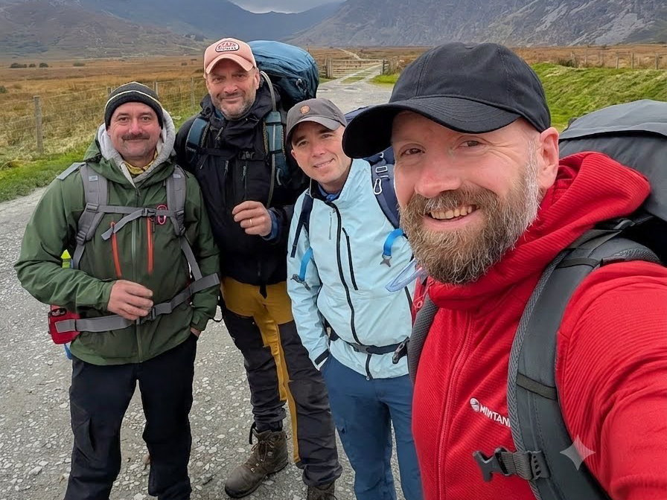
During a hiking trip in Wales with friends, he struggled to keep up with the group, and had to take rests throughout.
He said: "That was a real wake-up call because these aren't guys I would normally be trailing up the hill.
"I'm usually the other way around - I was just exhausted."

(Leukaemia Care / Scott Cassidy via SWNS)
But his symptoms weren't improving, and eventually, his primary care doctor decided to run blood tests "to rule out any nasties."
Scott was at the cinema with his youngest daughter and his wife when his primary care doctor called to explain that the blood results suggested chronic myeloid leukemia, but further tests were needed to confirm the diagnosis and establish whether the disease was in the chronic or accelerated/acute stage.
A period of confusion followed, with Scott thinking the doctors were trying to determine whether he had chronic or acute leukemia – two very different conditions.


For around a week, he and his wife were left waiting for answers while trying to shield their two daughters.
He said: "I was waiting to find out whether I was likely to die or likely to be okay.
"It was just horrendous."
Eventually, Scott saw a consultant who confirmed he had CML and he was started on treatment.
Initially, the treatment appeared to be working. But three months later, tests showed that Scott had not responded sufficiently and the medication had failed to achieve the required milestones.
He said: "It was a real mental blow.
"You think, 'The drugs are great, you've got normal life expectancy', but that's dependent on the drugs working."
Scott was moved onto another form of treatment, and with this he reached both his three- and six-month treatment milestones.
Since then, Scott has returned to work but has been left with severe fatigue.
He said: "I've heard people speak about fatigue before, but this is different.
"It's like someone's pulled the plug out - there are moments when I'm just done."

(Leukaemia Care / Scott Cassidy via SWNS)
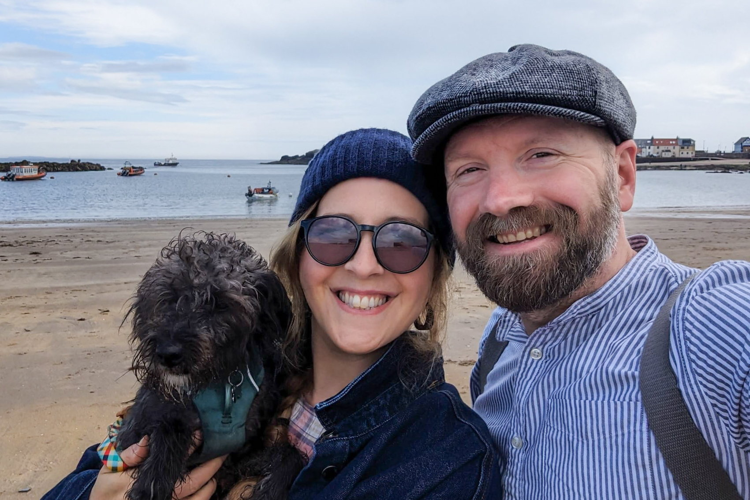
Now, the 44-year-old is urging people to listen to their bodies, join the dots between symptoms and ask for a blood test if something doesn't feel right as part of Leukaemia Care's 'Spot Leukaemia' campaign.
He said: "I think my message to anyone that I've been chatting to is advocate for yourself."
"If you're not happy, go back.
"Explain all your symptoms and ask for blood tests early.
"What I should have been saying is, 'I am shattered. I'm not sleeping at night. I'm having to switch off. I can't do the workouts I was doing previously.' "
Colin Dyer, chief executive of Leukaemia Care, said: "Blood cancer doesn't always present in the way people expect.
"Scott's first and most noticeable symptom was an unusual change to his vision, while other signs such as profound fatigue and a sudden loss of physical ability could easily have been explained by the considerable stress he was experiencing at the time.
"Our SPOT leukaemia campaign is encouraging people to pay attention to changes in their health, particularly when symptoms are unusual, persistent or out of character.
"Scott's advice to listen to your body, and ask about a blood test is incredibly important.
"Knowing what is normal for you can help you recognize when something isn't."


(0) comments
Welcome to the discussion.
Log In
Keep it Clean. Please avoid obscene, vulgar, lewd, racist or sexually-oriented language.
PLEASE TURN OFF YOUR CAPS LOCK.
Don't Threaten. Threats of harming another person will not be tolerated.
Be Truthful. Don't knowingly lie about anyone or anything.
Be Nice. No racism, sexism or any sort of -ism that is degrading to another person.
Be Proactive. Use the 'Report' link on each comment to let us know of abusive posts.
Share with Us. We'd love to hear eyewitness accounts, the history behind an article.