


At the very top of my list of summer plans is scheduling tours of the two Frank Lloyd Wright homes in Manchester that have been restored and are now in the collection of the Currier Museum of Art.
The organic architecture of Frank Lloyd Wright has always interested me, as much as reading about his fascinating life. From 1937 until 1959 he spent his winters in the desert foothills of the McDowell Mountains in Scottsdale, Arizona at a compound he called “Taliesin West.” Many years ago, on a trip to Arizona I toured Taliesin, which is now part of the Frank Lloyd Wright Foundation. When Wright was alive architectural students would spend the winter there working and studying. On Saturday, attired in black tie and long, flowing dresses, everyone gathered for a formal dinner and chamber concert. I remember imagining how magical those evenings must have been. The pitch-black night sky, sparkling stars, moon shadows, the quiet of the dessert and the simplicity of the architecture. The reverence for nature and beauty ever present.
Wright's work was inspired by the simplicity of Japanese architecture. He made his first trip to Japan in 1905 and traveled there again in 1913. When he was asked to design the New Imperial Hotel in Tokyo (demolished 1968) he spent almost three full years, 1917-1922, there. He studied Japanese architecture and culture. What attracted him were the clean lines, the organic nature of their art that incorporates nature in all forms. Traditional Japanese homes are devoid of decoration and extraneous objects leaving the mind clear for thought and contemplation.
Frank Lloyd Wright’s idea for “Usonian” homes began in 1900. The houses were simple and affordable, arranged in zones, with three areas: living space, small bedrooms, and a kitchen-dining area. The idea behind Usonian houses was to provide smaller, affordable houses that could incorporate into or form a community. Large windows brought the outside in. Natural materials blended the house with the site and warm colors on the interior further contributed to the feeling of bringing the outdoors inside. The Kalil house in Manchester is a Usonian house. Isadore and Lucille Zimmerman commissioned Wright to design their home. To learn more, visit currier.org/frank-lloyd-wright.
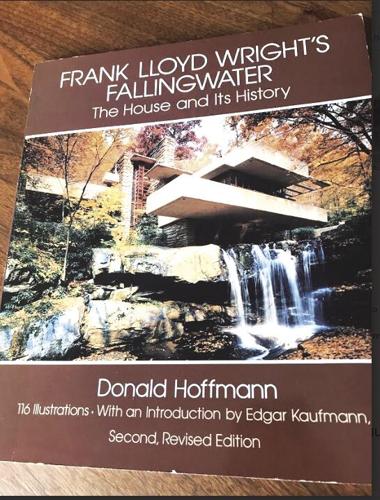
If you share my interest in architect and should be traveling through Stewart Township or Fayette County in southern Pennsylvania, plan to visit Fallingwater, Wright’s home built for the Edgar J. Kaufman family. Located over a waterfall, so the sound of the water can be heard, it is a house that incorporates all of Wright’s ideas about what a home should be. There are Japanese elements throughout and a sense one is living in nature. It is, of course, necessary to book tours of Fallingwater. I arrived early on a March morning after driving from downtown Pittsburgh. The group who had been scheduled to join my tour never appeared and I was fortunate to have the opportunity to walk through the house with a guide. It is an experience I often recall. Having the space and time to look at each detail in every room.
How we live? How do others live? Endlessly fascinating to all of us. We have opportunities in New Hampshire to visit “historic” homes. One can visit the farm where Robert Frost spent many summers in Franconia. The Franklin Pierce Homestead, home of the 14th president from his infancy until his marriage in 1834, is open in Hillsborough. Augustus Saint-Gaudens' home was at the center of the Cornish arts colony, which included about 100 artists, writers, and politicians from about 1895 to the end of World War I. Now the home and surroundings garden and long sweeping lawn have musical programs and concerts throughout the summer. One can spend an afternoon walking the grounds, enjoying a picnic on the grass, and listening to glorious chamber music being performed in what was originally Saint-Gaudens Studio.
We seek out New Hampshire for its natural beauty. The space for contemplation.
“Nature is my manifestation of God. I go to nature every day for inspiration in the day’s work. I follow in building the principles which nature has used in its domain.” — Frank Lloyd Wright
•••
Elizabeth Howard is the host of the Short Fuse Podcast, found on Spotify, Apple Podcasts or through the Arts Fuse. Her career intersects journalism, marketing, and communications. Ned O’Gorman: A Glance Back, a book she edited, was published in May 2016. She is the author of A Day with Bonefish Joe, a children’s book, published by David R. Godine. She lives in New York City and has a home in Laconia. You can send her a note at eh@elizabehthhoward.com.


(0) comments
Welcome to the discussion.
Log In
Keep it Clean. Please avoid obscene, vulgar, lewd, racist or sexually-oriented language.
PLEASE TURN OFF YOUR CAPS LOCK.
Don't Threaten. Threats of harming another person will not be tolerated.
Be Truthful. Don't knowingly lie about anyone or anything.
Be Nice. No racism, sexism or any sort of -ism that is degrading to another person.
Be Proactive. Use the 'Report' link on each comment to let us know of abusive posts.
Share with Us. We'd love to hear eyewitness accounts, the history behind an article.