


Occupational therapy is designed to help people regain and build skills that are important for functioning on their own. The occupational therapist will help the person evaluate levels of function.
An occupational therapist —
• Tests a person’s strength, range of motion, endurance (the ability to continue an activity or effort), and dexterity (skill in using hands) to do everyday tasks that were done easily before an illness or injury happened.
• Designs a program of activities and solutions that ensure the greatest possible independence.
• Provides training to relearn everyday activities of daily living like eating, grooming, dressing, toileting, bathing, and leisure activities such as gardening.
• Decides whether special equipment is needed, such as wheelchairs, feeding devices, transfer equipment, hand and skin devices.
Physical and occupational therapies are part of the process of relearning how to function after an injury, illness, or period of inactivity. If muscles are not used, they shorten and tighten, making joint motion painful. For the person in your care, these therapies are key to achieving as much functional independence as possible. Although you may not be asked to assist with these exercises, it is useful for you to know how they help.
The physical therapist
A physical therapist treats a person to relieve pain, build up and restore muscle function, and maintain the best possible performance. The therapist does this by using active and passive exercises, massage, heat, water, and electricity. Broadly speaking, a physical therapist:
✔ Sets the goals of treatment with patient and family
✔ Shows how to use special equipment
✔ Instructs in routine daily functions
✔ Teaches safe ways to move
✔ Sets up and teaches an exercise program
Range-of-motion exercises
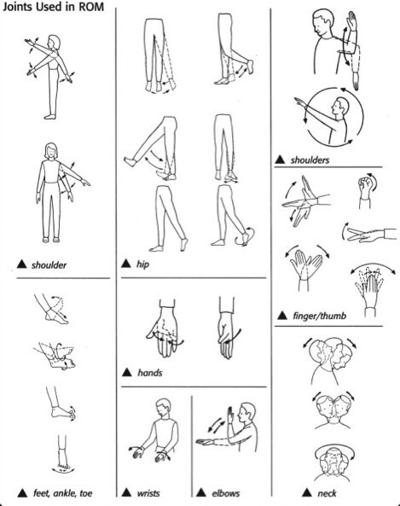
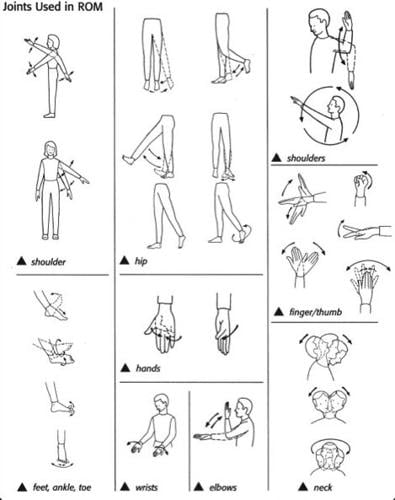
The following information is provided for your general knowledge. It IS NOT a substitute for training with professional therapists. Use range-of-motion exercises to relieve pain, maintain normal body alignment, help prevent skin swelling and breakdown, and promote bone formation. A ROM exercise program is ideally started before deformities develop.
Comfort Keepers can help
At Comfort Keepers, our professional care team is trained to identify changes in client behavior and report them to the family. For those suffering from Alzheimer’s or dementia, our caregivers can help them remain safe and comfortable at home, while providing everything from laundry and housekeeping to meal preparation and transportation. Learn more about how we can help seniors and other adult clients by contacting your local Comfort Keepers location today.
About Comfort Keepers
Comfort Keepers is a leader in providing in-home care consisting of such services as companionship, transportation, housekeeping, meal preparation, bathing, mobility assistance, nursing services, and a host of additional items all meant to keep seniors living independently worry free in the comfort of their homes.
Comfort Keepers have been serving New Hampshire residents since 2005. Let us help you stay independent.
Call 603-536-6060 or visit our website at nhcomfortkeepers.com for more information.





(0) comments
Welcome to the discussion.
Log In
Keep it Clean. Please avoid obscene, vulgar, lewd, racist or sexually-oriented language.
PLEASE TURN OFF YOUR CAPS LOCK.
Don't Threaten. Threats of harming another person will not be tolerated.
Be Truthful. Don't knowingly lie about anyone or anything.
Be Nice. No racism, sexism or any sort of -ism that is degrading to another person.
Be Proactive. Use the 'Report' link on each comment to let us know of abusive posts.
Share with Us. We'd love to hear eyewitness accounts, the history behind an article.