


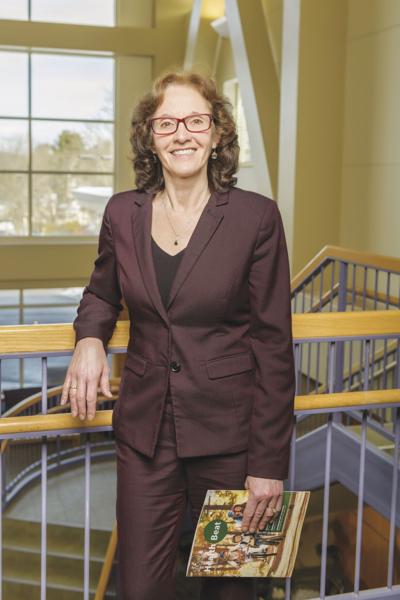
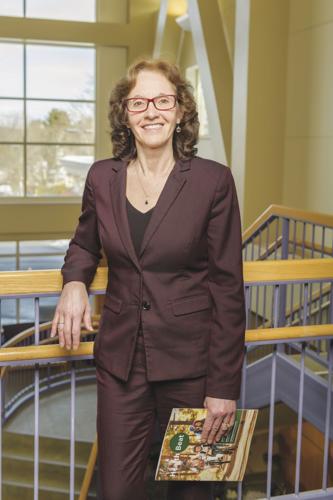
PLYMOUTH — The struggles that New Hampshire hospitals have been going through since the onset of COVID-19 have been splashed across the headlines. Overall, Speare Memorial Hospital in Plymouth has not had to fight against soaring numbers of COVID-positive patients, but President and CEO Michelle McEwen says the role this local hospital has played in central New Hampshire during the pandemic has been remarkable.
Speare is actively involved in providing community testing, treating hospitalized COVID patients, and providing outpatient monoclonal treatments to COVID-positive patients at high risk of developing severe illness from COVID. In addition, the Speare healthcare team is caring for patients facing exacerbated chronic conditions, much of which is a result of delaying care.
In the past several weeks, a winter surge of COVID was brought on by holiday gatherings and the Omicron variant. New Hampshire’s hospitals faced challenges with a shortage of beds and staff to care for everyone arriving at their facilities. Small hospitals like Speare were further challenged by not being able to transfer patients in life-threatening conditions to larger hospitals because of the capacity issues they, too, were facing. In response, Speare widened its geographic circle when searching for larger hospitals to accept their very ill patients. Transfers to Connecticut, New York, and even Michigan ensured these patients got the medical services they needed. Speare also utilized its telehealth capabilities to connect with specialists who assisted with the care of complex intubated patients.
“And last month we accomplished perhaps our greatest feat yet,” says McEwen.
In early January, Speare was consistently caring for more patients at one time than they ever have before, forcing them to house patients in need of inpatient care in their emergency department. This resulted in fewer beds available for ED patients, compelling Speare to care for patients in other nontraditional space near the ED.
“This was not ideal,” says McEwen. “But we are committed to ensuring our community has continuous access to care.”
On Jan. 5, the increasing number of patients needing care pushed Speare to officially declare “Surge” for the first time in their 123-year history. The entire senior and middle management team came together to deploy the hospital’s surge plan. Elective surgeries were put on hold, and six of the hospital’s operating rooms were converted into a telemetry unit to care for admitted patients who needed constant cardiac monitoring. This allowed Speare employees to move inpatients out of the ED. The surgical team was redeployed to care for patients in the new surge unit and assist in other nursing units throughout the hospital. Medical assistants from Speare’s physician practices were pulled to help nurses, and medical providers from those same practices assisted hospitalists in caring for inpatients.
“I was so impressed by the way our staff organized and implemented our surge plan with such efficiency and urgency that our surge unit was operational within 24 hours,” says McEwen. “Our staff willingly stepped into new roles, worked different shifts (like overnight), and long hours, due to their commitment to our community. They realized that the next patient could be a family member, neighbor, or friend — and their priority was to ensure that each patient that came through our doors got the medical care they needed.”
A week after declaring a surge, Speare was back to normal operations.
As the COVID pandemic has dragged on for two years, people everywhere have grown tired of the impact it has made on their lives. Healthcare workers across our country are exhausted, stressed, and fragile. Speare’s healthcare workers are among them.
“I am so proud of what our team accomplishes every day, and in particular what they accomplished in our recent surge,” says McEwen. “Now more than ever, they need to know that their efforts are recognized and valued.”
She urges the public to take a moment to thank our healthcare workforce, let them know they are appreciated, and thank them for their enduring commitment to the Plymouth region.


(0) comments
Welcome to the discussion.
Log In
Keep it Clean. Please avoid obscene, vulgar, lewd, racist or sexually-oriented language.
PLEASE TURN OFF YOUR CAPS LOCK.
Don't Threaten. Threats of harming another person will not be tolerated.
Be Truthful. Don't knowingly lie about anyone or anything.
Be Nice. No racism, sexism or any sort of -ism that is degrading to another person.
Be Proactive. Use the 'Report' link on each comment to let us know of abusive posts.
Share with Us. We'd love to hear eyewitness accounts, the history behind an article.