


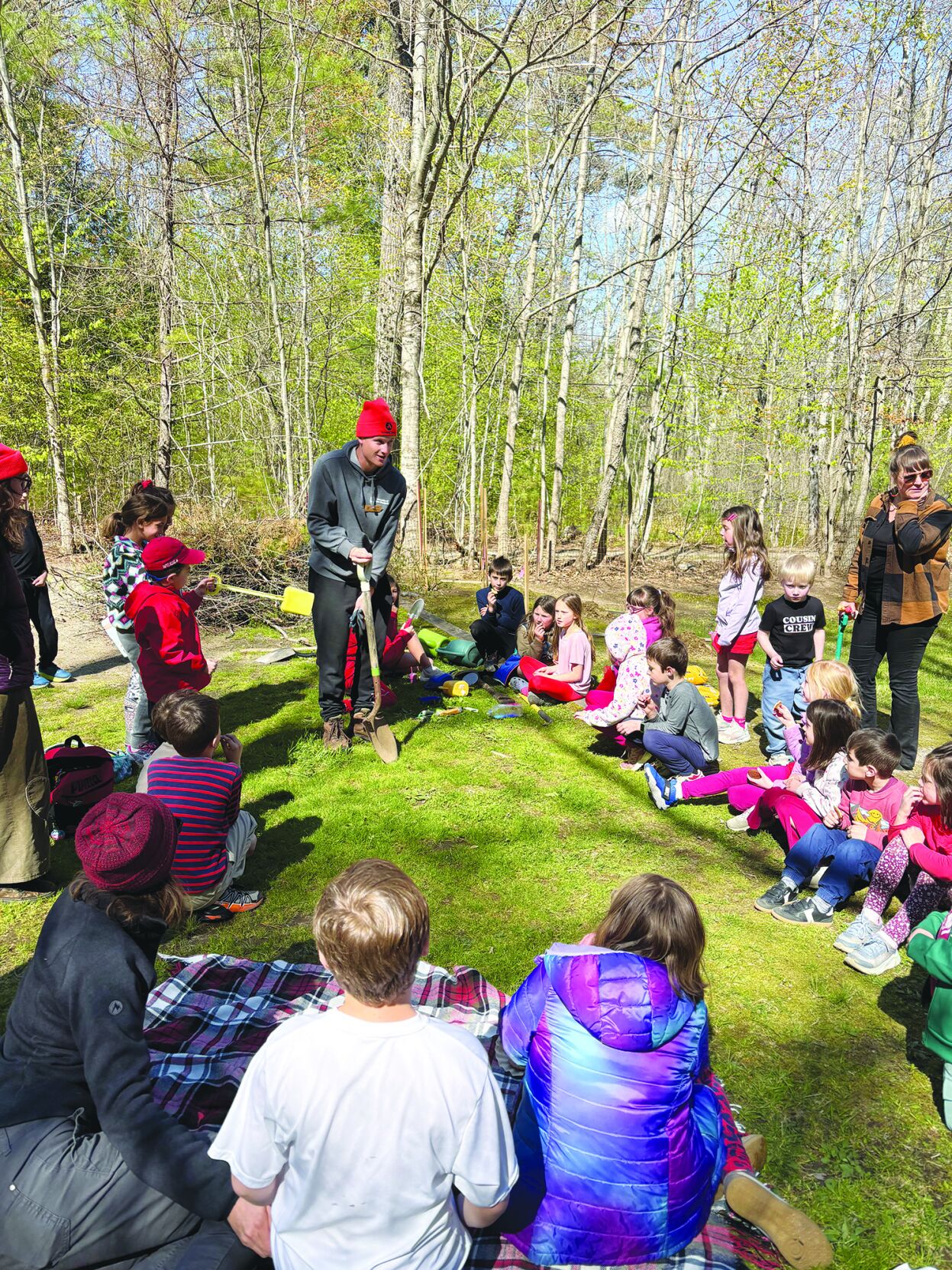
HOLDERNESS — A collaborative shoreline restoration effort is underway at Livermore Beach in Holderness, bringing together students, educators, conservation organizations, and town partners to protect the health of Squam Lake through hands-on environmental stewardship.
The project is a partnership between Holderness Recreation Department, Squam Lakes Natural Science Center, Squam Lakes Association, Squam Lakes Conservation Society, and Holderness Central School. The work is guided by recommendations from the LakeSmart Program, a voluntary, science-based assessment and education initiative focused on reducing runoff, preventing erosion, and protecting lake health.
The 7.9-acre beach property, which includes 234 feet of shoreline on Squam Lake, faces environmental challenges identified through the LakeSmart assessment. Compacted soils, unmanaged runoff from parking areas, bare soils vulnerable to erosion, and invasive plant species all contribute sediment and phosphorus runoff into the lake. These pollutants can degrade water quality, harm aquatic habitat, and contribute to harmful algal and cyanobacteria blooms.
Protecting Squam Lake’s water quality is critical not only for wildlife and recreation, but also for the region’s economy and identity. As climate change brings more frequent and intense stormwater events to New Hampshire, projects like this demonstrate how communities can work together to build resilience and safeguard treasured natural resources for future generations.
Throughout May, middle school students from Holderness Central School and Holderness residents worked to remove invasive plant species and build water diverters designed to slow and redirect stormwater runoff from the road. Additionally, K-4 Earth Club students gathered after school to plant native shrubs and trees to help stabilize soil, reduce erosion, and improve wildlife habitat. They were joined by parent volunteers and members of the Squam Lakes Association AmeriCorps staff. On another community workday, Squam Lakes Conservation Society and Lakes Region Conservation Trust AmeriCorps staff continued pulling invasive species and planting native trees.
Funding for this stage of the project was provided through a grant from the Rockywold-Deephaven Camps Squam Environmental Preservation Fund. Rockywold-Deephaven Camps is implementing its own LakeSmart shoreline improvements along its mile-and-a-half of Squam Lake shoreline.
Founded in 1966, the Squam Lakes Natural Science Center in Holderness is dedicated to advancing understanding of ecology by exploring New Hampshire’s natural world. The Center engages visitors through live animal exhibits, lake cruises, interactive programs, and nature-based learning experiences that inspire appreciation and stewardship of the environment. Located on Route 113 in Holderness, it’s an easy drive from exit 24 off I-93.
The Live Animal Trail is open daily through Nov. 1 and weekends through Nov. 23. For more information, call 603-968-7194 or visit nhnature.org.


(0) comments
Welcome to the discussion.
Log In
Keep it Clean. Please avoid obscene, vulgar, lewd, racist or sexually-oriented language.
PLEASE TURN OFF YOUR CAPS LOCK.
Don't Threaten. Threats of harming another person will not be tolerated.
Be Truthful. Don't knowingly lie about anyone or anything.
Be Nice. No racism, sexism or any sort of -ism that is degrading to another person.
Be Proactive. Use the 'Report' link on each comment to let us know of abusive posts.
Share with Us. We'd love to hear eyewitness accounts, the history behind an article.