


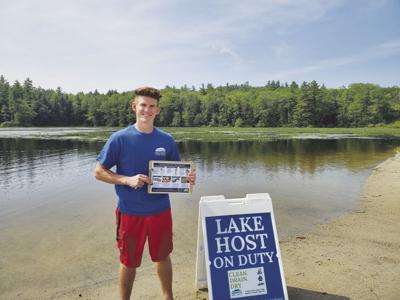
CONCORD — If you plan to boat or paddle on a New Hampshire lake or river this summer, NH LAKES has a message for you: Always take time to clean, drain, and dry your boat, trailer, and gear between waterbodies to protect New Hampshire’s lakes and rivers from aquatic invasive species. Not only will you be protecting the lake, you’ll help ensure that you, and others, will have safe and enjoyable boating for years to come.
Approximately 90 New Hampshire waterbodies contain infestations of invasive species that can clog boat motors and propellers, making boating unpleasant and difficult. Some types of aquatic invasive species even clog waterways to the point that boats can’t get through them. And, invasive mussels and snails leave sharp shells that are no fun to step on. Invasive species can make swimming dangerous and are difficult and expensive to manage and nearly impossible to get rid of.
NH LAKES’ nearly 800 lake hosts are at 100 of the busiest boat ramps on lakes throughout the state this summer teaching boaters how to clean their boats and gear to prevent the spread of invasive species. “Lake hosts have been the frontline defense against aquatic invasive species for since 2022. They’ve helped nearly 1.4 million boaters do their part to help stop spread of invasive species,” commented Andrea LaMoreaux, NH LAKES president. “If you know a lake host, or see a lake host this summer during your travels, please take a moment to thank them.”
You can keep aquatic invasive species out of New Hampshire’s lakes and rivers. Don’t let these hitchhikers invade our precious waters. Once they arrive, they may never leave. Practice the clean, drain and dry method to stop the spread:
CLEAN: Clean off all mud, plants, animals, and debris from your boat, trailer, and gear. Clean off anchors and anchor lines, water intake grates on jet-powered craft, kayak and canoe cockpits, storage compartments, and paddles, too! Dispose of all material away from the lake where it won’t wash back into the water. Cleaning is the law in New Hampshire.
DRAIN: Drain the motor, bilge, live wells, ballast tanks, storage compartments, and gear. Blow out water in jet-powered craft and tip paddle craft and motors to let out water. Drain all equipment in an area where the water won’t flow back into the lake. OPEN/REMOVE drain plugs and keep out/open while trailering. Draining is the law in New Hampshire.
DRY: If possible, wait at least five days before launching into the lake again. If you don’t have five days, dry off everything that came in contact with the water—a towel will work.
For more information, visit nhlakes.org, email info@nhlakes.org, or call 603-226-0299





(0) comments
Welcome to the discussion.
Log In
Keep it Clean. Please avoid obscene, vulgar, lewd, racist or sexually-oriented language.
PLEASE TURN OFF YOUR CAPS LOCK.
Don't Threaten. Threats of harming another person will not be tolerated.
Be Truthful. Don't knowingly lie about anyone or anything.
Be Nice. No racism, sexism or any sort of -ism that is degrading to another person.
Be Proactive. Use the 'Report' link on each comment to let us know of abusive posts.
Share with Us. We'd love to hear eyewitness accounts, the history behind an article.