


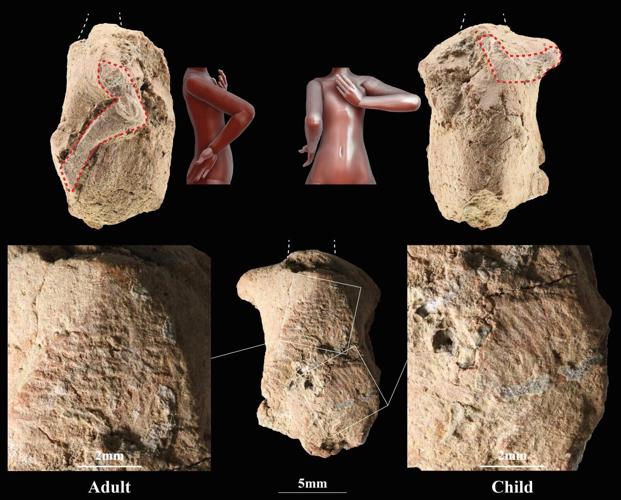


A Natufian figurine depicting a stylised human body modelled in clay 15,000 years ago, discovered at the site of Eynan-Mallaha (Upper Jordan Valley). The back of the clay figurine bears the fingerprint of an adult, covered by a child's fingerprint. This sequence of gestures in the wet clay, when the figurine was being modelled, is a rare direct testimony of inter-generational knowledge transmission in a hands-on apprenticeship. (Laurent Davin via SWNS)
By Stephen Beech
Newly discovered clay figurines dating back up to 15,000 years show children helped shape the beginnings of artistic expression, say scientists.
The 154 artifacts, which appear to depict animals and people — and date back to before the agricultural revolution, were excavated from three sites in present-day Israel.
Experts say they are the earliest known example of a tradition of making clay figurines in the Middle East.
And the finds challenge long-held beliefs about when and how clay began to be used for symbolic purposes in the region, according to a study published in the open journal PLOS One.
Scientists say the discovery pushes the timeline back by up to 3,000 years to 15,000 years ago, and shows that both children and adults worked together to create miniature figures — offering rare evidence of hands-on learning across generations.
It challenges longstanding assumptions about when early societies began using clay for symbolic expression.
Study leader Laurent Davin, from the Hebrew University of Jerusalem, said: “These discoveries change how we understand the beginnings of artistic expression in this region.
“Thousands of years before agriculture emerged, people were already using clay to create figures, as part of their beliefs and knowledge of the natural world.
“These artifacts, originally excavated from three sites in modern-day Israel, date back between about 15,000 and 11,500 years ago.

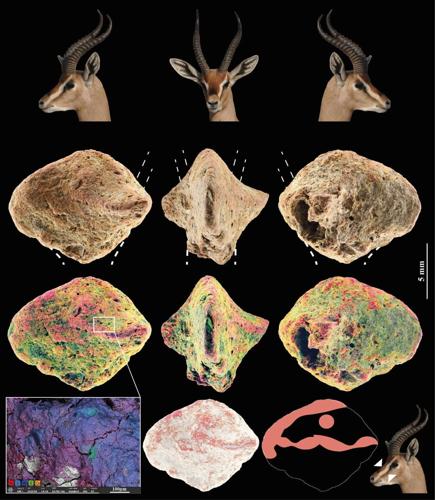
Fragment of a Natufian figurine depicting a gazelle head with horns made of perishable materials (e.g., twigs) modelled in clay 12,000 years ago, discovered at the site of Eynan-Mallaha (Upper Jordan Valley). The head was painted red with engobe (a mixture of liquid clay and ochre) to depict the gazelle's eyes and fur pattern. (Laurent Davin via SWNS)
“Some appear to represent birds, mammals, and humans, and some show traces of orange or red coloring — such as one fragment that may have depicted the facial pattern of a mountain gazelle.
“At the time, this region was inhabited by Natufian communities, a sedentary hunter-gatherer culture.
“What is particularly fascinating is the evidence that children were involved in making these objects, suggesting that creativity and cultural knowledge were shared across generations.”
Using microscopic analysis of fingerprints preserved in the clay, researchers found evidence that both adults and children participated in shaping and decorating the objects.
Some fingerprints belonged to children likely younger than 10, offering rare insight into childhood and learning in prehistoric societies.
On one human-shaped figurine, researchers identified two overlapping fingerprints, one left by a young adult or adult woman and another by a child who had not yet reached puberty.
Their placement suggests that the object may have been passed between an older individual and a child during its creation, providing possible evidence of hands-on learning across generations.
The children’s fingerprints were not simply accidental marks, according to the research team.
Their placement indicates that children actively participated in shaping and even coloring the objects, suggesting that figurine-making may have helped transmit artistic skills and cultural knowledge.
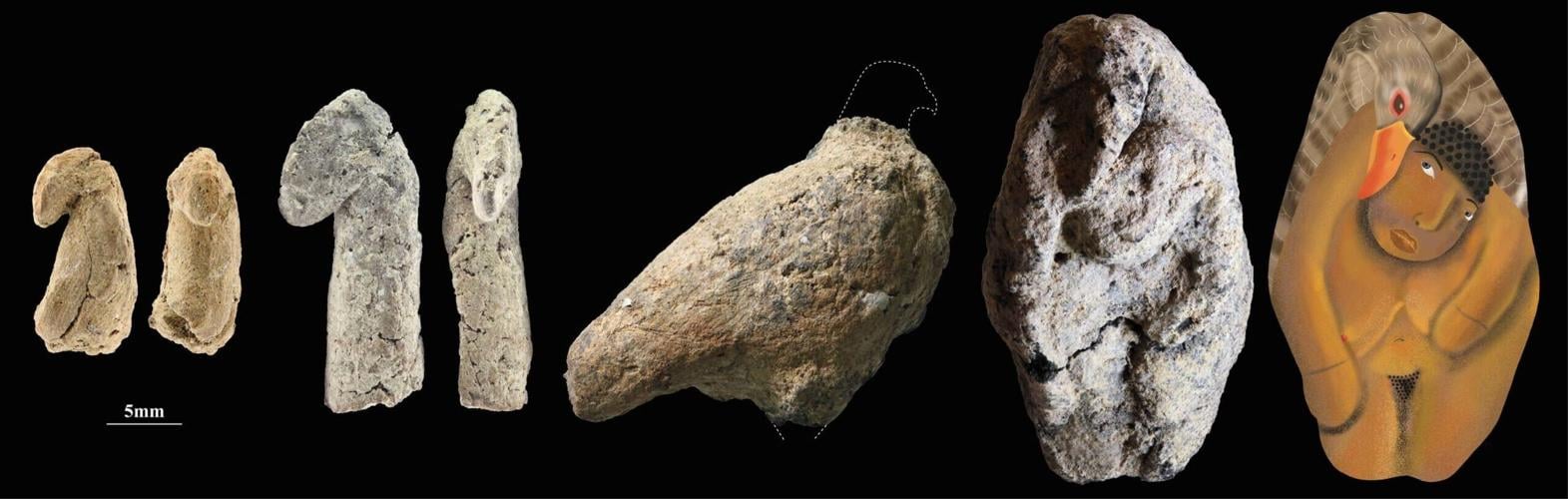
Among the 15 identifiable figurines, birds were the most common subject, accounting for 11 examples.


(Photo by ROMAN ODINTSOV via Pexels)
Other figures included representations of a mammal, a gazelle and two human forms.
Some birds were represented through simple shapes, while others displayed carefully marked wings, tails and feathers.
Several appear to depict ducks and geese, while others may represent birds of prey.
Some figurines show birds with their heads tilted downward and turned to the left, a posture researchers suggest may represent courtship displays observed among ducks during the breeding season.
They say that raises the possibility that the figurines were more than decorative objects as they may have conveyed knowledge about animal behavior, seasonal changes and the natural world — potentially playing a role in storytelling and cultural traditions.
Researchers also discovered traces of red coloring on several figurines, including evidence of engobe, a technique involving the application of a thin layer of colored clay.
One figurine, dated to 15,000 years ago, provides what the study identifies as the earliest known evidence of the coloring technique.
The discoveries were made at three Natufian sites: Eynan-Mallaha in the Upper Jordan Valley, Hayonim Terrace in the Galilee and el-Wad Terrace on Mount Carmel.
While archaeologists have previously found figurines from the Natufian period, most have been made from bone or stone.
Unlike carving figures from stone or bone, Davin says working with clay allowed people to gradually build, reshape and decorate their creations, representing an important technological and artistic development.
The findings challenge the longstanding view that major advances in symbolic expression emerged alongside agriculture.
Instead, they suggest that early hunter-gatherer communities were already developing “sophisticated” artistic traditions in the first villages of humanity, sharing knowledge across generations and finding new ways to represent the world around them.

Natufian figurines depicting waterfowls, a bird of prey and a human-bird (woman-goose) interaction, modelled in clay 15,000 years ago (left) and 12,000 years ago (right), discovered at the sites of Eynan-Mallaha and Nahal Ein Gev II (Upper Jordan Valley). (Laurent Davin via SWNS)
It was believed that clay figurines only become common in the region alongside the agricultural revolution in the Neolithic age, beginning around 11,500 years ago.
But Davin and his colleagues say the new findings show that Natufian figures were more varied and complex than once thought.
Davin said: “These discoveries change how we understand the beginnings of artistic expression in the first villages of humanity.
“Thousands of years before agriculture and pottery emerged, people were already using clay to create figures, as part of their beliefs and knowledge of the natural world.”
He added: “What is particularly fascinating is the evidence that children were involved in making these objects, suggesting that creativity and cultural knowledge were shared across generations.”
The study is part of a broader research project exploring the emergence of the symbolic use of clay.
The project has already led to the discovery of the earliest known figurine depicting a human-animal interaction, and the earliest known clay ornaments outside Europe.


(0) comments
Welcome to the discussion.
Log In
Keep it Clean. Please avoid obscene, vulgar, lewd, racist or sexually-oriented language.
PLEASE TURN OFF YOUR CAPS LOCK.
Don't Threaten. Threats of harming another person will not be tolerated.
Be Truthful. Don't knowingly lie about anyone or anything.
Be Nice. No racism, sexism or any sort of -ism that is degrading to another person.
Be Proactive. Use the 'Report' link on each comment to let us know of abusive posts.
Share with Us. We'd love to hear eyewitness accounts, the history behind an article.