


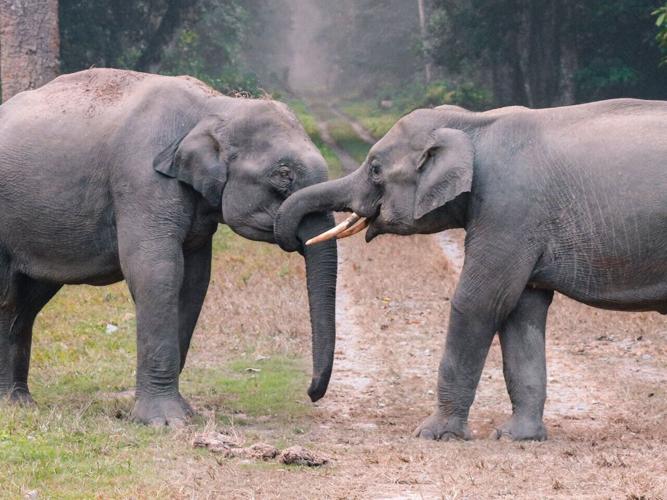
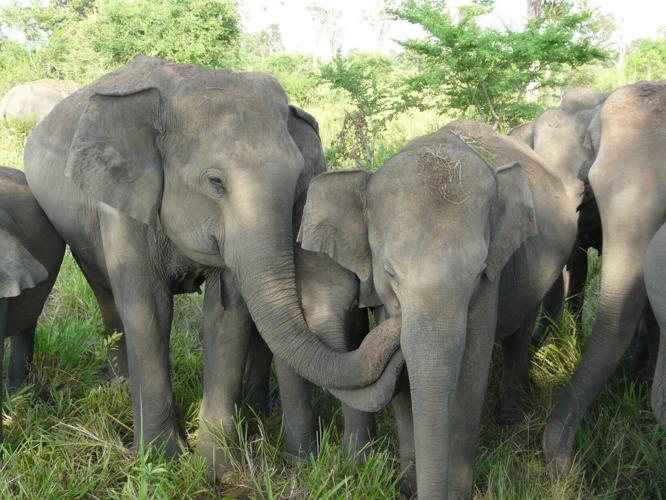
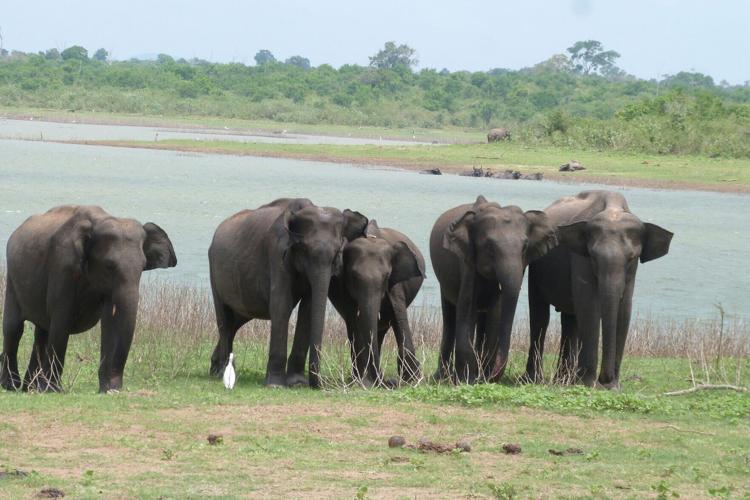
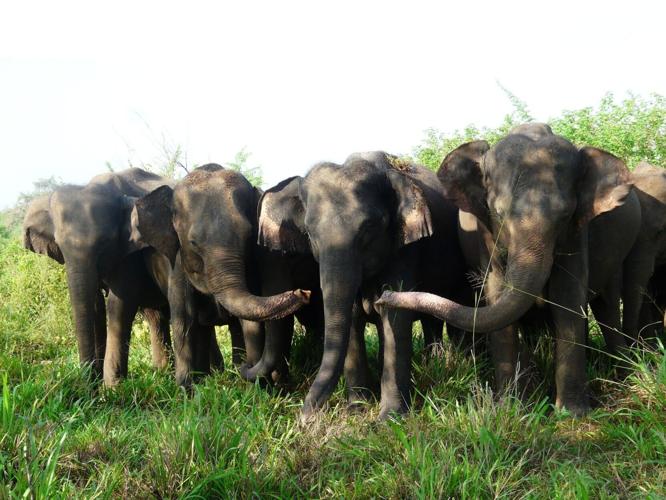
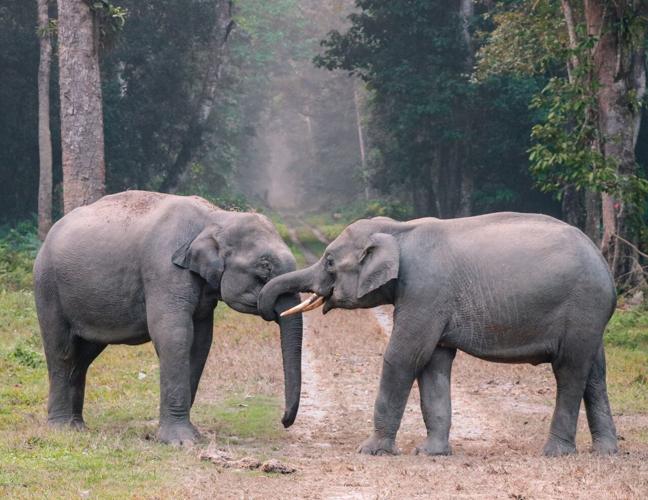

UC San Diego researchers studied more than 400 elephants at the Udawalawe National Park in Sri Lanka. (UERP via SWNS)
By Stephen Beech
Elephants are living increasingly isolated lives — leading to fractured social networks, warns new research.
Along with a worrying decline in numbers, scientists say a “tipping point” may have been reached for the highly social species.
They explained that Asian elephants, just like humans, thrive in well-established community networks.
Elephants flourish in groups that work together to access food and care for their young, among other social bonds.
But American scientists studying the intricacies of Asian elephant community structures have documented a “troubling” downturn in the population of the animals resulting in fractured social communities.

Asian elephants thrive in groups that work together to access food and care for their young. (UERP via SWNS)
Researchers analyzed the social dynamics of more than 440 wild female Asian elephants over 12 years at the Udawalawe National Park in Sri Lanka.
They studied key shifts in the demographics of the elephants that seemed to trigger social communities becoming smaller and more isolated.
Study leader Anastasia Madsen said: “We found that gradual accumulation of losses from turnover preceded sudden change in the social networks among females in a wild population of Asian elephants.”
She says the findings, published in the journal Science, indicate a social structure “tipping point.”
As the number of elephants in the population decreased over time, due to a combination of likely deaths, permanent emigrations of elephants and fewer incoming individuals, the population as a whole appears to have crossed a “critical threshold” that resulted in a shift from large, densely connected social communities, to smaller and less-connected social groupings.

The new findings serve future studies seeking to understand shifts in animal society structures. (UERP via SWNS)
Madsen, from the laboratory of Shermin de Silva at the University of California, San Diego, said: “We see individual elephants leaving and possibly dying at accelerating rates, but new individuals are not coming into the population.
“With fewer individuals in the population, those who are left will naturally have fewer relationships.


“However, the remaining elephants are also changing their relationships with each other.”
She says the new dynamic is a “cause for concern” since the animals utilize their social groups and connections to forage, acquire information and raise young.
De Silva, who is also president and founder of the conservation nonprofit organization Trunks & Leaves Inc., said: “We can probably all relate to the feeling of social isolation brought about, paradoxically, with the advent of digital communications that seem to remove the physical constraints of needing to be in the same place at the same time.

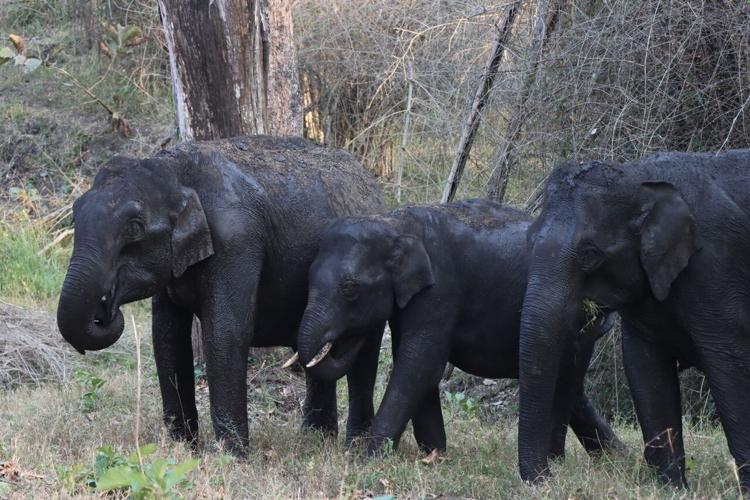
(Photo by FUTUREKIIID via Pexels)
“But for many social species, which includes ourselves as much as elephants, we have to remember that social connectivity is very much a matter of sharing space and building relationships throughout our lives.
“Crucially, in order to have resilient communities, we need to be able to replace the relationships that are lost over time.”
She says many elephant populations are already impacted through deaths as a result of poaching and conflicts with humans.
Other contributing factors may be disruptions in habitat connectivity and less food available as ecological conditions change across the 119-square-mile park and surroundings.
The new social fracturing structure observed may not be easily repaired, warn the researchers.

(Photo by Kushith M via Pexels)
Madsen said: “In general, we need to be more aware of these types of tipping points where we see sudden shifts after changes have been slowly building up.
“Once we move past the tipping point, it’s much harder to go back to previous states.”
She says the latest findings will serve future studies seeking to understand shifts in animal society structures, how to detect such tranformations and the factors responsible for vulnerabilities.
Madsen said the study also stimulates ongoing discussions for conserving elephant populations as humans expand into areas where the iconic species historically thrived.
She added: “We are gaining more evidence that studying social patterns is an important tool for us to see when things are going wrong in natural populations and, hopefully, to be able to do something about it.”


(0) comments
Welcome to the discussion.
Log In
Keep it Clean. Please avoid obscene, vulgar, lewd, racist or sexually-oriented language.
PLEASE TURN OFF YOUR CAPS LOCK.
Don't Threaten. Threats of harming another person will not be tolerated.
Be Truthful. Don't knowingly lie about anyone or anything.
Be Nice. No racism, sexism or any sort of -ism that is degrading to another person.
Be Proactive. Use the 'Report' link on each comment to let us know of abusive posts.
Share with Us. We'd love to hear eyewitness accounts, the history behind an article.