


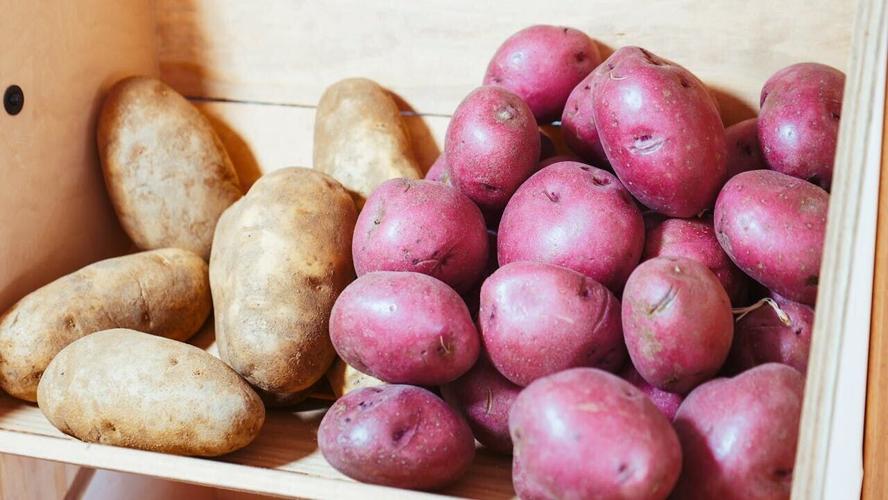


Photo by Kindel Media via Pexels
By Elizabeth Hunter
Potato crop waste is to be turned into skincare and makeup in a unique new project.
Scientists at the University of Aberdeen are working in collaboration with farmers, in the hopes of turning potato waste into high-value compounds that can be used for cosmetics, pharmaceutical and nutraceutical products
The Scottish seed potato industry, worth $24.2 million, generates over 51,000 tons of potato shaws annually - but stems and leaves of the plants, known as "shaws" are discarded as part of the process.
The project aims to extract solanesol from the discarded shaws, a compound vital for producing coenzyme Q10 and vitamin K2, key ingredients in cosmeceutical, nutraceutical, and pharmaceutical products.
Solanesol is currently sourced mostly from tobacco, but as demand increased from 4000 tonnes per year in the early 2000s, to around 66,000 tons in 2022, researchers began searching for a more sustainable source.
By using this method, the team hope to reduce agricultural waste and create a new income stream for Scottish farmers - who grow 12,800 hectares of seed potatoes each year.
Dr. Giovanna Bermano, Honorary Chair at the University of Aberdeen, who will collaborate on the project said: “This pioneering research lays the foundation for future innovation, ensuring that the UK is at the forefront of developing sustainable, ecoâfriendly natural products for the cosmeceutical sector.


Photo by zhugewala via Pexels
“By demonstrating how agricultural byâproducts can be transformed into highâvalue compounds, the project sets the stage for subsequent research and commercialization that will drive innovation, reduce environmental impact, and secure a competitive advantage for UK science and industry.”
The scheme is funded by Innovate UK through the Launchpad: Bio-based Manufacturing - Scotland program, and is consulting with experts at Grampian Growrs Ltd.
Sofia Alexiou, Project Lead at Grampian Growers said: “This project is particularly significant for Grampian Growers and the wider potato industry.
"It offers an opportunity to add value to agricultural by-products while addressing key challenges such as waste reduction and economic resilience.
"By unlocking new revenue streams, the project supports Scottish farmers and enhances the profitability of cooperative models, demonstrating the potential of innovation to strengthen rural economies."
The project is led by researchers from the University of Aberdeen and the James Hutton Institute and supported by Alder BioInsights’ strategic consultancy and the Scottish Agricultural Organization Society (SAOS).
Dr. Heather Wilson, Chair in Immunology, at the University of Aberdeen, explained: “Exploring the quality and yield of solanesol extracted from locally sourced potato shaws—and evaluating its potential applications across the cosmeceutical and related industries represents an exciting and impactful area of research.
“This work not only supports the transition to ethical, tobacco-free sourcing of high-value compounds, but also advances sustainable innovation, showcasing how science can unlock new value from agricultural by-products and strengthen the resilience of rural communities across Scotland and beyond.”


(0) comments
Welcome to the discussion.
Log In
Keep it Clean. Please avoid obscene, vulgar, lewd, racist or sexually-oriented language.
PLEASE TURN OFF YOUR CAPS LOCK.
Don't Threaten. Threats of harming another person will not be tolerated.
Be Truthful. Don't knowingly lie about anyone or anything.
Be Nice. No racism, sexism or any sort of -ism that is degrading to another person.
Be Proactive. Use the 'Report' link on each comment to let us know of abusive posts.
Share with Us. We'd love to hear eyewitness accounts, the history behind an article.