


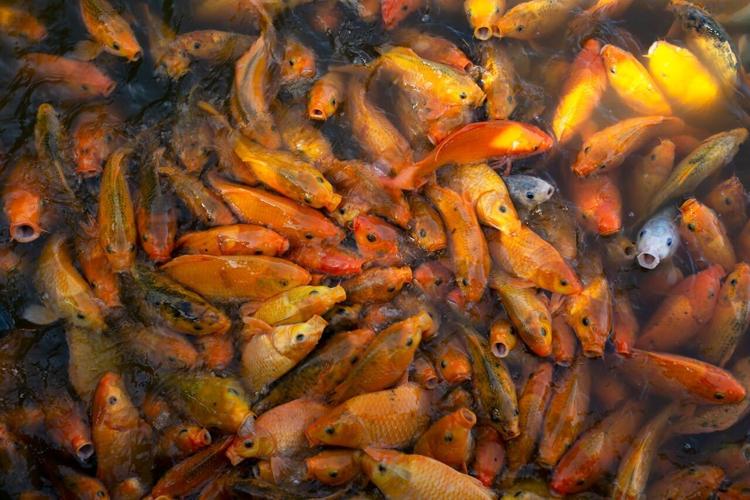

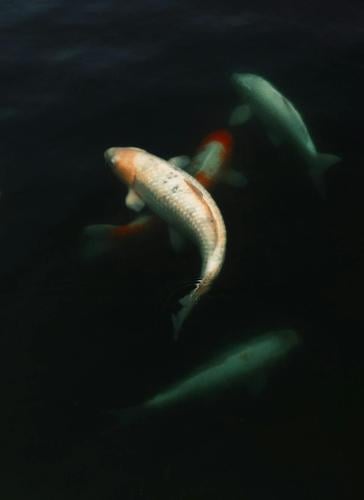


(Photo by Jeffry Surianto via Pexels)
By Stephen Beech
Fish are being killed off by pesticides, warns new research.
Long-term exposure to low levels of a common agricultural chemical can accelerate aging and shorten the lifespan of aquatic lifeforms, according to the study.
American scientists say their findings have potentially "far-reaching implications" for human health.
The study, published in the journal Science, shows that chronic exposure to the insecticide chlorpyrifos at concentrations too low to cause immediate toxicity causes fish to age faster at the cellular level.
The research began with field studies in China where scientists examined thousands of fish collected over several years from lakes with differing levels of pesticide contamination.
Biology Professor Jason Rohr and his colleagues observed that fish living in contaminated lakes lacked older individuals, while populations in relatively uncontaminated lakes included many older fish.

Professor Jason Rohr, chair of the Department of Biological Sciences, in his lab at Galvin Life Science Center. (Barbara Johnston via SWNS)
The pattern suggested that fish were not failing to add to their populations, but rather were dying earlier in life.
Rohr said: "When we examined telomere length and deposition of lipofuscin in the livers of the fish, well-established biological markers of aging, we found that fish of the same chronological age were ageing faster in the contaminated than clean lakes."
Chemical analyses revealed that chlorpyrifos was the only compound found in the fish tissues that was consistently associated with signs of ageing.
The signs included shortened telomeres, which act like the plastic caps of shoelaces and decrease fraying in chromosomes, and lipofuscin deposition, a build-up of “junk” like old proteins and metals within long-lived cells.
To determine whether chlorpyrifos was the direct cause, Rohr explained that the researchers needed to conduct controlled laboratory experiments with concentrations matching those measured in the wild.


(Photo by Ivy Son via Pexels)
In the lab experiment, chronic low-dose exposure to chlorpyrifos caused progressive telomere shortening, increased cellular ageing and reduced survival, particularly in fish from the contaminated lakes that were already physiologically older.
Rohr, of the University of Notre Dame in Indiana, said: “Although the laboratory results closely matched the field observations, it was possible that a missed high-dose exposure event in the field, rather than chronic low-dose exposures, caused the reduced lifespan."
To rule out that possibility, the team conducted another lab experiment showing that short-term exposure to much higher doses caused rapid toxicity and death but did not accelerate ageing through shortened telomeres and increased lipofuscin.
Rohr said that showed long-term accumulation of exposure to extremely common low concentrations - not brief high-dose spikes - was responsible for the observed ageing.
He says the loss of older individuals can have "serious" ecological consequences, as older fish often contribute disproportionately to reproduction, genetic diversity and population stability.

(Photo by Diego Sandoval via Pexels)
Rohr said: “These findings also raise broader concerns because telomere biology and ageing mechanisms are highly conserved across vertebrates, including humans."
He said potential future research will explore how widespread the phenomenon may be across species and chemicals.
While the UK and most parts of Europe have banned chlorpyrifos, it remains in use throughout China, parts of the United States and in many other countries.
Rohr says the ageing effects observed in the study occurred at concentrations below current US freshwater safety standards.
He added: “Our results challenge the assumption that chemicals are safe if they do not cause immediate harm.
“Low-level exposures can silently accumulate damage over time by accelerating biological ageing, highlighting that chemical safety assessments must move beyond short-term toxicity tests to adequately protect environmental and human health.”


(0) comments
Welcome to the discussion.
Log In
Keep it Clean. Please avoid obscene, vulgar, lewd, racist or sexually-oriented language.
PLEASE TURN OFF YOUR CAPS LOCK.
Don't Threaten. Threats of harming another person will not be tolerated.
Be Truthful. Don't knowingly lie about anyone or anything.
Be Nice. No racism, sexism or any sort of -ism that is degrading to another person.
Be Proactive. Use the 'Report' link on each comment to let us know of abusive posts.
Share with Us. We'd love to hear eyewitness accounts, the history behind an article.