



I live in the small city of Rolla, Missouri, where half the child care centers have closed in the past six years. In the past year, my state has lost 1,771 child care slots due to closures.
This problem isn’t isolated to Rolla – child care providers are closing in other rural areas. Some of the challenges these centers face are widespread. U.S. child care workers typically earn little money, yet child care costs are high for many families.
Approximately 1.4 million children whose families are low-income benefit from child care subsidies, which means the federal and state government partially cover the cost of child care. States typically receive federal funding that they match and then give to subsidize individual children’s care at child care centers.
In early January 2026, the Trump administration announced that it had temporarily frozen federal child care subsidy payments to all states because of fraud concerns in Minnesota.
A group of states – Minnesota, New York, California, Illinois and Colorado – then sued the Trump administration. A federal judge ruled on Jan. 26 that the administration must deliver nearly US$10 billion in federal child care subsidies to these states.
The new policy also creates new verification rules – like stricter proof of parents’ employment – that are making it more time-consuming and complicated to receive subsidies.
Despite the lawsuit, these other new subsidy rules remain in place – meaning that, among other things, child care providers have to do more paperwork and receive reimbursement from the federal government later than they typically do.
An already tough situation
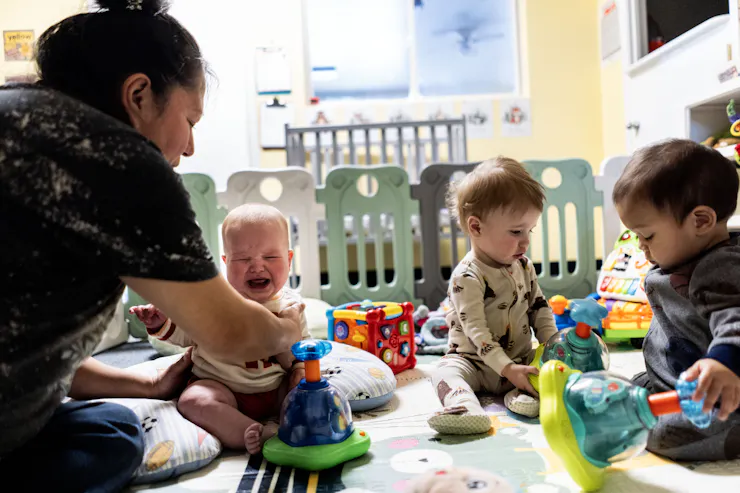
Already, many child care providers are struggling to keep their doors open.
I am a professor and the chair of the education department at Missouri University of Science and Technology. I help prepare my students – future teachers – to become the next generation of educators. Part of my job is also supporting our campus child development center, which cares for babies and young children of staff, faculty and students.
Across the nation, over 14 million children potentially need child care, but only 10 million slots exist.
Even if parents can find child care, its high cost can be prohibitive, sometimes leading to young parents with low-paying jobs leaving the workforce.
How child care subsidies work
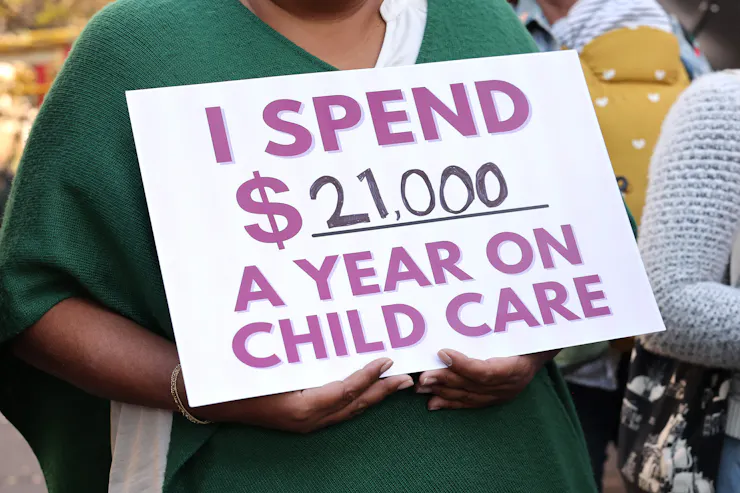
Placing an infant in an early childhood or day care center can cost parents annually an average of $15,000. These costs can rise up to more than $28,000 in places like Washington, D.C.
While subsidies can help offset the high cost of child care, only approximately 15% of children whose families are eligible for subsidies receive them.
The federal government distributes subsidies to designated state agencies that are responsible for contracting with providers and verifying family eligibility. States must match some of these funds. Parents then apply through their state to receive a subsidy.
Families generally pay the rest of their child care center costs on a sliding scale.
The exact requirements for receiving child care subsidies vary across states, both when it comes to families and providers. Often, states require that parents are working or are in school, and that they make less than a certain income.
In New York, a family of four could qualify if they earn up to nearly $110,000 each year. In Florida, a family of four could earn as much as about $56,000 a year and qualify.
The amount families receive in subsidies also varies, but getting them could save a family approximately $10,000 a year in a place like Seattle.
Getting a child care spot isn’t a guarantee
It can be difficult for families to apply for and receive child care subsidies. It requires extensive paperwork, and families often have to spend hours on the phone and deal with confusing instructions about how to receive the benefits.
In some states, there is a wait list to receive a child care subsidy.
In March 2026, Missouri started a child care subsidy waitlist. Before, families used to be able to receive child care subsidies immediately after approval, if they could find a provider. Now, families must wait until funding becomes available.


Providers may be reluctant to accept subsidies to help pay for a child’s care, in part because of the additional work of submitting a child’s attendance records to the state and verifying other information. Some providers simply cannot afford to gamble on delayed payments, which happened during the 2025 federal shutdown, for example.
In Missouri, child care center providers had their subsidy payments delayed for months when the state simply switched to a new system to process payments in 2023 and 2024.
Some states, including Arkansas and Oregon, have also cut their own funding for child care subsidies over the past few years.
Rural and other underserved communities are particularly hard hit by any subsidy delays and cuts.
When there is high demand for child care, there is little incentive for providers to accept subsidies and receive state reimbursement six weeks later, after they file extensive paperwork. The alternative for some providers is to largely enroll wealthier families to pay the full cost of care.
The math doesn’t work
The child care industry faces other challenges.
Despite some recent wage increases, child care workers are among the lowest-paid professionals in the U.S. They earn, on average, about $15 an hour, depending on where they live. They often do not receive other benefits like insurance or retirement.
Child care workers earn so little in part because child care centers typically run on thin margins. They often do not make a profit, unless they are part of a large, national chain, like Bright Horizons.
Most child care providers are small businesses, whether they are run out of a designated center or someone’s private home. Unlike K-12 public school districts, these child care providers typically do not receive any government funding.
If a child care provider raises the wages of child care workers too much, and subsequently increases its tuition rates, most families cannot afford to send their kids there – especially babies.
At the child care center on my campus, for example, raising child care worker wages from $15 to $17 an hour would cost over $85,000 annually. We would need to raise tuition rates by $1,000 per year, per child, to offset that cost.
The younger the children that a center has in a program, the more child care workers it needs to employ. In Missouri, for example, state regulations require that there is one caregiver for every four babies in a child care center.
No clear way forward
There are 16,000 fewer child care providers in the country than there were before the COVID-19 pandemic.
The federal government distributed $53 billion to support the child care industry during the pandemic in 2020 and 2021. Nearly all child care providers received money as part of this funding. But the money that kept some centers afloat during that time has now been spent.
Now, it remains difficult for many families to find affordable child care within a reasonable distance.
While the Trump administration’s freeze on child care subsidies may never take effect, the stricter verification rules are already making an impossible situation for families a whole lot worse. And if subsidies are cut off as well, more American families will simply be unable to afford child care.
This article is republished from The Conversation, a nonprofit, independent news organization bringing you facts and trustworthy analysis to help you make sense of our complex world. It was written by: Beth Kania-Gosche, Missouri University of Science and Technology
Read more:
- Zohran Mamdani’s transformative child care plan builds on a history of NYC social innovations
- Why child care costs more than college tuition – and how to make it more affordable
- Colorado faces a funding crisis for child care − local communities hope to fill the gaps
Beth Kania-Gosche is the Missouri University of Science & Technology education department chair. Part of the department includes the on campus Child Development Center, which is contracted with Missouri DESE to receive childcare subsidy. The Child Development Center also received state covid relief funds for childcare. She is the current president of the Missouri Association of Colleges for Teacher Education.


(0) comments
Welcome to the discussion.
Log In
Keep it Clean. Please avoid obscene, vulgar, lewd, racist or sexually-oriented language.
PLEASE TURN OFF YOUR CAPS LOCK.
Don't Threaten. Threats of harming another person will not be tolerated.
Be Truthful. Don't knowingly lie about anyone or anything.
Be Nice. No racism, sexism or any sort of -ism that is degrading to another person.
Be Proactive. Use the 'Report' link on each comment to let us know of abusive posts.
Share with Us. We'd love to hear eyewitness accounts, the history behind an article.